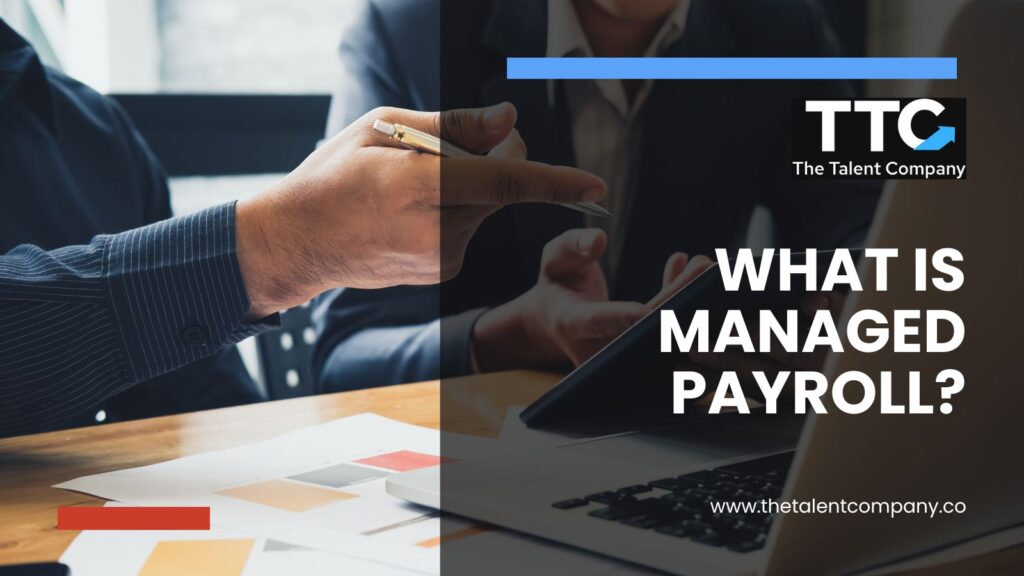
Payroll is one of the most important functions in an organization. Pay is one of the most important activities in an organization. Employees would want to be paid correctly and punctually, and the business, in this case, would ensure that taxes, deductions, and compliance are met correctly. The payroll internalization of companies is more complex and time consuming as the company increases. This is where managed payroll comes in.
Managed payroll is a solution in which companies delegate the tasks of payroll to specialized service providers who take care of everything from calculations and tax filings to employee payments and compliance monitoring. Companies will no longer have to spend hours overseeing the payroll procedures because experts and technology will be capable of doing this.
In this guide, we are going to discuss what managed payroll is, how the system operates, its advantages, the possible disadvantages, the pricing of the system, and how to select the best provider.
What Is Managed Payroll?
Managed payroll is an outsourcing framework of payroll, where a third-party provider handles a majority of all payroll-related functions of a firm. These providers deal with payrolls, payment processing, taxation, and maintenance of government regulations, payment distribution, and reporting.
Managed payroll involves outsourcing payroll to an external workforce rather than relying on an in-house team to handle it using specific systems and professional knowledge.
Organizations do not need to establish their own payroll departments, as they use the services of the payroll experts who make sure that the employees receive the right pay and all the legal and tax requirements are met.
Core Idea Behind Managed Payroll
Managed payroll is aimed at easing payroll functionality by combining:
- Professional payroll expertise
- Automated payroll technology
- Compliance management
- Secure employee data handling
Outsourced payroll service benefits companies with less administrative workload and increased growth and strategy planning.
How Managed Payroll Works?
Although the providers might have their own workflow, managed payroll is usually structured.
- Payroll Setup and Onboarding: The provider will install their system with the HR, payroll information and compliance rules of the company.
- Data Submission: The provider will require the employer to submit the data on hours worked, salary, bonuses or leave based on the pay cycle.
- Calculation and Processing: The provider makes gross pay calculations, makes deductions (taxes, benefits, garnishments) and makes net pay calculations.
- Disbursement: This is the process where the provider carries out or actually does the payment of the money through the issuance of a paycheck or direct deposits to the employees.
- Tax Filing and Compliance: Payroll taxes, administration, and filing of required documents with the government agencies are handled and registered by the provider.
- Reporting: The supplier is able to prepare detailed payroll reports which are provided to the company.
Types of Managed Payroll Services
Managed payroll solutions differ in terms of their level of responsibility which the company may want to outsource.
- Fully Managed Payroll Services: This is where the service provider handles the whole payroll procedure such as data entry, computation of salary, and tax filing, compliance and employee reporting.
- Partially Managed Payroll Services: The company has preserved its control over some aspects (e.g. data entry) but contracts out to a provider some specialized tasks such as tax filing and compliance.
- Cloud-Based Payroll Services: Payroll management through online applications means that an employee can be able to administer the payroll anywhere in real time, with automated and extremely high security.
- Professional Employer Organization (PEO): This is a co-employment model, where the PEO becomes the employer of record and handles all aspects of payment, HR administration, taxes, and benefits, which is often compared with global hiring structures such as AOR and EOR
- Global Payroll Services: Specialists dealing with the payroll issue in more than one country and taking into account the foreign regulations and exchange rates.
These services have a tendency to be applied to minimize mistakes, legal compliance, and time, and some providers also provide specialized, automated touchless payroll solutions.
Key Services Included in Managed Payroll
Services vary among providers but usually managed payroll services involve:
- End-to-End Payroll Processing: Calculation of bonuses, gross-to-net pay, overtime and allowances.
- Statutory Compliance Management: Dealing with deductions such as Provident Fund (PF), Employee State Insurance (ESI), Professional Tax (PT), and Labour Welfare Fund (LWF).
- Tax Administration: Computations and withholding taxes (TDS) and submission of tax returns, including TCS and TDS.
- Payment Distribution: This will issue salary payment either through direct deposit, cheques, or pay cards.
- Employee Support and Records: Generating detailed payslips, payroll records and responding to employee enquiries.
- Compliance/Audit Support: Ensuring that the labor laws, local, state, or federal are adhered to, and also maintain audits.
- Reporting: Presenting comprehensive management payrolls, analytics and insights.
These services are aimed at making sure that everything is correct, minimizing the risk of non-compliance, and time-saving as the companies can transfer complex payroll administration to the specialists.
Benefits of Managed Payroll
Managed payroll services have a number of benefits that can enhance efficiency and risk minimization to the companies.
- Better Compliance: Third-party specialists keep up with the evolving tax regulations and labor laws and minimize the risks of penalties and legal actions.
- Precision and Fewer Errors: Automated systems and human supervision reduce errors in payroll calculations, deductions, and tax remittance.
- Time and Cost Saving: Eliminates internal employee training, costly and dedicated payroll software. It liberates the HR departments to concentrate on strategic activities.
- Skilled Knowledge: Availability of specialized knowledge on how to deal with complicated situations such as international payroll, multi-state taxation challenges and employee enquiries.
- Data Safety and Trustworthiness: Cloud based services are usually secure, encrypted and managed by the provider and are more reliable and secure against in-house applications that handle sensitive data relating to employees.
- Scalability: Managed services can easily support business expansion, increases in employee headcount, new pay types, and new destinations.
Potential Drawbacks of Managed Payroll
Despite the numerous advantages of managed payroll, it may not be ideal for all organizations.
- Loss of Control and Flexibility: Outsourcing implies the loss of direct and immediate access to the payroll information and it is hard to perform the last minute changes to the payroll runs.
- Higher and Hidden Costs: Although there is the elimination of in-house labor costs, managed services are quite costly, and there is a charge for extra service such as the year-end tax forms, reports, or emergency corrections.
- Communication and Service Problems: Payroll bureaus are typically automated or call centres, so their service delivery is impersonal. More of them will take longer to respond to queries, and they may miscommunicate.
- Data Security Risks: By handing sensitive data of employees to a third party, there is a greater possibility of data leakage and privacy violations.
- Dependency on Third Party: Your payroll efficiency relies fully on the systems, stability and accuracy of the provider. A failure in payroll may be caused by system outages or mistakes on the part of the provider.
- Operational Inflexibility: The processes established by the provider might not fully fit the needs of the company and urgent and non-standard changes might be hard to implement.
To address them, organizations would have to do extensive research to ascertain that the provider is reliable and safe.
How Much Do Managed Payroll Services Cost?
Managed payroll services may be of various costs depending on the size of the business, complexity of the payroll operations and the intensity of service needed. Businesses comparing outsourcing models often ask How Much Does EOR Cost? before choosing a workforce solution. Managed payroll is normally tailored to suit the needs of a particular organization unlike the normal payroll programs which adhere to a pre-set pricing system. This implies that pricing is usually calculated following considerations of the number of employees, payroll frequency, the requirement of compliance facilities, as well as other services.
Key Factors That Influence Managed Payroll Costs
Several elements affect how much a business will pay for managed payroll services.
- Number of employees
One of the biggest cost factors is the size of the workforce. Many providers charge on a per-employee basis, meaning the total cost increases as the number of employees grows. However, larger companies may receive volume discounts.
- Payroll frequency
Businesses that run payroll weekly or biweekly may pay more than those that process payroll monthly. More frequent payroll cycles require additional processing, reporting, and tax management.
- Level of service required
Costs depend heavily on whether the company chooses fully managed payroll or partially managed payroll.
- Fully managed payroll includes end-to-end services such as payroll processing, tax filing, payments, and compliance monitoring.
- Partially managed payroll may include only specific services like tax calculations or payroll processing.
- Payroll complexity
Organizations with complex payroll structures often pay higher service fees. Complexity can arise from factors such as:
- Multiple employee pay structures
- Overtime and shift differentials
- Bonuses and commissions
- Multi-state or international payroll
- Union or contract-based workers
The more variables involved in payroll calculations, the more effort is required from the payroll provider.
- Additional services and integrations
Some managed payroll providers offer extended services such as:
- HR system integration
- Benefits administration
- Time and attendance tracking
- Payroll analytics and reporting
- Compliance advisory services
These additional features can increase the overall cost but may provide significant operational value.
Common Pricing Models for Managed Payroll
Payroll service providers typically use one of several pricing models.
- Per Employee Per Month (PEPM): This is one of the most common pricing structures. Businesses pay a fixed amount for each employee every month. This model makes costs predictable and easy to scale as the workforce grows.
- Base Fee Plus Per-Employee Charges: Some providers charge a flat monthly base fee along with an additional cost for each employee processed in payroll.
- Custom Enterprise Pricing: Large organizations with complex payroll requirements often receive custom pricing based on their specific needs, locations, and compliance requirements.
Average Cost Range
Although exact pricing varies between providers, small and mid-sized businesses often pay anywhere from $30 to $200 per employee per month for managed payroll services. Larger enterprises may negotiate lower per-employee rates but may incur additional costs for complex payroll environments.
It is important to note that these costs usually include payroll processing, tax filing, compliance support, and reporting. However, optional services such as HR integrations or global payroll support may involve additional fees.
How to Choose the Right Managed Payroll Provider?
The choice of the payroll partner is crucial to achieve success in the long run. These are major aspects to be taken into consideration.
- Industry experience: Find providers who are experienced in managing payrolls on the similar businesses.
- Compliance expertise: Make sure that the provider is familiar with federal, state, and local payroll laws.
- Technology and automation: The modern payroll equipment ought to be automated, and have the ability to generate a report and the possibility of secure data management.
- Integration capabilities: The payroll system is to be integrated with existing HR, accounting, or time-tracking systems.
- Customer support: Stable backup also means that payroll problems can be solved within a short time.
- Security standards: Select those providers that are strict in data protection and cybersecurity.
Final Thoughts
Managed payroll has emerged as a critical solution to those companies that desire to streamline payroll through ensuring accuracy and compliance. With the increased complexity of payroll rules and the increasing size of the workforce, it may put a huge strain on HR and finance departments, consequently creating considerable pressure on a few managers to handle payroll in-house. By outsourcing payroll to professional providers, companies can be sure that the payment of employees and tax returns will be organized effectively and punctually, as well as adhere to the requirements.
Besides reducing administrative work pressures, managed payroll service assists in increasing the accuracy of the payroll, improves the safety of the payroll data, and makes payroll technology readily available. This helps businesses to concentrate on their long term objectives of growth, human resource management and business efficiency. A managed payroll solution may be a viable and scalable solution to organizations that desire to efficiently automate payroll operations and reduce the risk of payroll compliance.