Fractional Accounting Services: Everything You Need to Know
Managing business finances becomes more challenging as a company grows. What starts with basic bookkeeping often expands into budgeting, financial reporting, tax planning, compliance, payroll management, and strategic decision-making.
Hiring a full-time finance professional can be expensive, especially for startups and small businesses that need expertise without the cost of a permanent employee. This is where fractional accounting services offer a practical solution. Businesses can access experienced financial professionals on a part-time or project basis, gaining the support they need without committing to a full-time salary.
In this guide, you’ll learn how fractional accounting works, the services it includes, its advantages, and how to decide if it’s the right fit for your business.
What Are Fractional Accounting Services?
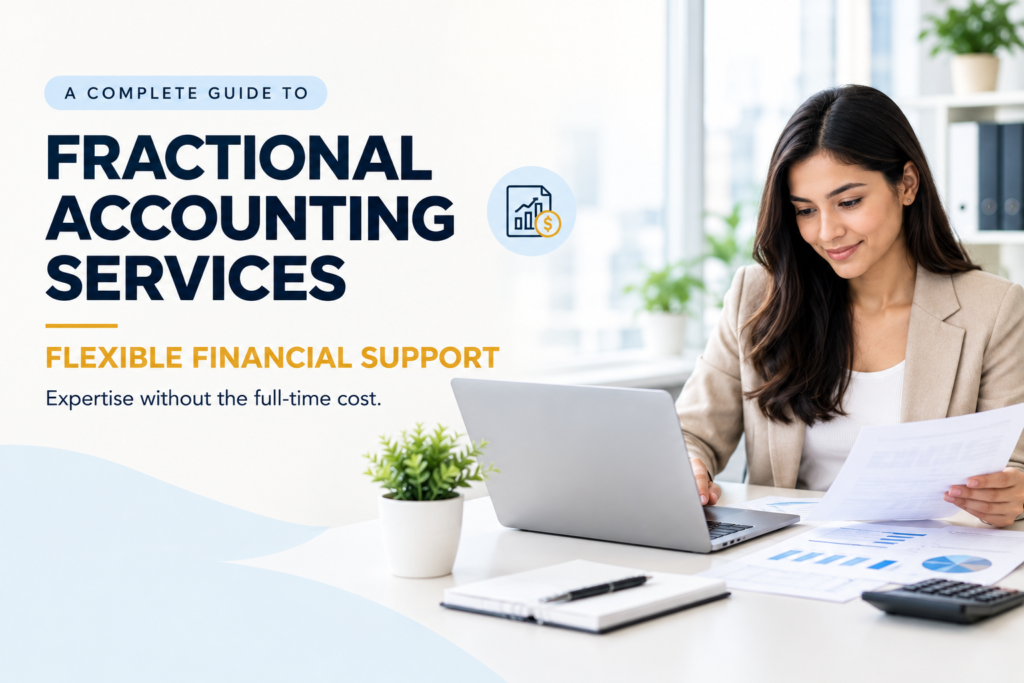
Fractional accounting services allow businesses to hire experienced accounting professionals for a specific number of hours, projects, or ongoing financial responsibilities instead of employing them full time.
A fractional accountant supports multiple businesses by providing strategic financial guidance, maintaining accurate records, and helping owners make informed financial decisions.
This model has become increasingly popular among startups, small businesses, marketing agencies, SaaS companies, eCommerce brands, and rapidly growing organizations because it provides access to senior-level financial expertise at a significantly lower cost.
For example, a startup may not need an accountant working 40 hours every week. Instead, it may require someone for only 15 to 20 hours each month to review financial reports, manage cash flow, prepare forecasts, and ensure tax compliance. Fractional accounting makes this possible.
How Fractional Accounting Services Work?
Understanding the process helps business owners know exactly what to expect when partnering with a fractional accounting provider.
-
Initial Financial Assessment
The relationship usually begins with a detailed review of the company’s current financial position. The accountant evaluates existing accounting systems, bookkeeping records, financial statements, tax obligations, payroll processes, and cash flow.
This assessment helps identify weaknesses, financial risks, and opportunities for improvement before creating a customized accounting strategy.
-
Understanding Business Goals
Every business has different financial priorities. Some companies focus on improving profitability, while others are preparing for expansion, fundraising, or entering new markets.
A fractional accountant takes time to understand these objectives before recommending financial solutions. This ensures accounting activities support broader business goals instead of simply recording transactions.
-
Customized Financial Management Plan
After reviewing the business, the accountant develops a structured financial plan based on current needs.
The plan may include:
- Monthly bookkeeping
- Financial reporting
- Budget forecasting
- Cash flow management
- Payroll management
- Tax planning
- Compliance monitoring
- KPI tracking
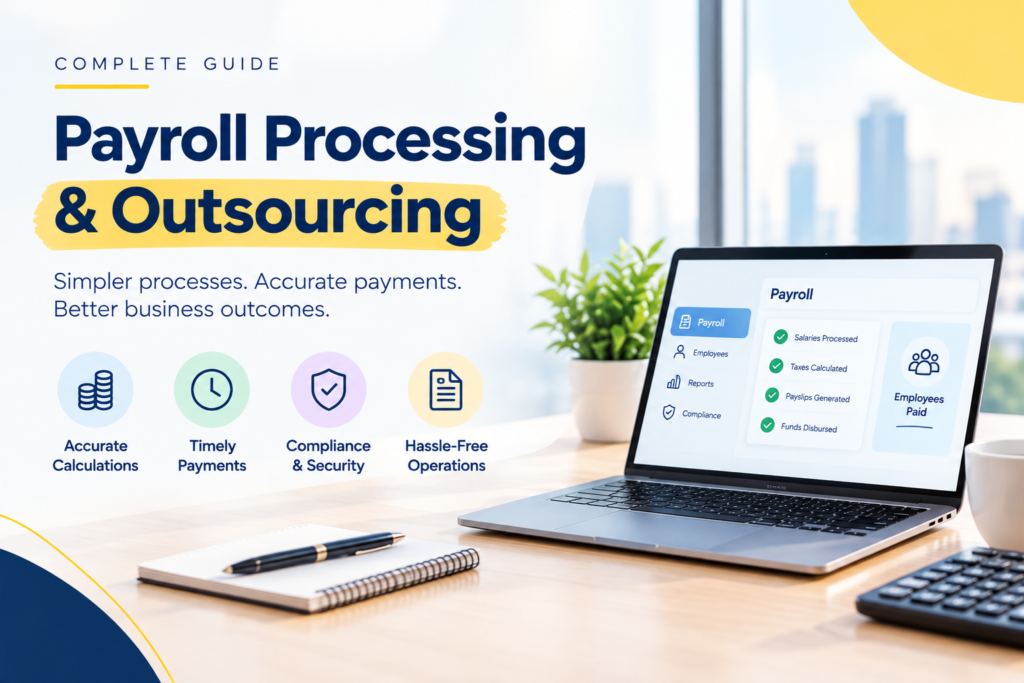
Because the engagement is flexible, businesses can increase or decrease support as their needs change. For companies scaling their workforce, integrating dedicated payroll processing & outsourcing ensures seamless wage delivery alongside broader financial plans.
-
Ongoing Financial Support
Unlike one-time consulting projects, fractional accounting services provide continuous support. The accountant regularly reviews financial data, reconciles accounts, prepares reports, monitors expenses, identifies unusual trends, and recommends improvements that strengthen financial performance.
Business owners receive ongoing guidance without the expense of maintaining an internal finance department.
-
Monthly Reporting and Strategic Reviews
Most providers prepare monthly financial reports covering:
- Profit and loss statements
- Balance sheets
- Cash flow reports
- Revenue analysis
- Expense trends
- Budget performance
- Financial forecasts
These reports help owners understand where the business stands financially and make decisions backed by reliable data rather than assumptions.
Services Included in Fractional Accounting
One of the biggest advantages of fractional accounting services is their flexibility. Businesses can choose only the services they need while avoiding unnecessary expenses.
1. Bookkeeping and Accounting Services
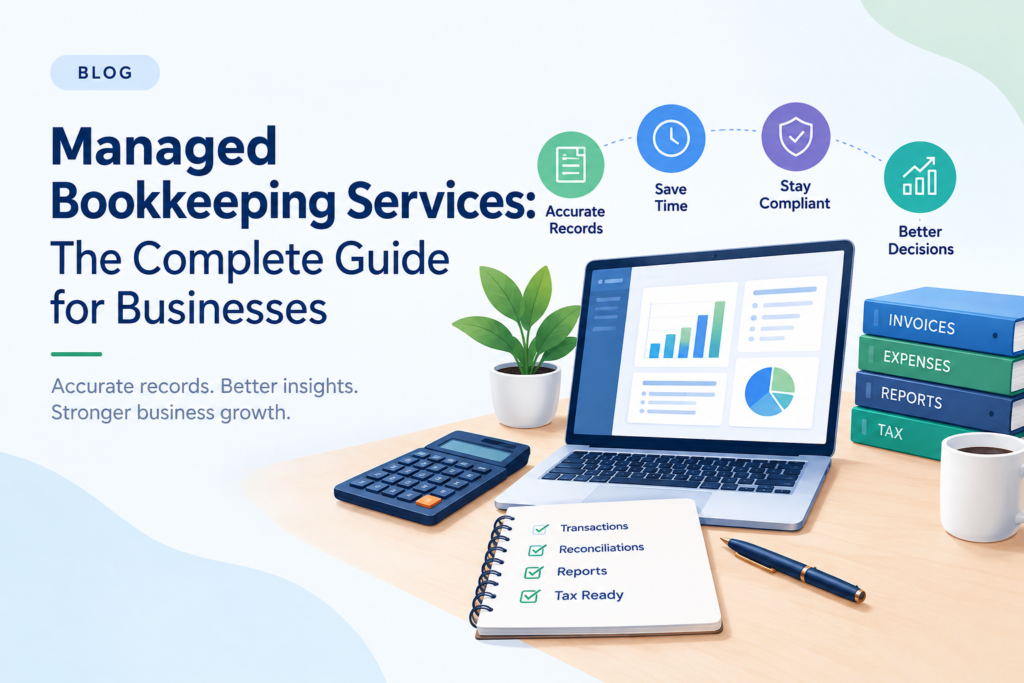
Accurate bookkeeping is the foundation of healthy business finances. A fractional accounting professional records financial transactions, reconciles bank accounts, categorizes expenses, maintains general ledgers, and ensures financial records remain organized throughout the year.
Reliable bookkeeping and accounting services reduce reporting errors and simplify tax preparation.
2. Financial Reporting
Business owners need clear financial reports to evaluate company performance.
A fractional accountant prepares reports such as:
- Income statements
- Balance sheets
- Cash flow statements
- Profitability reports
- Financial dashboards
These reports make it easier to identify trends, monitor performance, and make informed investment decisions.
3. Cash Flow Management
Many profitable businesses struggle because they run out of cash. Effective cash flow management ensures enough funds are available to pay employees, suppliers, taxes, and operating expenses while maintaining healthy reserves for future growth.
A fractional accountant monitors cash movement, predicts shortages, and recommends improvements before financial problems occur.
4. Budget Forecasting
Budget forecasting helps businesses prepare for future expenses, revenue changes, seasonal fluctuations, and expansion plans.
Instead of relying on assumptions, businesses receive financial projections based on historical performance and current market conditions. Accurate forecasting supports better planning and reduces financial uncertainty.
5. Payroll Management
Managing payroll involves much more than issuing salaries. Fractional accounting professionals often oversee:
- Employee payroll
- Payroll tax calculations
- Compliance requirements
- Benefit deductions
- Payroll reporting
This reduces administrative workload while minimizing costly payroll mistakes.
6. Accounts Payable and Accounts Receivable
Healthy cash flow depends on collecting payments quickly while managing outgoing expenses efficiently.
Fractional accounting teams help businesses:
- Track customer invoices
- Manage supplier payments
- Improve collections
- Reduce overdue balances
- Strengthen vendor relationships
7. Tax Planning
Tax planning is not only about filing returns. It involves developing strategies that legally reduce tax liabilities while ensuring compliance with current regulations.
Businesses receive guidance on deductions, estimated tax payments, recordkeeping, and year-end financial preparation.
8. Compliance Management
Regulatory compliance protects businesses from penalties, audits, and financial risks. Fractional accounting providers help companies stay compliant by maintaining accurate financial records, meeting reporting deadlines, and following accounting standards applicable to their industry.
8. Profitability Analysis
Revenue alone doesn’t determine business success. A fractional accountant evaluates profit margins, operating costs, customer profitability, and product performance to identify opportunities for higher returns. These insights help owners focus resources where they generate the greatest value.
9. Financial Strategy
Beyond managing numbers, experienced professionals contribute to long-term financial strategy.
This may include:
- Pricing analysis
- Expansion planning
- Investment evaluation
- Cost reduction initiatives
- Operational efficiency improvements
- Business growth planning
Instead of functioning only as an accountant, they become a trusted financial advisor supporting sustainable growth.
Types of Fractional Accounting Services
Not every business requires the same level of financial support. Fractional accounting can be tailored to different business sizes, industries, and growth stages. Depending on your needs, you can hire specialists for day-to-day accounting tasks or senior finance professionals who guide long-term business strategy.
1. Fractional Bookkeeper
A fractional bookkeeper manages routine financial activities such as recording transactions, reconciling bank accounts, maintaining ledgers, and organizing financial records. This option is ideal for businesses with straightforward accounting needs that want accurate books without hiring a full-time employee.
2. Fractional Accountant
A fractional accountant goes beyond bookkeeping by preparing financial statements, handling reconciliations, supporting tax preparation, monitoring compliance, and providing regular financial reporting. They help business owners understand their financial position and improve decision-making through accurate data.
3. Fractional Controller
Businesses with more complex financial operations may benefit from a fractional controller. This role focuses on strengthening internal controls, improving accounting processes, overseeing month-end close procedures, ensuring financial accuracy, and managing reporting standards. A controller also helps establish systems that support business growth and reduce financial risks.
4. Fractional CFO
A fractional CFO provides high-level financial leadership without the cost of a full-time executive. They work closely with business owners on strategic planning, fundraising, investor reporting, budgeting, forecasting, mergers, acquisitions, and long-term financial strategy. Companies experiencing rapid growth or expanding into new international territories often rely on this option.
When scaling across international borders, incorporating global payroll services ensures seamless international workforce compliance alongside high-level financial oversight.
5. Outsourced Finance Team
Some organizations require broader financial support than a single professional can provide. An outsourced finance team combines bookkeepers, accountants, controllers, and CFOs to deliver end-to-end financial management services. This model is especially valuable for growing businesses that need scalable expertise across multiple financial functions.
Top Benefits of Fractional Accounting Services
Businesses today need accurate financial information without the overhead of maintaining a full-time finance department. Fractional accounting services provide expert support that helps companies improve financial performance while keeping costs under control.
1. Cost Savings
Hiring a full-time accountant involves salaries, benefits, training, and other overhead expenses. With fractional accounting, businesses pay only for the services they need, making it a cost-effective solution.
2. Access to Experienced Professionals
A fractional accountant brings specialized knowledge and industry experience that many small businesses may not be able to afford through a full-time hire.
3. Better Cash Flow Management
Regular monitoring of income and expenses helps improve cash flow management, ensuring the business has enough funds for daily operations and future growth.
4. Improved Financial Reporting
Accurate and timely financial reporting gives business owners a clear understanding of profitability, expenses, and overall financial health.
5. Flexible and Scalable Support
As your business grows, you can increase or adjust the level of accounting support without going through another hiring process.
6. Strategic Financial Guidance
Beyond day-to-day accounting, many providers offer budgeting, forecasting, tax planning, and financial strategy to support long-term business growth.
Fractional Accounting Services vs Full-Time Accountant
Choosing between Fractional Accounting Services and hiring a full-time accountant depends on your business size, budget, and financial needs. While both help manage business finances, they differ significantly in terms of cost, flexibility, and the level of expertise available.
| Feature | Fractional Accounting Services | Full-Time Accountant |
| Cost | Pay only for the required hours or services | Fixed monthly salary, benefits, and other employment costs |
| Flexibility | Easily scale services up or down based on business needs | Limited flexibility with fixed working hours |
| Experience | Often includes senior accountants, controllers, or CFO-level professionals | Depends on the individual employee’s skills and experience |
| Hiring Process | Faster onboarding with immediate support | Recruitment, interviews, and training can take weeks or months |
| Business Growth Support | Provides strategic financial planning, forecasting, and business insights | Usually focused on daily accounting responsibilities unless hired at a senior level |
| Technology Expertise | Experienced with modern cloud accounting and automation tools | May require additional training on new software |
| Best For | Startups, SMEs, and growing businesses needing flexible financial support | Large organizations with continuous, high-volume accounting needs |
Signs Your Business Needs Fractional Accounting Services
Many business owners wait until financial problems become overwhelming before seeking professional help. Recognizing the warning signs early can prevent costly mistakes and improve long-term performance.
You may benefit from fractional accounting services if:
- Your financial reports are often delayed or inaccurate.
- Cash flow is becoming difficult to manage.
- Tax deadlines are frequently missed.
- You spend too much time handling accounting instead of growing the business.
- Business revenue is increasing, but profits are unclear.
- You’re planning to expand, seek investors, or apply for funding.
- Hiring a full-time finance professional isn’t financially practical.
- Your bookkeeping system has become difficult to manage.
- You need better budgeting, forecasting, and financial strategy.
- You’re using multiple accounting tools but still lack clear financial insights.
If several of these situations sound familiar, working with a fractional accountant can provide the expertise needed to regain financial control.
Common Challenges Solved by Fractional Accounting
Business finances often become more complicated as companies grow. Fractional accounting services help solve many of the challenges that limit efficiency and profitability.
1. Inaccurate Financial Reporting
Incomplete or inaccurate reports make it difficult to understand business performance. Fractional accountants establish consistent reporting processes that provide reliable financial information each month.
2. Cash Flow Problems
Late customer payments, rising expenses, and poor forecasting can quickly create cash shortages. Regular monitoring and forecasting help businesses maintain healthy cash reserves and avoid unnecessary financial stress.
3. Limited Financial Visibility
Without detailed financial reports, owners often make decisions based on assumptions instead of facts. A fractional accounting professional provides meaningful insights through dashboards, KPIs, and profitability analysis.
4. Compliance Risks
Changing tax laws and financial regulations can create compliance challenges. Professional oversight helps businesses meet reporting requirements, maintain accurate records, and reduce the risk of penalties.
5. Inefficient Financial Processes
Manual data entry, disconnected systems, and outdated workflows reduce productivity. Many virtual accounting services recommend automation and cloud-based accounting software that improve accuracy while saving time.
6. Difficulty Scaling Operations
Growth brings additional complexity. More employees, customers, transactions, and suppliers require stronger financial systems. An experienced outsourced finance team can build scalable financial processes that support continued business growth without sacrificing accuracy or efficiency. Additionally, as you scale your team alongside your financial infrastructure, prioritizing a positive candidate experience ensures you attract top talent across all departments while maintaining operational efficiency.
How to Choose the Right Fractional Accounting Service Provider?
Not every provider offers the same level of expertise. Taking time to evaluate your options will help you find a partner who understands your business and supports your long-term goals.
-
Industry Experience
Choose a provider with experience in your industry. Businesses in SaaS, healthcare, manufacturing, retail, or professional services often have unique accounting requirements.
-
Service Offerings
Look for providers that offer a complete range of services, including bookkeeping and accounting services, financial reporting, payroll management, budgeting, tax planning, and strategic financial guidance. A provider that can grow with your business offers greater long-term value.
-
Technology Expertise
Modern accounting depends on cloud-based software and automation. Ask which accounting platforms they use and whether they can integrate with your existing systems.
-
Communication and Reporting
Regular communication is essential. A reliable provider should deliver timely financial reports, explain complex financial information clearly, and remain available to answer questions throughout the month.
-
Data Security
Financial information is highly sensitive. Confirm that the provider follows strong security practices, uses secure cloud systems, and protects confidential business data.
-
Flexible Pricing
The best accounting services for small businesses offer flexible pricing based on business size and service requirements. Choose a provider whose pricing structure matches your current needs while allowing room for future growth.
Final Thoughts
While hiring a full-time finance team may not be practical for every organization, fractional accounting services offer an effective alternative that combines flexibility, affordability, and expert financial support.
From bookkeeping and accounting services to financial reporting, cash flow management, budget forecasting, tax planning, and strategic guidance, a fractional accounting provider helps businesses build stronger financial systems and make better decisions.
Whether you’re running a startup, managing an established small business, or preparing for expansion, working with a fractional accountant gives you access to the expertise needed to improve financial performance without the cost of a permanent hire.
Frequently Asked Questions
Who should hire a fractional accountant?
Startups, small businesses, growing companies, agencies, and organizations that need financial expertise without the cost of a full-time employee can benefit from hiring a fractional accountant.
What services are included in fractional accounting?
Services may include bookkeeping, financial reporting, payroll management, accounts payable and receivable, cash flow management, budgeting, forecasting, compliance, and tax planning.
Are fractional accounting services suitable for small businesses?
Yes. They are especially valuable for accounting services for small businesses because they provide expert financial support without the expense of hiring full-time staff.
Can fractional accounting help startups?
Absolutely. Startup accounting services help founders manage finances, prepare investor reports, improve budgeting, and establish scalable financial processes from the beginning.
Are virtual accounting services secure?
Reputable providers use encrypted cloud-based systems, secure data storage, and strict confidentiality practices to protect sensitive financial information.