Working remotely has begun as an expectation rather than an experiment. Companies in the US are establishing distributed teams between states, time zones and more recently, offshore markets using models like an Employer of Record (EOR). The model provides cost effectiveness and availability of specialised skills. However, it also presents a leadership problem that most organisations do not take seriously, which is connection.
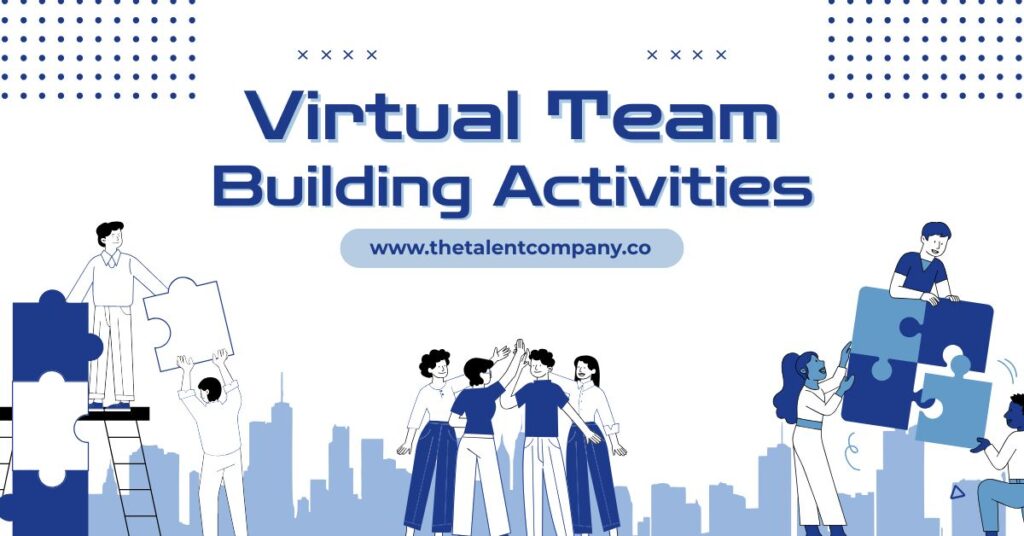
When teams do not share physical space, culture does not develop by accident. It must be designed. Strategic implementation of virtual team-building activities improves collaboration, decreases isolation, and enhances the performance of remote and offshore teams. It is not about entertainment. It is about building operational cohesion in a distributed workforce.
This guide provides a detailed framework for selecting, structuring and implementing virtual team building activities that deliver measurable value.
What Are Virtual Team Building Activities?
Virtual team building games are planned as virtual experiences that are organized online to enhance the relationship, communication and support the company culture of the remote, hybrid or offshore teams. They can include:
- Interactive games and competitions
- Social connection sessions
- Creative workshops
- Problem-solving simulations
- Wellness initiatives
- Culture and professional development sessions
The key difference between casual online interaction and effective team building is intent. These activities are designed with a clear objective: improving team dynamics and alignment.
Why Virtual Team Building Matters for Remote Teams?
In a traditional office, the relationship is created automatically in the form of casual communication, lunch, and informal cooperation. Remote teams lack such opportunities. Communication becomes transactional without any deliberate effort and the members of the team may feel isolated.
The following are the reasons why virtual team building is important:
1. Reduces Isolation and Elevates Morale
Remote workers are also likely to experience a lack of informal social interactions, which may result in being lonely and unengaged. The organized online activities also form points of connection that maintain morale and keep the employees emotionally involved.
2. Builds Trust and Team Cohesion
Trust is not easily built in distributed teams when there is no frequent human interaction. Shared virtual experience enhances relationships and forms a better basis for working together.
3. Improves Communication Quality
Informal interaction minimizes misinterpretations that are likely to take place in online communication. Socially connected teams communicate better and solve their problems more quickly.
4. Drives Higher Productivity
Related workers are more driven and in line with the goals of the team. Well connected relationships minimize friction and enhance the overall speed of execution.
5. Reinforces Company Culture Across Locations
Online communication sustains the drive between employees in the various regions towards the company’s values and mission. This stability enhances membership and dedication.
6. Supports Successful Onboarding
New remote hires can feel disconnected without structured social interaction. Virtual team building assists them blend quickly and feel that they are part of the team within the initial day.
10 Best Virtual Team Building Activities That Actually Work
Below are some of the tested team building activities of a virtual team that are proven to provide real value. Each activity will consist of its purpose, the manner of running that activity and when to apply it.
1. Virtual Escape Room
The virtual escape room is a game in which teams are required to solve puzzles within a time constraint. The participants should be able to communicate effectively, assign roles, and think on their feet. This exercise enhances problem-solving ability and it demonstrates inherent leadership dynamics. Particularly, it is useful in cross-functional teams that require a more powerful collaboration.
2. Online Team Trivia
The trivia in online sessions can be tailored to company history, industry knowledge, general knowledge or pop culture. Learning happens in small teams where teams discuss and think strategically. Trivia creates momentum and interaction and enhances the communication aspect. It is effective with big remote teams since it is easy to participate and it is inclusive.
3. Virtual Coffee Roulette
This format randomly pairs employees for short, informal video conversations. There is no agenda, only an opportunity to connect beyond daily work discussions.
Coffee roulette builds rapport across departments and locations. It reduces silos and strengthens personal connections that improve long-term collaboration.
4. Remote Scavenger Hunt
In virtual scavenger hunt, members would search around their homes to locate the items as per the prompts and within a time constraint. The exercise is dynamic and very interactive.
It encourages spontaneity and energizes teams. This format works particularly well during all-hands meetings or company-wide virtual events.
5. Online Workshops and Skill Sessions
Creative workshops like painting classes, cooking lessons or photography lessons allow an employee to learn with the other employees in a fun atmosphere.
Mutual learning experiences promote connection and alleviate stress. They also encourage innovative thinking, which is advantageous to innovation oriented teams.
6. Virtual Hackathon
A hackathon is a focused, time constrained, innovation event in which teams compete to create solutions or new ideas. It may last a couple of hours or a few days.
It is an activity that directly adds value to business, in addition to reinforcing teamwork. It suits best technology, product, and strategy based organizations.
7. Two Truths and a Lie
Each participant shares three statements about themselves, and others guess which one is false. The game encourages storytelling and light interaction.
It is simple but powerful for breaking the ice, especially during onboarding sessions or new project kick-offs.
8. Virtual Wellness Sessions
Mental and physical wellbeing are targeted by guided meditation, yoga, or stress management workshops. These sessions will show that the organization values employee health.
Wellness programs minimize the risk of burnout and contribute to long-term productivity in remote work.
9. Culture Exchange Sessions
The team members who are based in various regions share the elements of their culture, traditions or work practices. This is valuable, particularly in globally based teams.
It enables a more powerful sense of inclusion, less cultural confusion and mutual understanding between places.
10. Virtual Recognition Ceremonies
Structured recognition events celebrate achievements, milestones, and contributions. Employees can nominate peers and share appreciation publicly.
Recognition increases engagement and reinforces positive behavior. In remote teams, consistent acknowledgment plays a critical role in retention.
Best Practices for Implementing Virtual Team Building
Virtual team building delivers real impact only when it is planned with intention and aligned with business goals. Random activities without structure may create short-term engagement, but they rarely strengthen long-term collaboration. The following best practices ensure your efforts produce measurable results.
1. Define a Clear Objective
Every activity should serve a specific purpose. Whether the goal is improving communication, integrating offshore hires, reducing burnout, or strengthening cross-department collaboration, clarity is essential.
When leadership defines the outcome in advance, it becomes easier to select the right format and measure success afterward.
2. Align Activities with Team Needs
Different teams require different approaches. A newly formed team may need trust-building exercises, while a high-performing but stressed team may benefit from wellness sessions.
Assess team challenges through feedback surveys or manager insights before choosing the activity. Relevance increases participation and engagement.
3. Respect Time Zones and Schedules
For distributed teams working across regions, scheduling can become a major obstacle. Always rotate session timings so that no group consistently carries the inconvenience.
This demonstrates fairness and inclusion, especially when managing offshore or global employees.
4. Keep Sessions Focused and Structured
Virtual attention spans are shorter than in-person settings. Activities should ideally last between 30 and 60 minutes unless they are large-scale workshops or hackathons.
Clear instructions, defined timelines, and a facilitator ensure that sessions stay productive and engaging.
5. Encourage Active Participation
Passive attendance does not build connection. Choose formats that require collaboration, discussion, or problem-solving rather than simple observation.
Breakout rooms, team-based challenges, and interactive tools increase involvement and make sessions more impactful.
6. Maintain Consistency, Not Overload
Team building should be regular but not excessive. Monthly or quarterly activities work well for most organisations.
Consistency strengthens culture over time, while over-scheduling can lead to fatigue and reduced enthusiasm.
7. Measure Feedback and Impact
Collect feedback after sessions to understand what worked and what did not. Short surveys or informal check-ins provide valuable insight.
Track improvements in engagement, communication quality, and retention trends to evaluate long-term effectiveness.
8. Integrate Leadership Participation
When managers and senior leaders participate actively, it reinforces the importance of the initiative.
Leadership involvement also breaks hierarchy barriers and strengthens trust across levels within the organization.
9. Connect Activities to Company Values
Team building should reinforce the organization’s mission and cultural principles.
When activities reflect company values, they strengthen alignment and create a shared sense of purpose across remote teams.
Why Choose The Talent Company?
Global expansion requires more than recruitment support. Businesses expanding internationally must also understand workforce structures like AOR vs EOR models for global hiring.It demands structure, compliance, and a workforce model built for long-term scale, while also understanding potential Employer of Record risks when hiring internationally. The Talent Company helps businesses build offshore teams that operate as Extended Teams. Built to Work Inside Your Business.
We do not create disconnected remote units. We design integrated workforce models that align with your systems, leadership, and growth strategy.
- A Workforce Model Built for Scale: We create highly scalable offshore teams that scale with yours. This will guarantee stability and control of the operations, despite expanding into different regions.
- Complete Compliance Without Administrative Burden: Our staff takes care of local payroll, taxations, and labor law compliance in all the target countries. This helps your organization to avoid compliance risk and eliminates administrative pressure.
- Stable, Long-Term Offshore Teams: We do not do short-term contracts, but rather permanently and fully engaged offshore teams. This enhances retention, performance and cut long term hiring costs.
- Structured Onboarding and Workforce Continuity: We use standard onboarding models that speed up productivity. Continuity planning makes sure that you do not lose your operations when you have a sudden growth.
- Strategic Alignment With Your Growth Plans: Every workforce structure is customized around your operational goals. We design hiring models that directly support your expansion and performance targets.
- End-to-End Workforce Management: From onboarding through ongoing administration, we manage the complete employee lifecycle under one governance framework. This creates consistency and reduces risk.
- Predictable, Cost-Efficient Global Operations: We standardize processes and compliance controls to deliver cost clarity and operational predictability. You scale offshore teams with confidence and financial stability.
Final Thoughts
There is no longer a geographical constraint on global growth. The actual struggle is to create teams that are compliant, cost efficient and work with you fully integrated. Offshore expansion may soon become complicated and dangerous without the proper structure.
The Talent Company eliminates such uncertainty. We ensure you create permanent, high performing offshore teams that become real extensions of your organization and not appendages. When the right workforce model is in place, you are able to achieve speed, control and scalability in the long-term.
When you want to achieve a sustainable global growth that has no exposure to compliance or operational hassles, it is time to create your extended team in the right way. Partner with The Talent Company and scale with confidence.