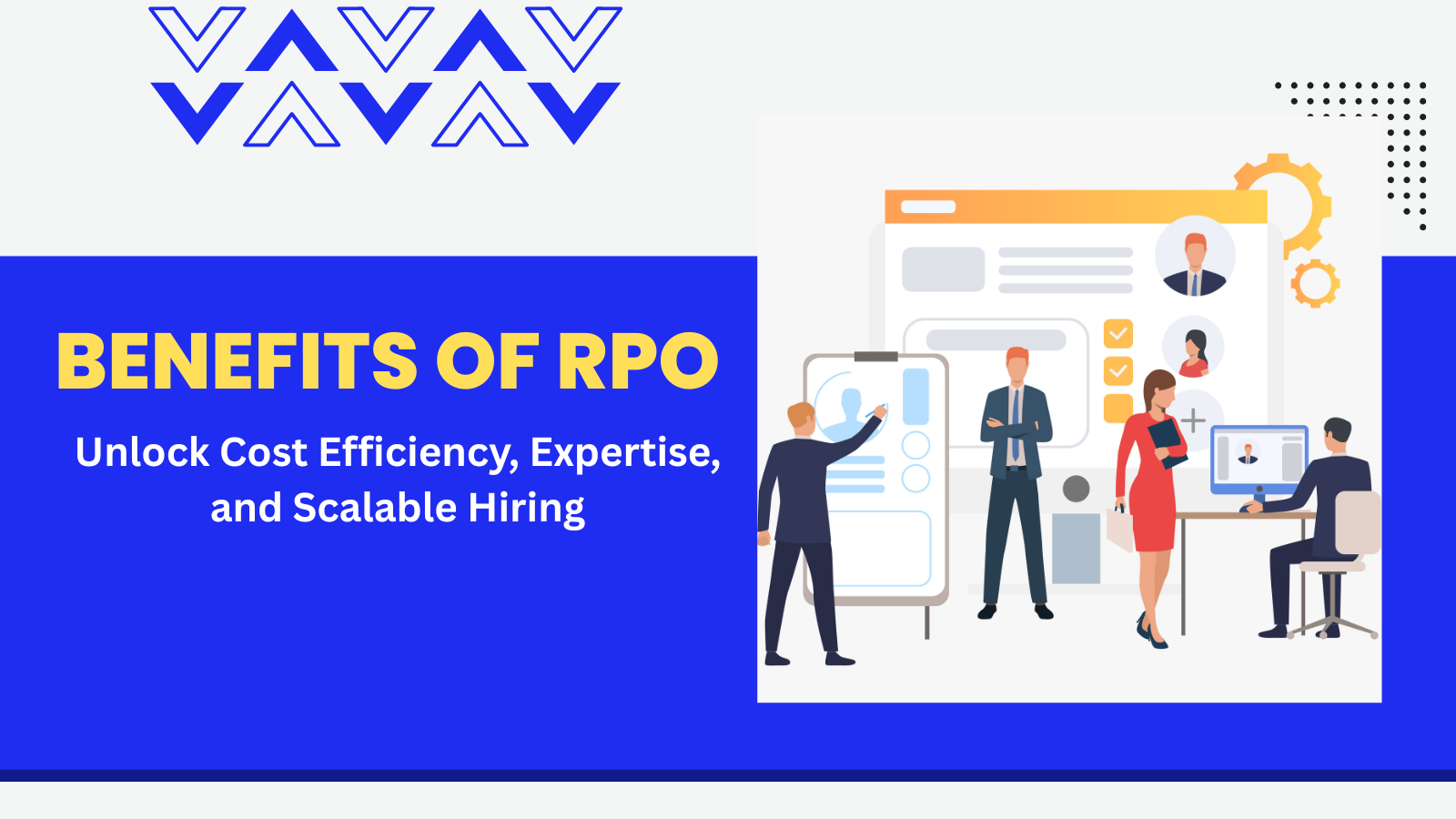
As hiring pressures are piling up for U.S. organizations, a lot of them are on the lookout for more sustainable ways to expand their workforce without compromising on quality or brand. Outsourcing talent acquisition has sprung up as a strategic alternative through recruitment process outsourcing (RPO), which can help turn a hiring burden into a growth strategy. Instead of completely depending on the internal hiring teams to take care of every vacant position, firms are increasingly using outsourced recruitment to attain expert knowledge and manpower. You will learn not only the benefits of RPO but also its assistance to business goals and the reason why talent outsourcing can be a source of real value to companies operating in the current cut-throat labour market. Outsourced Recruitment Solutions by The Talent Company At The Talent Company, we deliver bespoke outsourced recruiting solutions designed around your specific hiring profile, business strategy, and growth ambitions. Whether you are a mid-sized US enterprise scaling rapidly or a large organisation looking for enterprise-level RPO support, our model adapts. You benefit from: Strategic workforce-planning consultation and forecasting Access to broad talent networks and a high-quality candidate pipeline Technology-enabled workflows (including analytics, sourcing automation, candidate-experience platforms) Flexibility in delivery, whether full lifecycle RPO, project-based outsourcing, or hybrid models integrated with your internal HR team Partnership that respects your employer brand and aligns with your business goals If you are seeking a partner who offers more than “body-shop” recruiting and instead delivers the advantages of RPO in practice, The Talent Company is positioned to deliver. Key Benefits of RPO (Recruitment Process Outsourcing) RPO’s advantages are not just limited to hiring but also to transforming the company’s staffing into an indispensable contributor to growth. Here are the benefits of outsourcing recruitment a. Cost Efficiency and Faster Hiring RPO is one of the major factors that bring down hiring costs and time. The internal management of recruitment can be tough and tedious. On the other hand, companies that collaborate with an outsourced recruitment provider are the ones who enjoy the benefit of saving on advertising, job boards, and technology. RPO teams apply cutting-edge tools, automation, and skilled labor pools that they have built over time to achieve a 50% reduction in time-to-hire, which is a remarkable improvement in both speed and quality of hiring. b. Access to Specialized Expertise and Talent Networks Outsourcing talent acquisition provides businesses with access to recruiters who are not only very knowledgeable about the industry but also have very large professional networks. RPO partners are the ones who are specializing in sourcing the rare and high-demand skills and also keep the talent pipelines ready for the critical roles. Their knowledge assures quality hires, even in highly competitive markets. c. Enhanced Candidate Experience and Employer Branding For drawing the best talent, the way hiring is done has to be smooth and the process has to be transparent. The RPO partners will communicate very clearly, respond very quickly, and follow up, thereby increasing candidate experience and employer branding. Happy candidates would be the ones to apply again or recommend the company, thus strengthening the long-term talent attraction. d. Scalability and Flexibility The changing demands for hiring can put a lot of pressure on the internal HR team. But with the outsource recruitment solution, a company will be able to respond to the hiring needs immediately without increasing its overhead costs. This flexibility is a great asset almost always; especially during times like company expansions, mergers, or higher seasonal hiring activities. Thus, it is a way for the business to be agile and cost-efficient. e. Data-Driven Recruitment Decisions Present-day RPO vendors take advantage of analytics to monitor indicators among others like cost-per-hire, source efficiency, and conversion rates. Such understanding makes it possible for companies to take data-based decisions, to increase the recruitment budget’s ROI, and to foresee the future talent requirements. The data-driven employment makes certain about the hiring being consistent, transparent and more efficient on the front of the manpower planning. f. Compliance and Risk Management The recruitment process in the United States is governed by a myriad of strict labor laws, data privacy regulations, and equal opportunity laws. By outsourcing recruitment and selection process to a competent RPO partner, the companies not only ensure compliance but also minimize the risk of legal actions. This is particularly important in fields where the regulatory norms are very stringent, such as healthcare and finance. g. Higher Quality of Hire One of the most important benefits of outsourcing recruitment is the quality of candidates. The RPO specialists utilize behavioral assessments, structured interviews, and predictive analytics to make sure that the candidate’s values align with the company and the success is long-term. As a result, the company’s retention rates go up while the turnover costs go down. h. Diversity and Inclusion The services provided by the RPO companies guarantee that the diversity and inclusion targets set by organizations are being met. Through using the blind screening method, they strengthen equal opportunity hiring and thus, the diversity of the teams that not only enhances the organization’s innovation and culture but also its strength. i. Long-Term Strategic Partnership RPO is, unlike staffing agencies, a long-term partnership. This partnership makes sure that recruitment is not merely a matter of filling vacant positions; it is about fueling the continuous growth of the business. The Future of Outsourcing Talent The RPO industry is evolving with AI, automation, and data-driven recruitment leading the charge. The integration of predictive analytics, chatbots, and smart screening tools is reshaping how companies attract and evaluate talent. According to Grand View Research, the global RPO market is expected to reach USD 27 billion by 2030, with North America holding a significant share. The future of RPO lies in delivering hyper-personalized, tech-enabled, and agile recruitment experiences that align talent strategy with business goals. In this future, The Talent Company continues to lead by offering innovative, human-centered outsourcing solutions that bridge skill gaps and strengthen organizational capability. Conclusion The benefits of RPO extend far
Talent Acquisition vs Recruitment: Building tomorrow’s workforce today
It is essential to modify the ways in which talent is recognized and retained in the modern workforce for reputable institutions, given the ever-changing nature of the job market. Simply filling in the blank spaces in the office isn’t enough anymore; for long-term growth and achievement, talent must be found, nurtured, and sustained. As a result, it is quite necessary to understand the meaning of talent acquisition and how strategic recruitment can help an organization reach its goals. Here, a talent acquisition company can help a lot, while the need to outsource the hiring process is also increasing among companies. The aim is simple: how to optimise the normal hiring process to bring the best out of long-term strategic benefits as well. As per the data of the Bureau of Labor Statistics (BLS), in August 2025 alone, there was a listing of 7.2 million job openings. All of these listings show that providing only vacancies and filling them is not enough anymore. Companies must look into acquisitions that are for the future. Recruitment and talent acquisition – What are the main differences? Even though most people use them as alternatives in layman’s terms, what is the difference between recruitment and talent acquisition? Some of the major differences are listed below: Dimension Recruitment Talent Acquisition Time horizon This is for filling immediate openings in a short term basis This is for building talent pipelines keeping long term goals in mind and by evaluating future needs Focus This is mainly done on a transactional basis, where the candidates are taken from the source, screened, and hired These are more strategic, where employer brands are seen, talent communities are observed, and skill planning is tested Metrics It usually requires more time to fill, and the cost depends on every hire This is more focused on the hire quality, more like retention, and it aligns more with the strategy of the business Trigger This mainly starts when a job opening occurs Here, the entire process is continuous, and the engagement of talent goes on Outcome It usually comes with a filled requisition The talent flow is sustainable, and all kind of future and current roles are considered If we talk in basics, recruitment mainly focuses on immediate hiring, while talent acquisition is focused on the talent the company needs, how the talent can be hired, and how the talent can be retained. Since the market is tight at present, this type of strategic recruitment is extremely critical. A lot of companies are outsourcing talent acquisition and recruitment today. Partner with The Talent Company Looking to boost your business with data-driven and optimised talent acquisition strategies? At The Talent Company, we do exactly that. From developing the brand of the employer to planning the workforce and hiring according to your company goals, we have got you covered. Looking to build such a workforce that ensures success? Connect with The Talent Company today for outsourced recruitment solutions. What is a Talent Acquisition Specialist’s Role The main role of a talent acquisition specialist is to approach the talent in the best way possible, on behalf of the company. The key responsibilities include: Identifying the critical roles that will be important in the next one to two years. Elevating the brand of the employer to such a level that talented employees will automatically be attracted to the company. Identifying potential talented candidates and preparing them to build a talent pipeline. Keeping a record of important metrics such as how much retention is being done of new hires, productivity, and hiring to business alignment goals. Making sure that the strategic talent planning aligns with the tactical hiring process. The role of a talent acquisition specialist is key to ensuring a company stays ahead with respect to its competition. Outsourcing the hiring process and why it is necessary With more and more requirements and the tedious process, companies often opt for hiring process outsourcing to experienced vendors. In the right hands, proper expertise is attained and efficiency is enhanced. Why are organizations outsourcing? When rapid scaling is required among a massive hire, the company cannot manage internally. Expert firms provide a deep analysis with market analysis, data analytics, and deep sourcing networks. Speed improvements are observed, and cost effectiveness is acquired by outsourcing talent. When is it beneficial? When urgent hiring and high-volume hiring are required For requiring talent pools and acquiring job-specific skills or niche skills When companies have the potential to build a capable infrastructure, but are not yet ready What to look out for? The employer brand and the company culture should be properly understood by the vendor. The metrics for hiring should match the long-term policy of the company. It is always necessary to maintain a necessary internal insight. Why is Talent Acquisition important now? The labour market is extremely competitive right now. As a result, normal recruitment may not help the company to achieve its long-term goals. In 2025, around 76% of employers are struggling with filling vacant roles. Massive job openings are still there. Around 7.2 million openings were listed in August 2025. There is a huge gap between the role requirements and skill level. As a result, more and more companies are focusing on long-term talent acquisition rather than just hiring when absolutely needed. How can a talent acquisition-oriented approach be implemented? The first steps towards achieving a proper talent acquisition are as follows: Identify the required talent – Companies should recognize which exact skillset they are looking for. Developing a brand – With the company being promoted as a reputed brand, talented workers will themselves opt to work there. Engaging Talent Pipelines – Creating networks, communities, and nurturing potential candidates is also very important. Taking Strategic Measures – Records should be kept of new hire performances, efficiency, and net output. Ensuring Outsourcing is Aligned with values – When the hiring process is outsourced, it is to be ensured that the core values and insights of the company are maintained. Being Ready