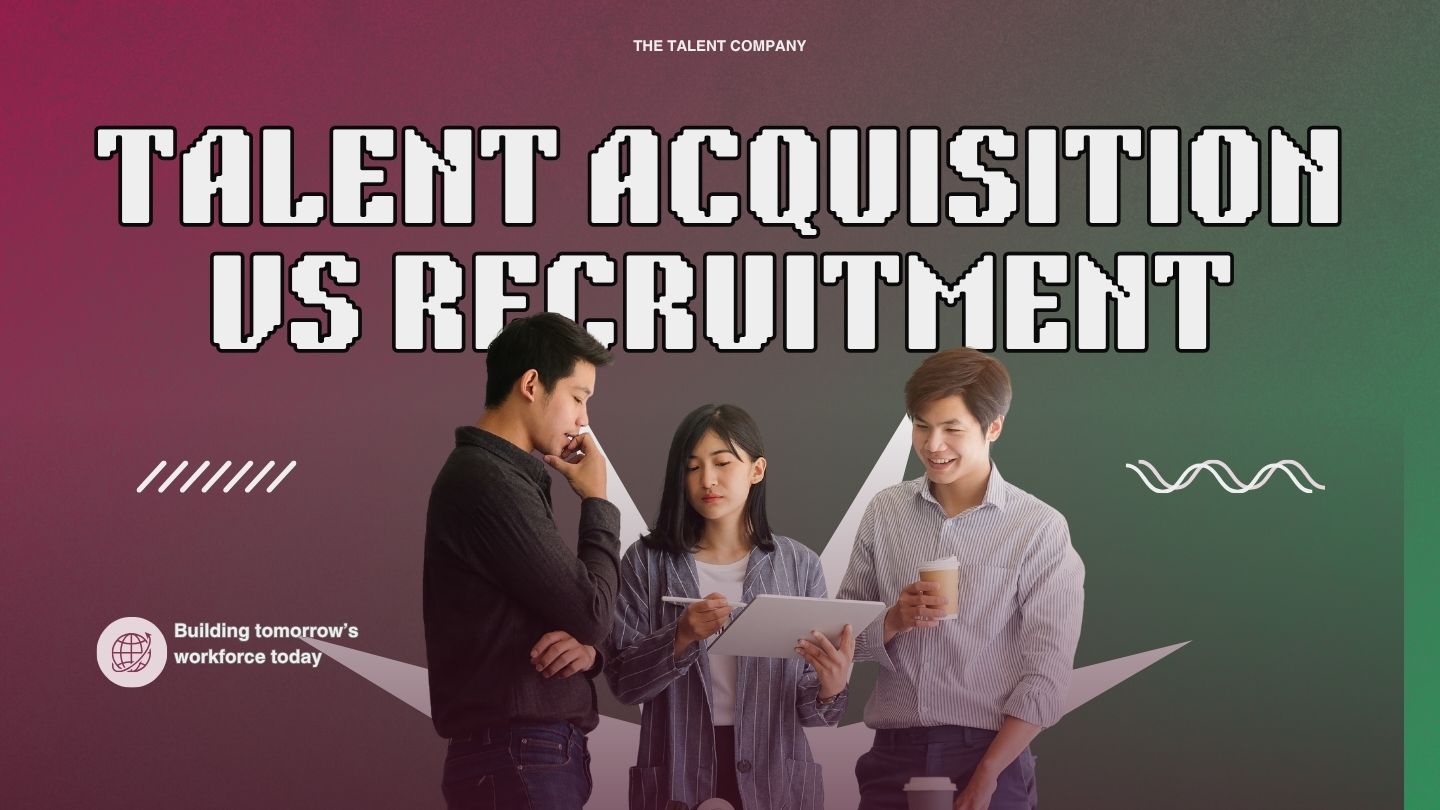
It is essential to modify the ways in which talent is recognized and retained in the modern workforce for reputable institutions, given the ever-changing nature of the job market. Simply filling in the blank spaces in the office isn’t enough anymore; for long-term growth and achievement, talent must be found, nurtured, and sustained. As a result, it is quite necessary to understand the meaning of talent acquisition and how strategic recruitment can help an organization reach its goals.
Here, a talent acquisition company can help a lot, while the need to outsource the hiring process is also increasing among companies. The aim is simple: how to optimise the normal hiring process to bring the best out of long-term strategic benefits as well.
As per the data of the Bureau of Labor Statistics (BLS), in August 2025 alone, there was a listing of 7.2 million job openings. All of these listings show that providing only vacancies and filling them is not enough anymore. Companies must look into acquisitions that are for the future.
Recruitment and talent acquisition – What are the main differences?
Even though most people use them as alternatives in layman’s terms, what is the difference between recruitment and talent acquisition? Some of the major differences are listed below:
| Dimension | Recruitment | Talent Acquisition |
| Time horizon | This is for filling immediate openings in a short term basis | This is for building talent pipelines keeping long term goals in mind and by evaluating future needs |
| Focus | This is mainly done on a transactional basis, where the candidates are taken from the source, screened, and hired | These are more strategic, where employer brands are seen, talent communities are observed, and skill planning is tested |
| Metrics | It usually requires more time to fill, and the cost depends on every hire | This is more focused on the hire quality, more like retention, and it aligns more with the strategy of the business |
| Trigger | This mainly starts when a job opening occurs | Here, the entire process is continuous, and the engagement of talent goes on |
| Outcome | It usually comes with a filled requisition | The talent flow is sustainable, and all kind of future and current roles are considered |
If we talk in basics, recruitment mainly focuses on immediate hiring, while talent acquisition is focused on the talent the company needs, how the talent can be hired, and how the talent can be retained. Since the market is tight at present, this type of strategic recruitment is extremely critical. A lot of companies are outsourcing talent acquisition and recruitment today.
Partner with The Talent Company
Looking to boost your business with data-driven and optimised talent acquisition strategies? At The Talent Company, we do exactly that. From developing the brand of the employer to planning the workforce and hiring according to your company goals, we have got you covered. Looking to build such a workforce that ensures success? Connect with The Talent Company today for outsourced recruitment solutions.
What is a Talent Acquisition Specialist’s Role
The main role of a talent acquisition specialist is to approach the talent in the best way possible, on behalf of the company. The key responsibilities include:
- Identifying the critical roles that will be important in the next one to two years.
- Elevating the brand of the employer to such a level that talented employees will automatically be attracted to the company.
- Identifying potential talented candidates and preparing them to build a talent pipeline.
- Keeping a record of important metrics such as how much retention is being done of new hires, productivity, and hiring to business alignment goals.
- Making sure that the strategic talent planning aligns with the tactical hiring process.
The role of a talent acquisition specialist is key to ensuring a company stays ahead with respect to its competition.
Outsourcing the hiring process and why it is necessary
With more and more requirements and the tedious process, companies often opt for hiring process outsourcing to experienced vendors. In the right hands, proper expertise is attained and efficiency is enhanced.
Why are organizations outsourcing?
- When rapid scaling is required among a massive hire, the company cannot manage internally.
- Expert firms provide a deep analysis with market analysis, data analytics, and deep sourcing networks.
- Speed improvements are observed, and cost effectiveness is acquired by outsourcing talent.
When is it beneficial?
- When urgent hiring and high-volume hiring are required
- For requiring talent pools and acquiring job-specific skills or niche skills
- When companies have the potential to build a capable infrastructure, but are not yet ready
What to look out for?
- The employer brand and the company culture should be properly understood by the vendor.
- The metrics for hiring should match the long-term policy of the company.
- It is always necessary to maintain a necessary internal insight.
Why is Talent Acquisition important now?
The labour market is extremely competitive right now. As a result, normal recruitment may not help the company to achieve its long-term goals.
- In 2025, around 76% of employers are struggling with filling vacant roles.
- Massive job openings are still there. Around 7.2 million openings were listed in August 2025.
- There is a huge gap between the role requirements and skill level.
As a result, more and more companies are focusing on long-term talent acquisition rather than just hiring when absolutely needed.
How can a talent acquisition-oriented approach be implemented?
The first steps towards achieving a proper talent acquisition are as follows:
- Identify the required talent – Companies should recognize which exact skillset they are looking for.
- Developing a brand – With the company being promoted as a reputed brand, talented workers will themselves opt to work there.
- Engaging Talent Pipelines – Creating networks, communities, and nurturing potential candidates is also very important.
- Taking Strategic Measures – Records should be kept of new hire performances, efficiency, and net output.
- Ensuring Outsourcing is Aligned with values – When the hiring process is outsourced, it is to be ensured that the core values and insights of the company are maintained.
- Being Ready to Evolve – The entire process of talent acquisition should also be able to evolve according to the market needs and requirements of the company.
Frequently Asked Questions (FAQs)
Q.1) Is investment in talent acquisition worth it?
To ensure that a company stays ahead of its competition, it is imperative that companies go for long-term talent pools rather than short-term term immediate hirings.
Q.2) Should only big companies invest in talent acquisition?
Companies of any scale should adopt outsourcing talent acquisition. It can prove to be extremely helpful for growing small to medium businesses.
Q.3) When is outsourcing the hiring process necessary?
When companies are unable to cope with massive volumes of hiring due to their limited infrastructure, they can usually opt for an outsourcing hiring process.
Q.4) What are the talent acquisition metrics that should be tracked?
Mainly, the following metrics should be closely evaluated: what is the performance level of the new hires, how long the new hires are staying, what are the engaged prospects, how well are they aligning with the long-term company goals, and so on.
Final thoughts
Hiring should not only be done for the sake of filling out vacancies. With strategic talent acquisition, a company can grow leaps and bounds, all while developing a network of talented individuals who will elevate themselves along with the future of the company. Thus, long-term business goals can be sustained and prospered