Hiring has changed. It’s no longer just about companies choosing candidates. Candidates are choosing you just as much. And most of that decision comes down to one thing, their experience during your hiring process.
If someone applies, waits for weeks, gets no updates, and faces a confusing interview process, they’re already forming a negative opinion. On the other hand, a smooth, respectful, and well-communicated process can leave a strong impression, even if the candidate doesn’t get the job.
In 2026, many forward-thinking companies are shifting toward skills-based hiring to make the process more objective and candidate-friendly, focusing on what an applicant can actually do rather than just their resume.
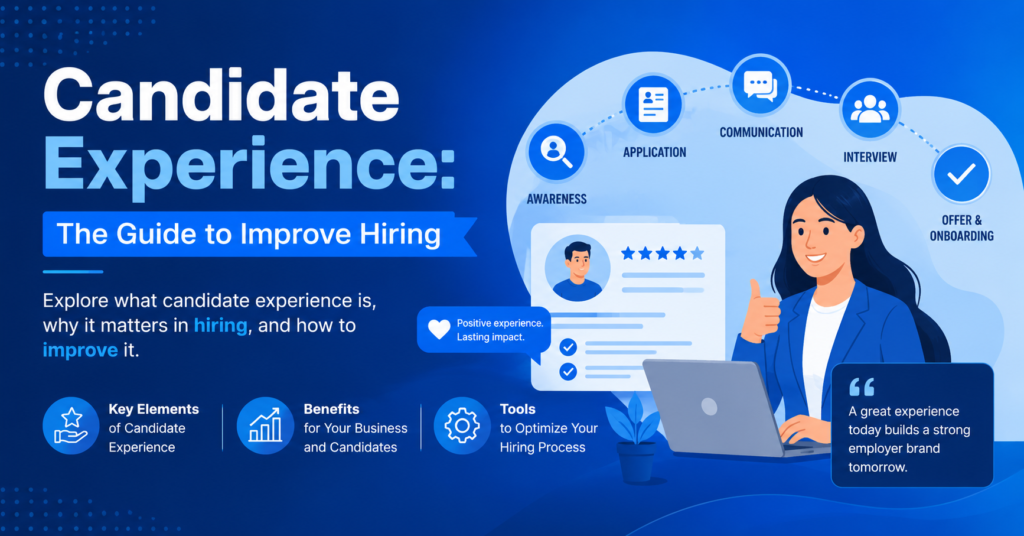
In this guide, we’ll break down what candidate experience really means, why it matters more than ever in 2026, and how you can actually improve it in a practical way.
What is Candidate Experience?
Candidate experience is simply how a job applicant feels about your company based on their interaction with your hiring process.
It starts the moment they come across your job opening and continues through application, interviews, communication, and final decision. Even after rejection, that experience stays with them. Candidate experience is the impression you leave on people who apply to work with you.
Why Candidate Experience Matters?
Candidate experience is important because it shapes how candidates perceive your company and directly impacts your ability to attract and hire top talent. A smooth, transparent, and respectful hiring process builds trust and strengthens your employer brand, making candidates more likely to accept job offers.
This becomes even more critical when companies are competing for talent across borders through global talent acquisition, where candidates have multiple international opportunities to choose from.
On the other hand, a poor experience can lead to negative feedback, which damages your reputation and discouraging future applicants. Even candidates who are not selected can become strong advocates if treated well, helping you build a positive image in the market and create a reliable talent pipeline for future hiring needs.
How to Improve Candidate Experience?
Improving candidate experience requires a structured and thoughtful approach across every stage of the hiring journey.
Below are the key ways to improve candidate experience:
1. Strong Employer Branding
A positive candidate experience directly impacts your employer brand. Candidates often share their experiences online or within their networks. A good experience enhances your reputation, while a bad one can damage it quickly.
2. Higher Offer Acceptance Rates
Candidates are more likely to accept job offers when they feel valued and respected during the hiring process. A poor experience can cause even selected candidates to decline offers.
3. Reduced Hiring Costs
Improving candidate experience can reduce time-to-hire and cost-per-hire. When your process is smooth, you attract better candidates faster and reduce drop-offs.
4. Competitive Advantage
In a talent-driven market, companies that provide a better hiring experience stand out. Candidates often choose organizations that offer clarity, speed, and professionalism.
5. Better Candidate Engagement
Engaged candidates are more responsive, prepared, and interested. A positive experience keeps candidates invested throughout the hiring journey.
How to Measure Candidate Experience?
Measuring candidate experience is not just about collecting feedback, it is about understanding how candidates feel at every stage of your hiring process.
Below are the most effective methods and metrics to measure candidate experience:
1. Candidate Experience Surveys
One of the most reliable ways to measure candidate experience is by asking candidates directly. Surveys can be sent after key stages such as application submission, interviews, or once the hiring process is complete.
Here are the key metrics to track:
- Net Promoter Score (NPS): Measures how likely candidates are to recommend your company to others.
- Satisfaction Scores: Helps you understand candidate opinions on communication, interview quality, and overall experience.
2. Interview Feedback
Collecting structured feedback from interviewers gives insights into how consistent and fair your evaluation process is. It also highlights whether candidates are being assessed properly.
Key metrics include:
- Performance Ratings: Evaluate candidates based on predefined criteria and required skills.
- Feedback Consistency: Check if multiple interviewers are aligned in their evaluation, which reflects a fair hiring process.
3. Time to Hire and Decision Speed
The speed of your hiring process plays a major role in candidate experience. Delays can frustrate candidates and lead to drop-offs.
Important metrics to measure:
- Time to Hire: Total time taken from application to final selection.
- Time to Decision: Time taken to make a decision after the final interview round.
4. Offer Acceptance Rate
This metric shows how many candidates actually accept your job offers. A low acceptance rate often signals issues in your hiring experience or employer value proposition.
Key metric to focus on:
- Offer Acceptance Percentage: Indicates how attractive your offers and hiring experience are to candidates.
5. Onboarding Feedback
Candidate experience does not end with hiring. The onboarding phase is equally important. This becomes even more structured when organizations use systems like managed payroll, which ensure smooth salary processing and compliance from day one.
Below are effective ways to gather onboarding feedback:
- Structured Surveys: Use standardized questions to collect measurable feedback on training, resources, and overall onboarding experience.
- Open Discussions: Conduct one-on-one or group conversations to understand real experiences and concerns in detail.
Key metrics include:
- Onboarding Satisfaction: Measures how comfortable and supported new hires feel.
- Completion Rate: Tracks how many new employees complete the onboarding process.
- Time to Productivity: Indicates how quickly new hires become fully productive.
- Employee NPS (eNPS): Shows how likely employees are to recommend your company as a workplace.
6. Candidate Feedback on Review Platforms
Candidates often share their experiences on review platforms and social media. Monitoring these platforms helps you understand your external employer brand.
Important metrics to track:
- Sentiment Analysis: Determines whether feedback is positive, negative, or neutral.
- Mention Frequency: Tracks how often your company is discussed in candidate reviews.
7. Conversion Rates Across Hiring Stages
Tracking how candidates move through each stage of the hiring funnel helps identify where candidates drop off.
Key metrics include:
- Application-to-Interview Rate: Percentage of applicants shortlisted for interviews.
- Interview-to-Offer Rate: Percentage of interviewed candidates who receive job offers.
8. Employee Referral Rates
Referrals are a strong indicator of a positive candidate experience. When employees refer others, it reflects trust in your hiring process.
Key metric to measure:
- Referral Rate Percentage: Shows how many candidates come through employee referrals.
Key Elements of a Great Candidate Experience
A strong candidate experience is built on multiple factors that work together to create a smooth, transparent, and respectful hiring journey.
Here are the key elements of a great candidate experience:
1. Transparency
Candidates expect clarity at every stage of the hiring process. Clearly communicating job roles, salary expectations, and timelines helps build trust and avoid confusion.
2. Communication
Regular and timely communication keeps candidates informed and engaged. Even simple updates or acknowledgments can significantly improve their overall experience.
3. Efficiency
A fast and streamlined hiring process shows professionalism and respect for the candidate’s time. Delays or unnecessary steps often lead to frustration and drop-offs.
4. Fairness
A structured and unbiased evaluation process ensures all candidates are treated equally. This builds credibility and strengthens your employer brand.
5. Respect
Treating candidates with professionalism, whether selected or rejected, leaves a lasting impression. Respectful interactions reflect your company culture.
6. Feedback
Providing constructive feedback helps candidates understand their performance and shows that you value their effort. It also increases the chances of them reapplying in the future.
Benefits of a Positive Candidate Experience
A positive candidate experience strengthens your employer brand, improves hiring outcomes, and builds long-term engagement with potential talent.
Below are the key benefits of a positive candidate experience:
1. Stronger Employer Brand and Reputation
When candidates have a smooth and respectful experience, they tend to share positive feedback with others, even if they are not selected. This strengthens your employer image and attracts more quality applicants.
2. Higher Offer Acceptance Rates
A well-managed and professional hiring process builds trust and excitement among candidates. As a result, they are more likely to accept your offer instead of choosing a competitor.
3. Better Quality of Hires
Top candidates usually have multiple opportunities available. A positive hiring experience can influence their decision and make your company stand out as the preferred choice.
4. Improved Employee Retention and Engagement
Candidates who go through a transparent and positive hiring journey often join with the right expectations. This leads to higher engagement levels and reduces the chances of early attrition.
5. More Efficient Recruitment Process
A structured and candidate-friendly hiring process helps reduce delays and confusion. This improves overall efficiency, speeds up hiring decisions, and lowers recruitment costs.
6. Increased Talent Pipeline and Reapplications
Candidates who have good experience are more likely to apply again in the future and recommend your company to others. This helps build a strong and sustainable talent pipeline.
Common Candidate Experience Mistakes to Avoid
Many companies lose top talent not because of a lack of candidates, but due to avoidable mistakes in their hiring process. These issues often create frustration, reduce trust, and damage your employer brand.
Below are the most common candidate experience mistakes you should avoid:
1. Issues in Application and Pre-Interview Stage
The early stages of hiring create the first impression, and any friction here can lead to immediate drop-offs.
- Overdependence on Manual Processes: Handling scheduling and communication manually slows things down and creates inconsistencies in the candidate journey.
- Lack of Follow-Ups: When candidates don’t receive timely updates, they quickly lose interest and may move on to other opportunities.
- Unclear Job Descriptions: Poorly written or overly generic job descriptions create confusion and often lead to mismatched expectations later.
2. Mistakes During the Interview Process
The interview stage is where candidates closely evaluate your organization, and small mistakes can have a big impact.
- No Communication After Interviews: Ignoring candidates after interviews leaves a negative impression and harms your reputation.
- Slow Hiring Decisions: Lengthy processes increase the chances of losing strong candidates to faster competitors.
- Unprepared Interviewers: Interviewers who are not familiar with the candidate’s profile appear unprofessional and disorganized.
3. Post-Interview and Offer Stage Mistakes
Even after selecting the right candidate, poor handling at this stage can result in offer rejections or early exits.
- Uncompetitive Compensation Offers: Offering below-market salaries discourages candidates and can lead to quick turnover.
- Overpromising the Role: Setting unrealistic expectations about growth or benefits often leads to dissatisfaction later.
- Weak Onboarding Process: A lack of structured onboarding leaves new hires confused and disengaged from the start.
4. General Mistakes Across the Hiring Process
Some issues are not limited to a single stage but affect the entire candidate journey.
- Inconsistent Candidate Experience: Different communication styles or processes across teams create confusion and reduce trust.
- Lack of Transparency: Not being clear about salary, timelines, or expectations makes candidates hesitant to move forward.
How HR Software Enhances the Candidate Experience?
Below are the key ways HR software enhances the candidate experience:
1. Automated and Consistent Communication
HR tools ensure candidates receive instant confirmations, status updates, and timely notifications throughout the hiring process. This removes uncertainty and keeps candidates informed at every stage.
2. Faster Hiring Process
Automation in resume screening and interview coordination speeds up the entire recruitment cycle. A quicker process keeps candidates engaged and reduces the chances of losing them to competitors.
3. Easy Interview Scheduling
With self-scheduling features, candidates can choose interview slots based on their availability. This eliminates unnecessary back-and-forth communication and improves convenience.
4. Mobile-Friendly Application Experience
Modern recruitment platforms are optimized for mobile use, allowing candidates to apply, upload resumes, and track progress easily from their devices. This increases accessibility and reduces drop-offs.
5. Fair and Data-Driven Screening
Advanced systems evaluate candidates based on skills, qualifications, and experience, helping reduce bias in the initial screening process and ensuring a more objective evaluation.
Final Thoughts
Candidate experience has become a defining factor in successful hiring. Every interaction, from the first application to the final decision, shapes how candidates view your organization. Companies that focus on clear communication, faster processes, and a respectful approach attract and retain top talent. It is not just about filling positions but about building lasting relationships with candidates.
Frequently Asked Questions
What is candidate experience in recruitment?
Candidate experience refers to how job applicants perceive your company throughout the hiring process, from application to final decision.
Why is candidate experience important for companies?
It directly impacts employer branding, offer acceptance rates, and the ability to attract and retain top talent.
Can a bad candidate experience affect future hiring?
Yes. Candidates often share negative experiences online or within their network, which can discourage other potential applicants from applying.
What is the biggest mistake companies make in candidate experience?
The most common mistake is poor communication, especially not updating candidates after interviews or leaving them without closure.
Should small companies also focus on candidate experience?
Yes, regardless of company size, a positive candidate experience helps attract better talent and compete with larger organizations.