Key Takeaways
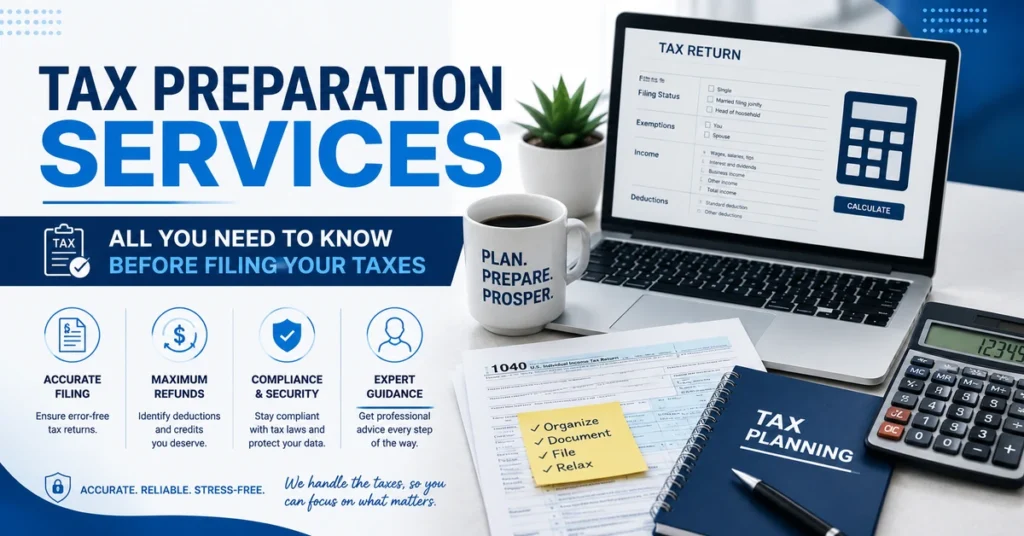
- Tax preparation services help individuals and businesses file accurate tax returns while staying compliant with tax laws.
- Professional tax preparers identify eligible deductions and credits that may reduce your tax liability.
- Organized financial records make the tax filing process faster and more accurate.
- Hiring an experienced tax professional can save time, reduce filing errors, and provide peace of mind.
- Choosing the right tax preparation service depends on qualifications, experience, pricing, security, and ongoing support.
Filing taxes is one of those responsibilities that many people postpone until the last minute. Whether you’re an employee, freelancer, investor, or business owner, even a small mistake on your tax return can lead to delays, penalties, or missed deductions. That’s where professional tax preparation services become valuable. They simplify the filing process, ensure compliance with tax regulations, and help you submit accurate returns with confidence.
This guide explains everything about tax preparation services, covering what these services include, who needs them, how the process works, and what to consider before hiring a tax professional.
By the end, you’ll have a clear understanding of how professional assistance can make tax filing easier and more efficient.
What Are Tax Preparation Services?
Tax preparation services are professional services that help individuals and businesses prepare, review, and file their tax returns accurately. Instead of trying to understand complex tax rules on your own, a qualified tax preparer handles the calculations, reviews financial records, identifies deductions, and submits your return according to the applicable tax laws. [To ensure your operational expenses and vendor obligations remain just as organized before tax season, explore our dedicated accounts payable services.]
Modern tax filing services go far beyond filling out forms. They focus on reducing errors, improving compliance, and ensuring every eligible deduction or credit is considered before the return is filed.
Professional income tax preparation is especially useful when your finances become more complex due to investments, rental income, business ownership, or multiple income sources.
For business owners, tax preparation becomes even more effective when supported by accurate financial records. If you’re unfamiliar with maintaining business finances, our guide on outsourced accounting explains how outsourced accounting helps businesses organize financial data and simplify tax compliance throughout the year.
What Does a Tax Preparer Do?
A tax preparer is responsible for much more than entering numbers into tax software. Their role involves reviewing your financial situation, preparing accurate returns, and ensuring compliance with current tax regulations.
A professional tax preparer typically performs the following tasks:
-
Collects Financial Information: The process begins by gathering all necessary financial documents, including income statements, expense records, investment details, and previous tax returns.
-
Reviews Income Sources: Income can come from multiple sources such as employment, freelance work, business operations, investments, rental properties, or retirement accounts. A tax preparer verifies each source to ensure nothing is overlooked.
-
Identifies Tax Deductions and Credits: One of the biggest advantages of professional tax preparation is identifying deductions and tax credits that taxpayers often miss when filing on their own.
-
Prepares Tax Returns: Using the collected information, the preparer completes your tax return preparation accurately while following applicable tax laws.
-
Files Returns Electronically: Most professionals submit returns through secure electronic filing systems, which makes the process faster and reduces paperwork.
-
Provides Tax Planning Guidance: Many experienced tax professionals also offer year-round advice to help clients make better financial decisions and legally reduce future tax liabilities.
Who Needs Tax Preparation Services?
While almost anyone can benefit from expert guidance, certain individuals and businesses gain the most value from professional tax preparation.
-
Individuals: Employees with straightforward income often use tax preparation services to ensure accuracy and claim all available deductions.
-
Freelancers and Self-Employed Professionals: Freelancers usually deal with multiple clients, invoices, deductible expenses, and estimated tax payments. Professional assistance helps keep everything organized.
-
Business Owners: Business owners manage payroll, operating expenses, equipment purchases, and various tax obligations. Business tax preparation helps maintain compliance while identifying legitimate tax-saving opportunities.
-
Investors: Individuals earning income from stocks, mutual funds, dividends, or capital gains often require specialized tax reporting.
Types of Tax Preparation Services
Different taxpayers require different levels of support. The most common services include:
-
Individual Tax Preparation: Designed for salaried employees, retirees, investors, and families who need help preparing personal tax returns.
-
Business Tax Preparation: Business owners have unique reporting requirements involving expenses, payroll, depreciation, and business income. Professional business tax preparation ensures these obligations are handled correctly.
-
Self-Employed Tax Preparation: Independent contractors, consultants, creators, and freelancers often need specialized support for business deductions and estimated taxes.
-
Corporate Tax Preparation: Larger organizations require detailed financial reporting, corporate tax filings, and compliance with corporate tax regulations.
-
Partnership Tax Preparation: Partnership businesses must prepare partnership returns while allocating income and expenses correctly among partners.
-
Nonprofit Tax Preparation: Charitable organizations have separate filing requirements to maintain their tax-exempt status.
-
International Tax Preparation: Individuals with foreign income, overseas investments, or cross-border business activities often require specialized tax expertise.
What Is Included in Professional Tax Preparation Services?
Comprehensive professional tax preparation includes much more than filing a return.
Common services include:
-
Reviewing income from all sources
-
Organizing financial documents
-
Verifying deductible expenses
-
Identifying available tax credits
-
Preparing accurate tax returns
-
Electronic filing
-
Reviewing calculations for accuracy
-
Supporting clients during tax notices or audits when applicable
-
Providing future tax planning recommendations
Many providers also create a customized tax preparation checklist, which makes it easier for clients to gather required documents before filing.
A quality service focuses on accuracy, transparency, and long-term financial planning rather than simply completing paperwork.
How Does the Tax Preparation Process Work?
The tax preparation process follows some steps to ensure your return is accurate, compliant, and filed on time. Whether you’re using tax preparation services for an individual return or business tax preparation, understanding the process helps you know what to expect and how to prepare.
-
Initial Consultation: The process starts with a consultation to understand your financial situation, income sources, deductions, and tax filing requirements. This helps tax professionals determine the best approach for preparing your return and identify potential tax-saving opportunities.
-
Document Collection: You’ll be asked to provide all the necessary documents, such as income statements, previous tax returns, investment records, and expense receipts. Having complete and organized records makes tax return preparation faster and more accurate.
-
Data Entry: Once your documents are received, the financial information is entered into secure tax software. Every detail is carefully recorded to minimize errors and ensure an accurate tax return.
-
Review and Verification: The prepared return is reviewed to verify calculations, confirm deductions, and check for missing information. This step helps ensure compliance with current tax regulations before filing.
-
Client Review: Before submission, you’ll receive the completed tax return for review. This allows you to verify the information and request corrections if anything needs to be updated.
-
Final Revisions: If any changes are required, they are incorporated into the return before filing. Every update is carefully reviewed to maintain accuracy and compliance.
-
Final Filing: After your approval, the tax return is submitted electronically or through the appropriate filing method. You’ll also receive a copy of the filed return for your records, and many tax filing services provide support if you have questions after filing.
Documents Required for Tax Preparation
Keeping your documents organized can make the filing process quicker and more accurate. Whether you’re using tax preparation services for a personal or business return, having the right paperwork ready helps tax professionals prepare your return efficiently while reducing the chances of delays or errors.
1. Personal Information
These documents help verify your identity and ensure your tax return is filed correctly.
-
Government-Issued ID: A valid passport, driver’s license, or other government-issued identification is required to verify your identity.
-
Social Security Number (SSN) or Tax Identification Number (TIN): You’ll need your SSN, Tax ID, or the country-specific taxpayer identification number for yourself and any dependents included on the return.
-
Previous Year’s Tax Return: Your last tax return serves as a useful reference, making it easier to verify information, compare financial details, and carry forward any applicable tax benefits.
2. Income Documents
Gather all documents that show the income you earned during the tax year. Depending on your situation, these may include:
-
Employment income statements
-
Self-employment or freelance income records
-
Business income reports
-
Investment and dividend statements
-
Rental income records
-
Pension or retirement income documents
Providing complete income information ensures accurate tax return preparation and helps avoid reporting errors.
3. Expense and Deduction Records
If you’re claiming deductions or tax credits, keep supporting documents ready. Common records include:
-
Business expense receipts
-
Medical or healthcare expenses (where eligible)
-
Education-related expenses
-
Charitable donation receipts
-
Home & office expenses (if applicable)
-
Childcare expenses (where applicable)
These records help your tax preparer identify legitimate deductions that may reduce your tax liability.
4. Investment and Property Documents
If you own investments or property, you may also need:
-
Capital gains or investment transaction statements
-
Property tax records
-
Mortgage interest statements
-
Rental property income and expense records
These documents help ensure all investment and property-related income is reported correctly.
5. Additional Supporting Documents
Depending on your financial situation, you may also be asked to provide:
-
Retirement contribution statements
-
Health insurance information
-
Bank account details for direct deposit or tax payments
-
Any notices received from tax authorities
Preparing these documents in advance not only speeds up the tax filing services process but also helps your tax professional complete an accurate and compliant return with fewer follow-up requests.
Benefits of Hiring Professional Tax Preparation Services
Many people assume they can handle taxes themselves, but professional assistance often provides value that extends beyond filing a return.
-
Greater Accuracy: Tax laws can be complicated and change regularly. Experienced tax professionals understand current regulations and reduce the likelihood of costly mistakes.
-
Time Savings: Preparing taxes can take several hours or even days, especially for individuals with multiple income sources or business activities. Outsourcing the work allows you to focus on your career or business.
-
Maximum Eligible Deductions: One of the biggest tax preparation benefits is identifying deductions and tax credits you may not have considered when filing on your own.
-
Reduced Risk of Errors: Simple mistakes such as incorrect calculations, missing income, or incomplete forms can delay processing or trigger additional reviews. Professional preparation significantly reduces these risks.
-
Support During Tax Notices: If tax authorities request clarification or additional information, many tax preparation firms provide assistance in responding to those notices.
-
Confidence and Peace of Mind: Knowing your return has been prepared by an experienced professional provides reassurance that everything has been handled correctly.
-
Better Tax Planning: Professional preparers don’t just file returns. They also help you understand strategies that may legally reduce your future tax burden through effective planning.
For high-level corporate strategies, businesses often look into Virtual CFO Services to analyze long-term financial impacts, and having a solid tax framework is a massive part of that planning.
How to Choose the Right Tax Preparation Service?
Not every tax preparer offers the same level of expertise. Taking the time to evaluate your options can help you receive accurate service and long-term support.
-
Check Qualifications: Choose professionals with relevant certifications, licenses, or recognized tax preparation experience. A qualified preparer should stay updated with changing tax laws.
-
Consider Industry Experience: If you’re self-employed or own a business, look for someone experienced in business tax preparation rather than someone who only handles basic individual returns.
-
Review Reputation: Online reviews, client testimonials, and referrals can provide valuable insight into a firm’s reliability, responsiveness, and customer service.
-
Understand Pricing: Ask how fees are calculated before agreeing to the service. Transparent pricing helps avoid unexpected costs later.
-
Ask About Data Security: Since tax returns contain sensitive financial information, ensure the provider uses secure systems to protect your personal and business data.
-
Confirm Electronic Filing: Most reputable firms offer secure electronic filing, allowing your return to be submitted quickly and efficiently.
-
Evaluate Communication: A good tax preparer should explain your return clearly, answer your questions patiently, and communicate throughout the filing process rather than only during tax season.
Final Thoughts
Understanding tax preparation services helps you make informed decisions during tax season. Whether you need income tax preparation or business tax preparation, working with experienced tax professionals can improve accuracy, save time, and help you claim eligible deductions.
By choosing reliable tax preparation services and keeping your financial documents organized, you can simplify the filing process and reduce the risk of costly mistakes. [For an integrated approach to all your organizational finance needs, explore our full suite of finance solutions.] A well-prepared tax return not only ensures compliance with tax laws but also gives you greater confidence and peace of mind when filing your taxes.
Frequently Asked Questions
What should I look for when choosing a tax preparation service?
Consider qualifications, experience, transparent pricing, data security practices, client reviews, electronic filing options, and ongoing customer support.
Why is tax planning important?
Tax planning helps you make informed financial decisions throughout the year, potentially reducing future tax liabilities while ensuring compliance with changing tax laws.
Can tax preparation services help reduce my tax liability?
Yes. Experienced professionals identify legitimate deductions and tax credits that may lower your overall tax liability while ensuring compliance with tax regulations.
Is online tax preparation secure?
Most reputable providers use encrypted platforms and secure document-sharing systems to protect sensitive financial information.
How long does tax preparation take?
The timeline depends on the complexity of your finances and how quickly you provide the required documents. Simple returns may be completed within a few days, while complex business returns can take longer.