In today’s competitive business environment, financial decisions can determine whether a company grows, survives, or struggles to keep pace with the market. While large enterprises often have dedicated Chief Financial Officers (CFOs), many startups and small to mid-sized businesses cannot justify the cost of hiring a full-time executive. This is where virtual cfo services have emerged as a practical and cost-effective solution.
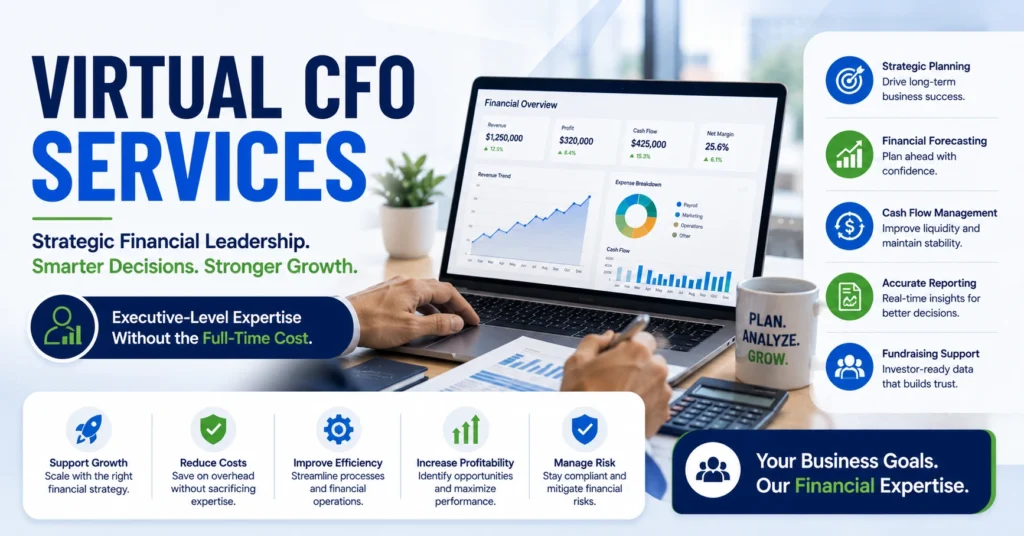
A virtual CFO provides strategic financial leadership, planning, forecasting, and performance analysis without the expense of a full-time CFO. From improving cash flow management to supporting fundraising efforts and driving profitability, utilizing VCFO services helps businesses make smarter financial decisions.
In this guide, we’ll explore how these services work, their key benefits, the ROI they deliver, and how to determine if your business needs one.
What Are Virtual CFO Services?
The term virtual CFO services refers to outsourced or fractional financial management that provides high-level expertise on a part-time, project-based, or ongoing basis. Instead of employing a full-time Chief Financial Officer, businesses gain access to experienced financial professionals who help manage and optimize their financial operations remotely.
While standard bookkeeping services focus on recording daily transactions, a fractional CFO looks at the bigger picture. These offerings typically include financial planning, budgeting, forecasting, cash flow management, financial reporting, risk assessment, fundraising support, and strategic decision-making.
For growing businesses, partnering with a reliable virtual CFO offers executive-level financial leadership without the significant salary, benefits, and overhead costs associated with a traditional in-house executive.
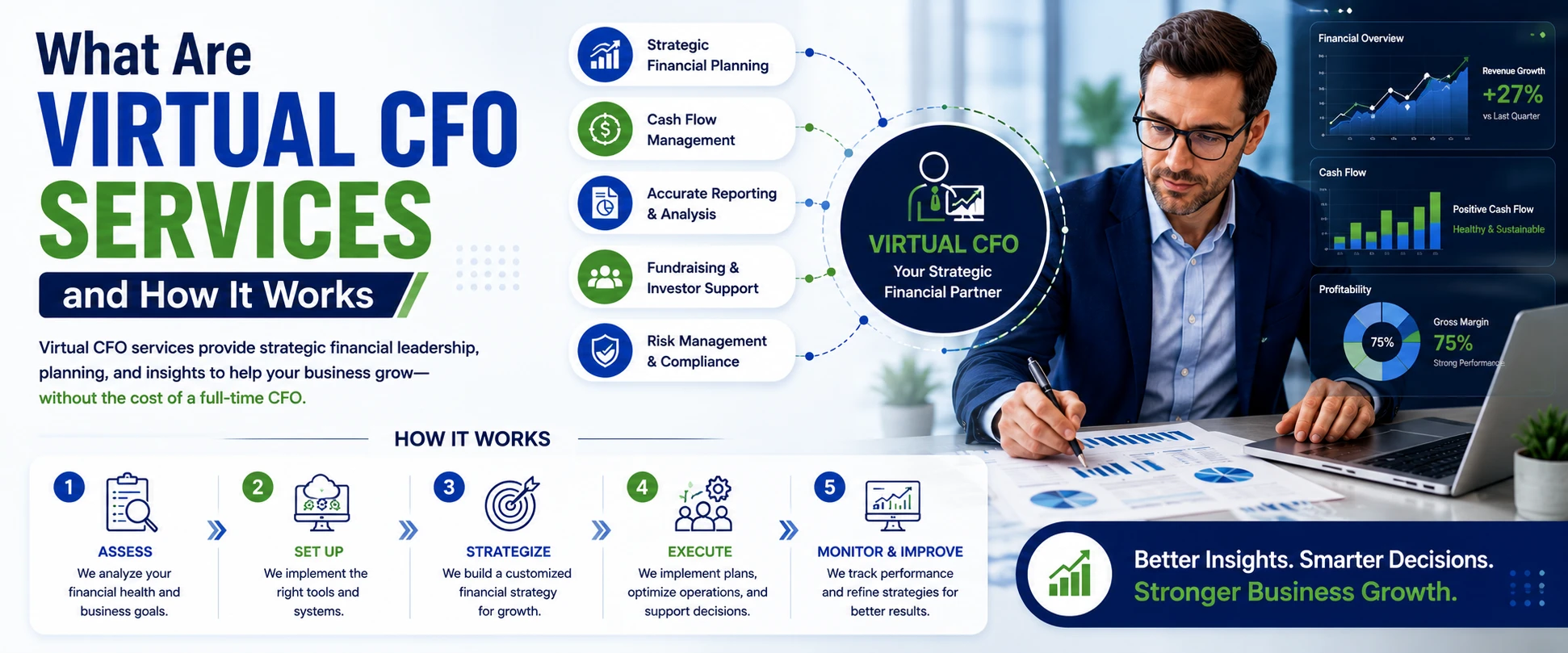
How Virtual CFO Services Work?
Opting for professional VCFO services follows a structured process designed to strengthen a company’s financial foundation while supporting long-term growth. Rather than offering one-time advice, they work as an ongoing strategic partner.
1. Financial Assessment and Business Review
The process typically begins with a detailed evaluation of the company’s financial health. The Virtual CFO reviews existing financial statements, accounting practices, cash flow patterns, operational processes, and business objectives. This assessment helps identify financial gaps, growth opportunities, potential risks, and areas that require immediate attention.
2. Technology and Financial System Setup
To improve visibility and efficiency, modern virtual CFO services integrate advanced tools and cloud-based accounting systems into the business. Real-time dashboards, automated reporting, and performance tracking solutions are implemented to provide accurate financial data whenever it is needed.
3. Customized Financial Strategy Development
Every business has unique financial goals and challenges. Based on the initial assessment, the Virtual CFO develops a tailored financial strategy that aligns with the company’s objectives. This may include budgeting, cash flow forecasting, profit improvement plans, tax optimization strategies, cost management initiatives, and growth-focused financial planning.
4. Strategic Financial Execution
Once the strategy is in place, the Virtual CFO works closely with management and finance teams to implement financial initiatives. They oversee financial operations, support accurate reporting, strengthen internal controls, and manage high-level responsibilities such as fundraising preparation, investor reporting, risk management, and business expansion planning.
5. Ongoing Monitoring and Performance Reviews
A key advantage of comprehensive VCFO services is continuous financial oversight. Through regular meetings and detailed financial reports, they track business performance, review key metrics, and refine financial strategies as market conditions evolve.
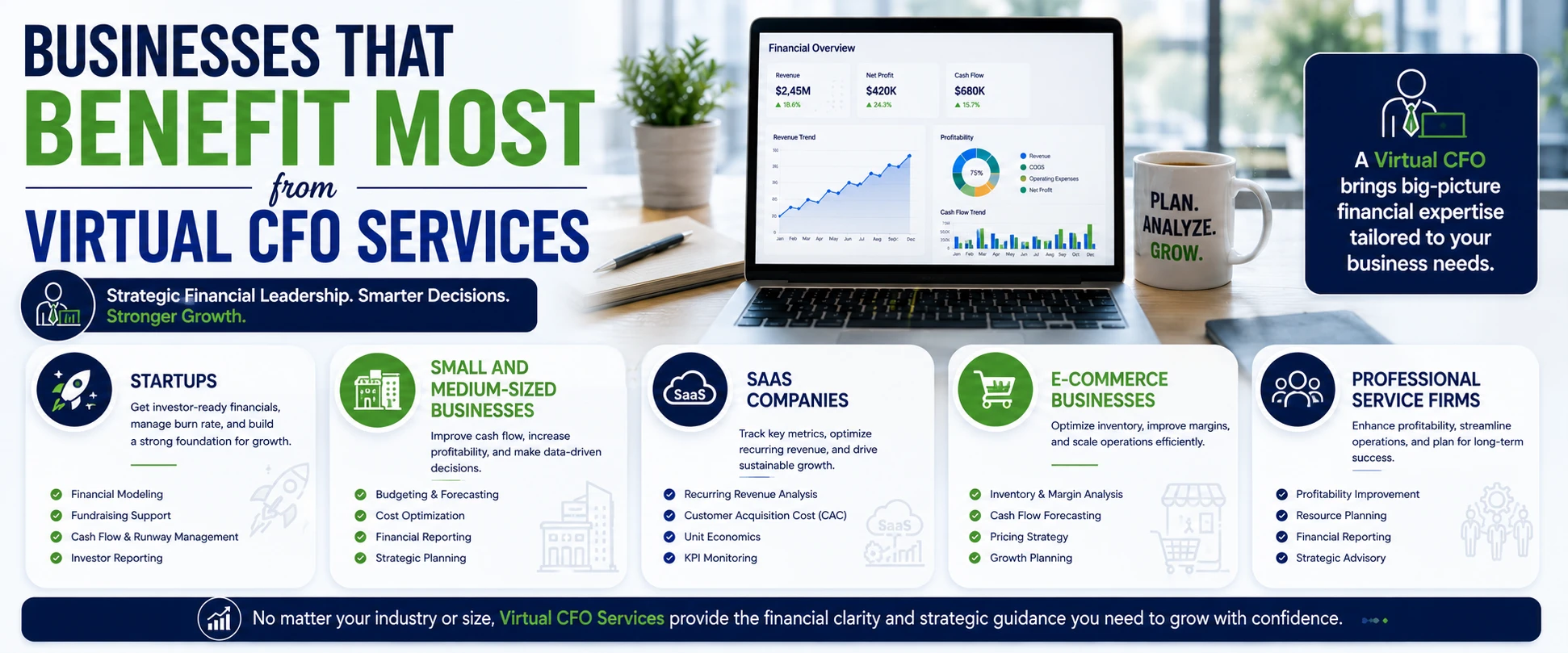
Businesses That Benefit Most from Virtual CFO Services
Although almost any organization can benefit from strategic financial guidance, certain businesses gain exceptional value from outsourced CFO services.
-
Startups
Startups often need financial modeling, investor-ready reports, fundraising support, and burn rate management. A Virtual CFO helps founders make informed financial decisions while focusing on product development and growth.
-
Small and Medium-Sized Businesses
SMEs frequently face financial challenges related to cash flow, profitability, and expansion. Virtual CFO Services provide expert guidance without the cost of a full-time executive.
-
SaaS Companies
Subscription-based businesses require accurate forecasting, recurring revenue analysis, customer acquisition cost tracking, and profitability measurement.
-
E-commerce Businesses
E-commerce companies benefit from inventory planning, margin analysis, cash flow forecasting, and growth strategy development.
-
Professional Service Firms
Law firms, marketing agencies, consulting companies, and accounting firms can leverage strategic financial planning to improve profitability and operational efficiency.
Key Responsibilities of a Virtual CFO
The role of a Virtual CFO extends far beyond bookkeeping and accounting. Their primary focus is strategic financial management and business growth.
1. Financial Planning and Forecasting
Virtual CFOs create budgets, forecast future performance, and help businesses establish realistic financial goals.
2. Cash Flow Management
Effective cash flow management is critical for business success. Virtual CFOs monitor inflows and outflows, identify potential shortages, and implement strategies to maintain healthy liquidity.
3. Financial Reporting
They prepare accurate financial reports that provide visibility into revenue, expenses, profitability, and overall business performance.
4. Strategic Business Planning
Virtual CFOs align financial strategies with business objectives and help management make informed growth decisions.
5. KPI Monitoring
They track critical business metrics such as profit margins, revenue growth, operating expenses, customer acquisition costs, and return on investment.
6. Fundraising and Investor Support
A Virtual CFO develops financial models, prepares investor presentations, and supports due diligence processes during funding rounds.
7. Risk Management
They identify financial risks, strengthen internal controls, and ensure compliance with financial regulations.
Virtual CFO vs Traditional CFO: Understanding the Difference
| Feature | Virtual CFO | Traditional CFO |
| Role | Strategic planning, forecasting, and financial advice. | Oversees all financial operations and teams. |
| Commitment | Part-time or project-based. | Full-time employee. |
| Cost | Lower and flexible pricing. | High salary and benefits cost. |
| Work Model | Remote and outsourced. | In-house and on-site. |
| Flexibility | Easily scalable as business grows. | Less flexible due to fixed employment. |
| Expertise | Experience across multiple industries. | Focused on one company. |
| Technology | Uses cloud-based financial tools. | Uses company-specific systems. |
| Best For | Startups, SMEs, and growing businesses. | Large enterprises and complex organizations. |
Top Benefits of Virtual CFO Services
Below are the key benefits of Virtual CFO Services for growing businesses:
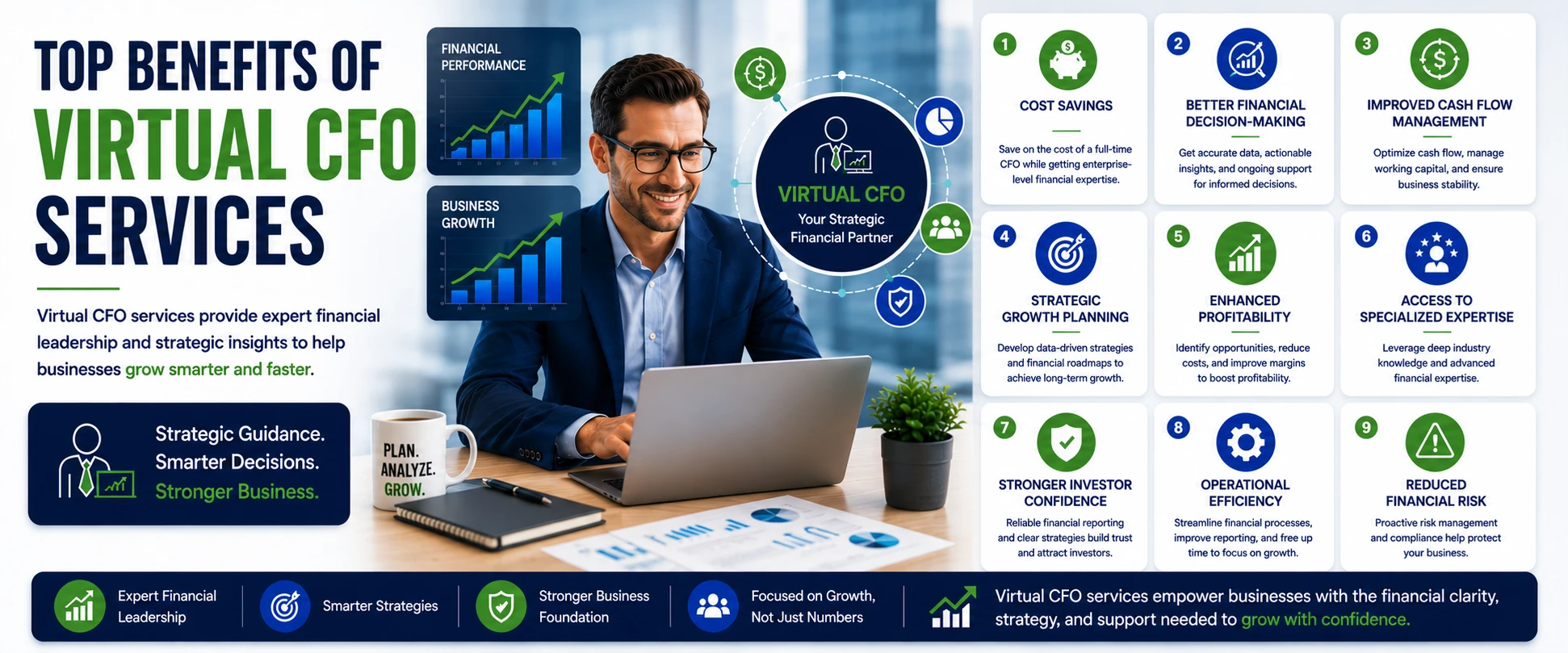
1. Cost Savings
One of the most significant advantages of Virtual CFO Services is affordability. Businesses gain executive-level expertise without paying a full-time salary and benefits package.
2. Better Financial Decision-Making
Access to accurate financial data and professional guidance enables leaders to make informed decisions regarding investments, hiring, expansion, and operations.
3. Improved Cash Flow Management
Cash flow issues are among the leading causes of business failure. Virtual CFOs develop systems and strategies that improve liquidity and financial stability.
4. Strategic Growth Planning
They help businesses plan expansion models, budget for scaling, and navigate how to safely hire international employees without violating local tax laws.
5. Enhanced Profitability
Through detailed financial analysis, businesses can identify unnecessary expenses, improve margins, and increase profitability.
6. Access to Specialized Expertise
Virtual CFOs often possess experience across multiple sectors, providing valuable insights and proven financial strategies.
7. Stronger Investor Confidence
Professional financial reporting and forecasting increase credibility with investors, lenders, and stakeholders.
8. Operational Efficiency
Improved processes, automation recommendations, and KPI tracking contribute to higher efficiency and better resource allocation.
9. Reduced Financial Risk
Virtual CFOs help identify financial weaknesses before they become serious problems, reducing risk and improving business resilience.
Measuring the ROI of Virtual CFO Services
Many business owners ask whether hiring a Virtual CFO is worth the investment. The answer depends on the value generated through improved financial performance.
The ROI of hiring a Virtual CFO can be measured through several factors:
- Revenue Growth: Strategic financial planning often leads to increased revenue through better pricing, budgeting, forecasting, and investment decisions.
- Cost Reduction: Virtual CFOs identify inefficiencies, unnecessary spending, and operational gaps that reduce profitability.
- Improved Cash Flow: Better cash flow management reduces borrowing costs and improves financial stability.
- Faster Decision-Making: Accurate reporting and financial insights enable leadership teams to make quicker and more effective decisions.
- Fundraising Success: Investor-ready financials improve the likelihood of securing funding and favorable financing terms.
Signs Your Business Needs a Virtual CFO
Many business owners don’t realize they need financial leadership until cash flow issues, profitability challenges, or growth-related problems start affecting operations. If your business is facing any of the following situations, it may be the right time to consider Virtual CFO Services.
- Cash Flow Problems Are Becoming Frequent
If your business often faces cash shortages or struggles to manage expenses, a Virtual CFO can improve cash flow planning and financial stability.
- Your Business Is Growing Rapidly
Rapid growth increases financial complexity. A Virtual CFO helps manage expansion while keeping profitability and cash flow under control.
- You Are Planning to Raise Funding
Investors and lenders expect accurate financial data. A Virtual CFO prepares financial models, forecasts, and reports to support fundraising efforts.
- Financial Reports Are Difficult to Understand
If financial statements feel confusing, a Virtual CFO can translate complex data into clear insights that support better decision-making.
- Profit Margins Are Declining
Increasing revenue doesn’t always mean higher profits. A Virtual CFO identifies inefficiencies and opportunities to improve profitability.
- Budgeting and Forecasting Are Weak
Without proper financial planning, businesses often make reactive decisions. A Virtual CFO creates reliable budgets and forecasts for future growth.
- Major Business Decisions Need Financial Analysis
Whether you’re hiring, expanding, or launching a new product, a Virtual CFO provides the financial insights needed to reduce risk.
- You Lack Visibility Into Business Performance
If you don’t have a clear view of key metrics like revenue, expenses, and profit margins, a Virtual CFO can implement effective reporting systems.
How to Choose the Right Virtual CFO Service Provider?
The effectiveness of Virtual CFO Services largely depends on choosing the right provider. Here are the key factors to evaluate before making a decision.
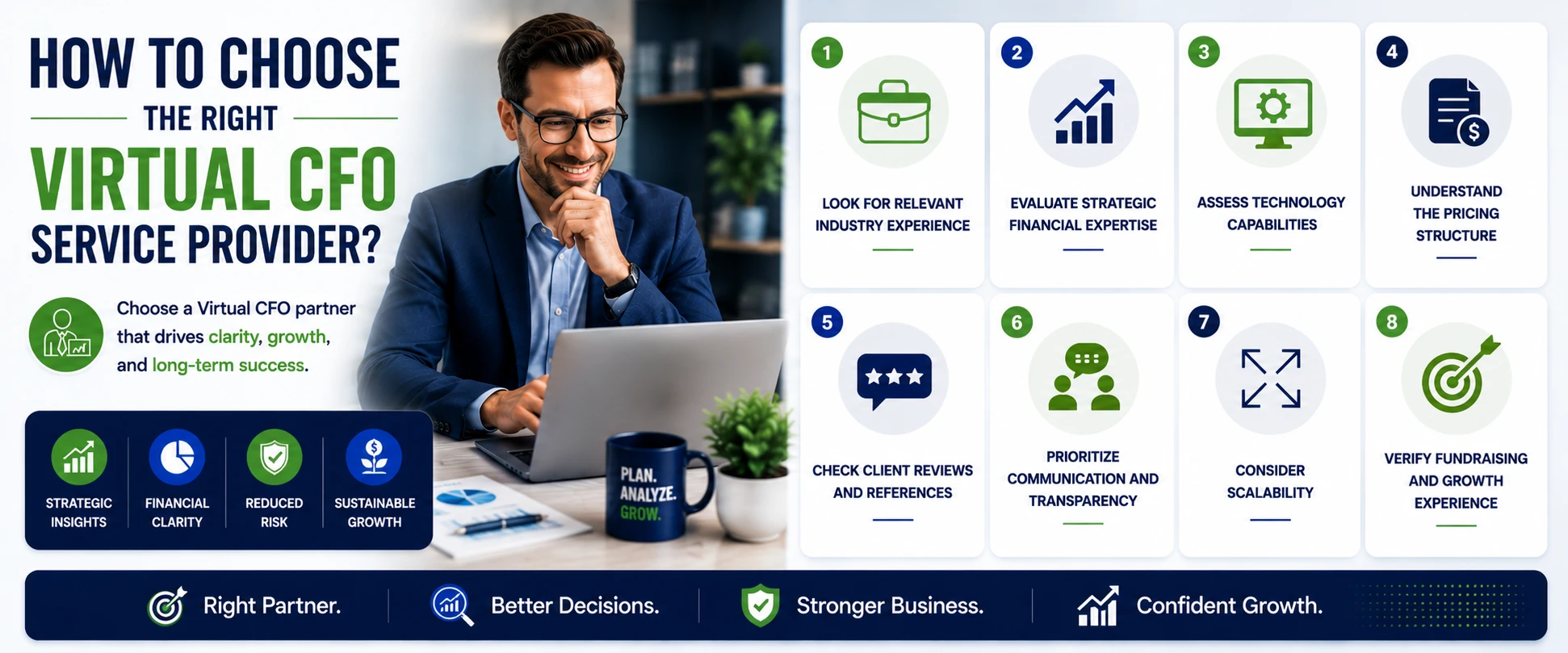
1. Look for Relevant Industry Experience
Choose a Virtual CFO who has worked with businesses in your industry and understands its financial challenges and opportunities.
2. Evaluate Strategic Financial Expertise
A good Virtual CFO should provide strategic guidance, not just financial reports and basic accounting support.
3. Assess Technology Capabilities
Ensure they are experienced with cloud accounting software, financial dashboards, and modern reporting tools.
4. Understand the Pricing Structure
Review their pricing model carefully to ensure it fits your budget and business requirements.
5. Check Client Reviews and References
Client testimonials and case studies can help you evaluate their track record and service quality.
6. Prioritize Communication and Transparency
Your Virtual CFO should provide regular updates, clear reports, and easy-to-understand 7. financial insights.
7. Consider Scalability
Choose a provider that can adapt their services as your business grows and financial needs become more complex.
8. Verify Fundraising and Growth Experience
If you plan to raise capital or expand, select a Virtual CFO with experience in fundraising, forecasting, and growth planning.
Final Thoughts
Deploying virtual CFO services has become a practical, game-changing solution for businesses that need strong financial leadership without the cost of a full-time executive. They bring clarity to financial decision-making, improve cash flow management, and support long-term strategic planning. For startups and growing companies, their impact goes beyond simple accounting by helping in fundraising, cost control, and profitability improvement.
The real value lies in turning financial data into actionable insights that drive smarter business decisions. As competition increases and financial complexity grows, having expert financial guidance is no longer optional. Choosing the right virtual CFO partner can strengthen stability, improve performance, and position a business for sustainable growth in the long run.
Frequently Asked Questions
- Is a Virtual CFO suitable for small businesses?
Yes. A Virtual CFO is highly suitable for small businesses because it provides expert financial guidance without the cost of a full-time CFO. It helps manage cash flow, improve profitability, and support smarter business decisions.
- Can a Virtual CFO help raise investment funding?
Yes. A Virtual CFO prepares investor-ready financial models, forecasts, and reports. They also support due diligence, making it easier for businesses to secure funding from investors or lenders.
- How do Virtual CFO services improve cash flow?
They improve cash flow by tracking inflows and outflows, identifying gaps, optimizing expenses, and building strong forecasting systems to prevent liquidity issues.
- When should a company hire a Virtual CFO?
A company should hire a Virtual CFO when it faces cash flow challenges, plans for growth or funding, or lacks clear financial visibility and structured reporting.
- Do Virtual CFOs assist with budgeting and forecasting?
Yes. Virtual CFOs create detailed budgets and accurate financial forecasts that help businesses plan ahead, control costs, and make data-driven decisions.