AP/AR Management for Growing Companies
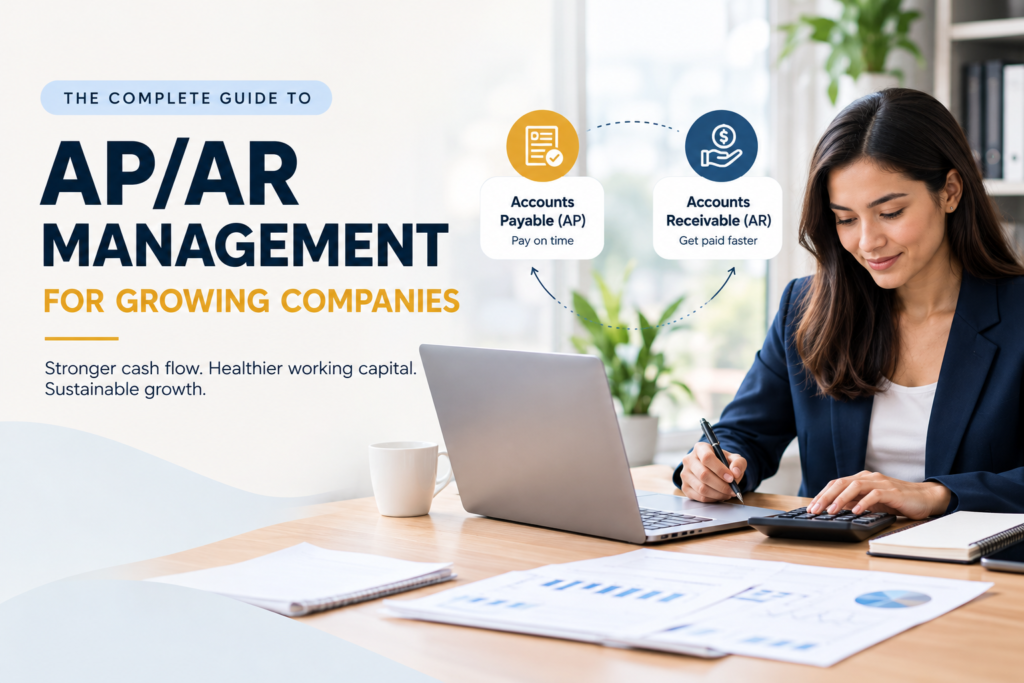
Growth is an exciting milestone for any business, but it also brings greater financial complexity. As customer orders increase, vendor payments multiply, and invoice volumes rise, managing cash flow becomes more challenging. This is where AP/AR Management for Growing Companies plays a critical role. A well-managed accounts payable and accounts receivable process ensures bills are paid on time, customer payments arrive faster, and the business always has enough working capital to operate confidently.
Whether you’re expanding your team, entering new markets, or handling a larger customer base, effective cash flow management, invoice management, and business financial management can make the difference between steady growth and financial stress.
This guide explains everything you need to know, from AP and AR fundamentals to best practices, automation, and performance metrics that help businesses scale with confidence.
What Is AP/AR Management?
AP/AR management refers to the process of handling both outgoing and incoming business payments in an organized and efficient manner.
Instead of viewing AP and AR as separate accounting functions, successful companies integrate them into a unified accounts payable and receivable management strategy that supports better financial operations, stronger working capital management, and healthier cash flow.
For companies looking to scale their back-office seamlessly without taking on excessive local overhead, leveraging a virtual bookkeeper can be an excellent way to keep these systems organized from day one.
Understanding Accounts Payable (AP)
Accounts payable (AP) focuses on the money your company owes to suppliers, vendors, and service providers for goods or services already received.
These obligations are usually recorded as short-term liabilities on the company’s balance sheet and must be settled within agreed payment terms.
How AP Works
A standard Accounts Payable Management process typically follows these steps:
- A vendor supplies goods or services.
- The business receives an invoice.
- The invoice is verified against purchase orders.
- Required approvals are completed.
- Payment is scheduled according to agreed terms.
- The transaction is recorded in the accounting system.
Why AP Matters
Whether handled by an internal team or a specialized accounts receivable service, strong Accounts Receivable Management helps businesses:
- Maintains healthy supplier relationships
- Avoids late payment penalties
- Improves vendor trust and credibility
- Helps optimize working capital
- Supports accurate budgeting
- Creates predictable cash outflows
Understanding Accounts Receivable (AR)
Accounts receivable (AR) deals with the money customers owe your business after purchasing products or services on credit. These outstanding invoices are recorded as current assets because they represent future cash inflows.
How AR Works
The Accounts Receivable process generally includes:
- Delivering products or services.
- Generating invoices.
- Sending invoices to customers.
- Tracking payment status.
- Sending reminders for overdue invoices.
- Recording received payments.
- Reconciling accounts.
Why AR Matters
Strong Accounts Receivable Management helps businesses:
- Receive payments faster
- Reduce overdue invoices
- Improve liquidity
- Minimize bad debt
- Support accurate cash forecasting
- Strengthen customer relationships through transparent billing
Why AP/AR Management Matters for Growing Companies?
As companies expand, their financial operations become more complex. More customers, more suppliers, larger inventories, and higher transaction volumes require structured AP and AR processes.
Many organizations find that mastering outsourced accounting helps them decide whether to build an in-house team or partner with external specialists to handle this mounting complexity.
1. Improves Cash Flow Management
Cash flow is the foundation of every successful business.
Even profitable companies can struggle if customer payments arrive late while vendor invoices must be paid immediately.
Efficient AP/AR management for growing companies ensures incoming cash is collected on time while outgoing payments are strategically scheduled. This creates better liquidity and reduces financial pressure.
2. Strengthens Working Capital
Healthy working capital allows businesses to purchase inventory, hire employees, invest in marketing, and expand operations without relying heavily on external financing.
Effective working capital management depends on maintaining the right balance between receivables and payables.
3. Builds Strong Vendor Relationships
Reliable vendors are valuable business partners. Consistently paying invoices according to agreed terms builds trust and may lead to:
- Better payment terms
- Priority service
- Volume discounts
- Improved negotiation opportunities
4. Speeds Up Customer Payments
Efficient accounts receivable management reduces delays through faster invoicing, automated reminders, and clear payment policies. The quicker customers pay, the stronger your cash position becomes.
5. Supports Business Growth
Growing companies need cash to fund expansion. Whether opening new locations, purchasing equipment, hiring staff, or investing in technology, healthy financial operations make growth sustainable rather than risky.
6. Reduces Financial Risk
Well-defined AP and AR processes help reduce:
- Duplicate payments
- Invoice fraud
- Accounting errors
- Compliance issues
- Missed payment deadlines
This improves financial accuracy while strengthening internal controls.
Common AP/AR Challenges Growing Businesses Face
Growth introduces new financial challenges that manual systems often cannot handle efficiently.
1. Manual Invoice Processing
Paper invoices and spreadsheets increase processing time and create opportunities for data entry errors. As invoice volumes grow, manual systems become difficult to manage.
2. Late Customer Payments
Delayed payments remain one of the biggest threats to healthy cash flow. Without consistent follow-ups and structured collection processes, overdue invoices accumulate quickly.
3. Poor Cash Flow Visibility
Businesses often struggle to forecast future cash availability when AP and AR information is spread across multiple systems. This makes financial planning far less reliable.
4. Invoice Errors
Incorrect invoice amounts, duplicate entries, missing purchase orders, and payment mismatches create unnecessary delays and disputes. Accurate invoice management reduces these issues significantly.
5. Scaling Financial Operations
Many businesses continue using accounting methods designed for much smaller transaction volumes. A scalable process is essential, and many companies find that outsourcing accounts payable and receivable is the most effective way to support rapid growth without administrative bottlenecks.
6. Lack of Automation
Without AP and AR Automation, finance teams spend excessive time on repetitive administrative tasks instead of strategic planning.
Automation allows businesses to process invoices faster, improve reporting accuracy, and deliver a better customer and vendor experience.
Best Practices for Accounts Payable Management
Managing outgoing payments efficiently is essential for maintaining healthy cash flow and building long-term relationships with vendors. Below are the best practices for effective accounts payable management, whether managed internally or by leveraging professional accounts payable outsourcing services:
1. Standardize Your AP Workflow
A clear and consistent workflow ensures every invoice follows the same process from receipt to payment. Standardization minimizes confusion, prevents duplicate payments, and makes it easier to handle increasing invoice volumes. Having documented procedures also simplifies employee training and improves accountability.
2. Automate Invoice Processing
Manual invoice handling is time-consuming and increases the likelihood of errors. Implementing AP automation allows businesses to digitize invoice capture, automate approval workflows, and schedule payments with minimal manual effort.
Some key benefits of AP automation include:
- Faster invoice approvals
- Reduced data entry errors
- Lower processing costs
- Better payment tracking
- Improved compliance
- Increased productivity
3. Schedule Vendor Payments Strategically
Paying invoices immediately isn’t always the best financial decision. Instead, review payment terms carefully and schedule payments to optimize cash flow while avoiding late fees.
For example:
- Take advantage of early payment discounts when they provide real savings.
- Pay invoices on the due date if there are no incentives for paying early.
- Prioritize critical suppliers to maintain uninterrupted operations.
This approach strengthens vendor payment management while supporting effective working capital management.
4. Maintain Accurate Vendor Records
Outdated vendor information can lead to payment delays and accounting errors. Regularly review supplier records to ensure banking details, payment terms, tax information, and contact details remain accurate. Accurate records also reduce fraud risks and simplify audits.
5. Reconcile Accounts Regularly
Monthly or weekly reconciliation helps identify discrepancies before they become larger issues.
Regular reconciliation allows finance teams to:
- Detect duplicate payments
- Identify missing invoices
- Resolve billing disputes
- Improve reporting accuracy
6. Monitor Key AP Metrics
Regularly track key performance indicators such as Days Payable Outstanding (DPO), Cost Per Invoice, and on-time payment rates to evaluate the efficiency of your Accounts Payable Management process. Monitoring these metrics helps improve cash flow, identify areas for optimization, and make better financial decisions.
Best Practices for Accounts Receivable Management
Efficient accounts receivable management ensures timely payments and steady cash flow, supporting business growth as your invoice volume increases.
Below are the key best practices to optimize this process:
1. Send Invoices Promptly
Bill immediately after delivery or service completion; include precise details, payment terms, and due dates to avoid confusion and payment delays.
2. Offer Multiple Payment Options
Accept credit cards, bank transfers, online gateways, and digital wallets to make paying easier, faster, and more convenient for customers.
3. Establish Clear Payment Terms
Clearly state due dates, late fees, and early payment discounts in every contract and invoice to set expectations and prevent disputes.
4. Automate Payment Reminders
Use AR automation to send scheduled reminders before and after due dates, which saves time and keeps overdue invoices to a minimum.
5. Conduct Customer Credit Checks
Evaluate credit history and payment behavior before offering credit terms to minimize bad debt risks from the start.
6. Track Outstanding Invoices
Regularly monitor unpaid invoices to identify overdue accounts early and allow your team to prioritize follow-ups effectively.
7. Improve Collection Processes
Use structured, polite follow-ups (emails, calls) and resolve billing disputes quickly to recover payments while keeping customer relationships strong.
8. Reduce Bad Debt
Protect profitability by combining accurate invoicing, proactive follow-ups, and credit checks to prevent unpaid balances.
9. Monitor Key AR Metrics
Track KPIs like Days Sales Outstanding (DSO) and Bad Debt Ratio to measure efficiency and find areas to improve cash flow.
AP vs AR: Finding the Right Balance
Managing Accounts Payable and Accounts Receivable together is essential for maintaining a healthy financial position. While AP focuses on controlling outgoing payments to vendors, AR ensures customer payments are collected on time. Striking the right balance between these two functions helps businesses maintain steady cash flow without creating unnecessary financial pressure.
If customer payments are delayed but supplier invoices must be paid immediately, even profitable businesses can experience cash shortages. On the other hand, delaying vendor payments too long may damage supplier relationships and affect business operations. That’s why successful AP/AR management for growing companies requires careful planning of both incoming and outgoing cash.
Regular cash flow forecasting and continuous monitoring of receivables and payables help businesses make informed financial decisions while keeping operations running smoothly.
How AP/AR Automation Improves Financial Operations?
AP/AR automation streamlines invoice tracking and approvals, reducing manual tasks to enhance financial accuracy and visibility as your business grows.
Below are the key ways automation improves financial operations:
- Faster Invoice Processing: Automation eliminates manual data entry by capturing and processing invoices digitally. This speeds up invoice approvals, reduces delays, and ensures payments are completed on time.
- Reduced Manual Errors: Manual processes often lead to duplicate payments, incorrect invoice entries, and calculation mistakes. Automated systems improve accuracy by validating data and reducing human intervention.
- Improved Cash Flow Visibility: Real-time dashboards provide a clear view of outstanding invoices, upcoming payments, and available cash. This helps businesses forecast cash flow more accurately and make informed financial decisions.
- Faster Customer Collections: AR Automation sends invoices instantly and automatically follows up with payment reminders. This encourages customers to pay on time, reducing overdue invoices and improving collection rates.
- Better Vendor Payment Management: Automation helps businesses schedule payments according to vendor terms, avoid late payment penalties, and take advantage of early payment discounts while maintaining strong supplier relationships.
- Lower Operational Costs: By reducing paperwork and repetitive administrative tasks, automation lowers invoice processing costs and allows finance teams to manage higher transaction volumes without increasing overhead.
- Stronger Compliance and Security: Automated workflows create digital audit trails, enforce approval policies, and improve data security. This reduces compliance risks and helps prevent unauthorized transactions or fraud.
AP/AR Metrics Every Growing Company Should Monitor
Monitoring key AP/AR metrics provides growing companies with the data needed to optimize accounting processes, strengthen working capital, and enhance cash flow management.
Below are the critical KPIs your business should track:
-
Accounts Receivable (AR) Metrics:
1. Days Sales Outstanding (DSO)
Days Sales Outstanding (DSO) measures the average number of days it takes to collect payments after an invoice is issued. A lower DSO indicates that customers are paying on time, which improves cash flow and reduces the risk of overdue receivables.
2. Collection Effectiveness Index (CEI)
The Collection Effectiveness Index (CEI) evaluates how efficiently your business collects outstanding customer payments during a specific period. A higher CEI reflects a stronger collection process and more effective payment collection strategies.
3. Average Days Delinquent (ADD)
Average Days Delinquent (ADD) shows how many days, on average, customer payments remain overdue after the due date. Monitoring this metric helps identify payment delays and improve collection efforts before outstanding balances grow.
4. Bad Debt-to-Sales Ratio
This metric measures the percentage of revenue that cannot be collected because of unpaid customer invoices. A lower bad debt ratio indicates healthier accounts receivable management and better credit control practices.
-
Accounts Payable (AP) Metrics:
1. Days Payable Outstanding (DPO)
Days Payable Outstanding (DPO) measures the average time your business takes to pay suppliers and vendors. Monitoring DPO helps businesses manage cash outflows effectively while maintaining positive supplier relationships and supporting efficient vendor payment management.
2. Cost Per Invoice
The Cost Per Invoice measures the average expense involved in processing a supplier invoice. Keeping this cost low through process improvements or AP automation helps increase operational efficiency and reduce administrative expenses.
3. Invoice Processing Time
Invoice Processing Time tracks how long it takes to process an invoice from receipt to final payment approval. Faster processing improves efficiency, prevents payment delays, and strengthens overall accounts payable management.
4. Invoice Exception Rate
The Invoice Exception Rate measures the percentage of invoices that require manual review due to errors, missing information, or approval issues. A lower exception rate indicates a more accurate and streamlined invoice management process.
Signs Your Business Needs Better AP/AR Management
Inefficient AP/AR processes can quietly disrupt cash flow, profitability, and operations as your company scales.
Below are the key warning signs that your business needs better AP/AR management:
- Frequent Late Payments to Vendors: Missing supplier deadlines leads to costly late fees, strained relationships, and lost opportunities for better payment terms.
- Increasing Overdue Customer Invoices: Piling up of unpaid invoices indicates a weak AR process that needs faster invoicing and automated reminders to speed up collections.
- Cash Flow Problems Despite Strong Sales: High sales won’t prevent liquidity issues if customer payments are delayed or vendor payments are poorly timed.
- Manual and Time-Consuming Processes: Spending hours on data entry, approval chasing, and manual tracking shows a clear need for AP/AR automation.
- Frequent Invoice Errors: Duplicate payments and missing records signal weak invoice management, affecting financial accuracy and wasting time.
- Limited Financial Visibility: Struggling to track outstanding invoices or cash flow in real time makes it difficult to take informed financial decisions.
- Difficulty Scaling Financial Operations: Manual systems quickly fail as transaction volumes rise, whereas a scalable process supports growth without increasing workload.
Final Thoughts
Effective AP/AR management for growing companies is more than an accounting function, it’s a key driver of healthy cash flow and sustainable growth. By strengthening Accounts Payable Management, improving Accounts Receivable Management, monitoring the right KPIs, and investing in AP and AR Automation, businesses can reduce financial risks, improve operational efficiency, and build stronger relationships with both customers and vendors.
Whether you’re a startup or an expanding business, adopting these AP and AR best practices will help optimize working capital management, support smarter financial decisions, and create a solid foundation for long-term success.
Frequently Asked Questions
How does AP/AR management support business growth?
Efficient AP/AR management improves liquidity, strengthens working capital, enhances financial planning, and enables businesses to invest confidently in expansion opportunities.
Which AP/AR metrics should businesses monitor?
Key metrics include Days Sales Outstanding (DSO), Days Payable Outstanding (DPO), Collection Effectiveness Index (CEI), Invoice Processing Time, Cost Per Invoice, and Cash Conversion Cycle (CCC).
How can businesses reduce late customer payments?
Businesses can reduce late payments by sending invoices promptly, setting clear payment terms, offering multiple payment options, and using automated payment reminders.
When should a company invest in AP/AR automation?
A business should consider automation when invoice volumes increase, manual processes become time-consuming, payment errors rise, or cash flow visibility becomes difficult.
How does AP/AR management improve cash flow?
It ensures customer payments are collected faster while vendor payments are scheduled strategically, helping businesses maintain a healthy cash balance.
Why is AP/AR management important for growing companies?
As businesses grow, they handle more invoices, customers, and suppliers. Efficient AP/AR management improves cash flow, reduces payment delays, and supports sustainable business growth.