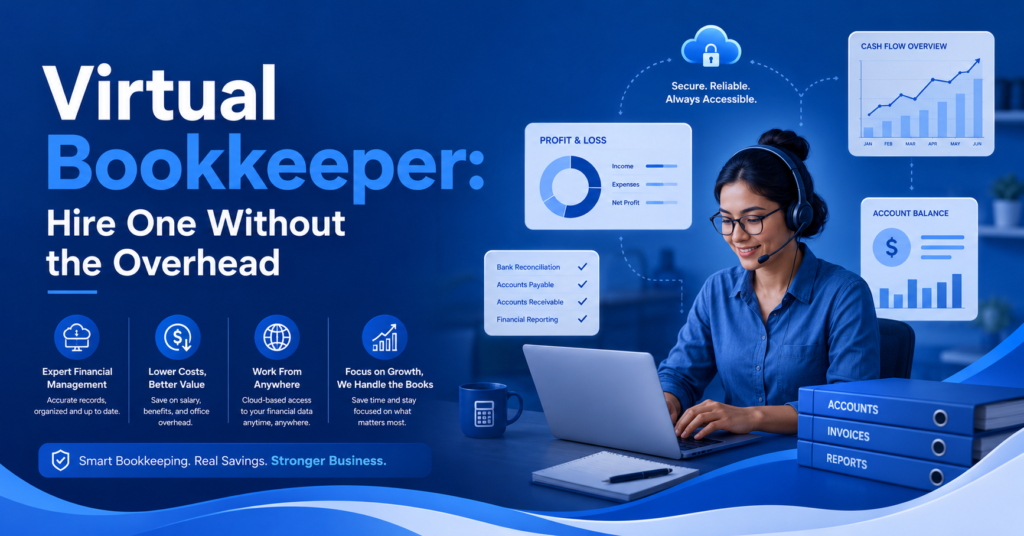
Managing finances is one of the most critical parts of running a business, yet it is also one of the most time-consuming. Many small business owners manage their books themselves at first, but as the business grows, it becomes harder to handle and more likely to lead to mistakes and stress. Hiring a full-time, in-house bookkeeper might seem like the next logical step, but it comes with high overhead costs, including salary, benefits, office space, and training.
This is where a virtual bookkeeper becomes a practical and cost-effective solution. Businesses today are shifting toward remote financial management because it offers flexibility, expertise, and real-time insights without the burden of maintaining an in-house team.
In this guide, you will understand what a virtual bookkeeper is, how they work, their benefits, and how to decide if hiring one is the right move for your business.
What is a Virtual Bookkeeper?
A virtual bookkeeper is a professional who manages your financial records remotely using cloud-based accounting tools. Unlike traditional bookkeepers who work from your office, virtual bookkeepers operate online, giving you access to your financial data anytime, from anywhere.
They perform the same core functions as an in-house bookkeeper but with added efficiency due to modern tools and automation. This setup is especially beneficial for small businesses, startups, and entrepreneurs who want professional financial management without committing to full-time hires.
What Does Hiring a Virtual Bookkeeper Really Mean?
Hiring a virtual bookkeeper means moving your financial management from a traditional, office-based setup to a more flexible and technology-driven system. Instead of employing someone full-time, you work with a remote professional who handles your books using secure, cloud-based tools.
This shift changes how your business operates financially. You no longer depend on manual processes or delayed updates. Your financial data becomes accessible anytime, which improves visibility and helps you make faster decisions. It also removes the burden of managing an in-house employee, such as recruitment, training, and overhead costs.
You will also get the flexibility and can scale services up or down depending on your business needs. Whether you are a startup or a growing company, you only pay for the level of support you require.
Hiring a virtual bookkeeper means creating a system where your finances are consistently maintained, easily accessible, and aligned with modern business practices. It allows you to focus on growth while ensuring your financial foundation stays strong and reliable.
In many growing businesses, payroll becomes a major part of financial operations. To understand how structured payroll systems support this process, you can read our guide on What is managed payroll to know how businesses simplify salary processing and compliance through managed systems.
What are the Key Responsibilities of a Virtual Bookkeeper?
A virtual bookkeeper is responsible for managing and maintaining your business’s financial records with accuracy and consistency. Their role focuses on handling day-to-day financial activities that keep your books organized and reliable.
- Recording Financial Transactions: Every income and expense is properly categorized and recorded to maintain accurate financial data.
- Bank and Credit Card Reconciliation: Accounts are regularly matched with bank statements to identify and fix discrepancies.
- Managing Accounts Payable: Vendor bills are tracked and payments are scheduled to ensure timely settlements.
- Handling Accounts Receivable: Customer invoices are created, sent, and monitored to ensure smooth cash flow and timely collections.
- Payroll Support: Employee payments, deductions, and related records are managed accurately and securely.
- Preparing Financial Reports: Regular reports such as profit and loss statements, balance sheets, and cash flow summaries are generated to reflect business performance.
- Maintaining Financial Records: All financial documents are organized and updated systematically for easy access and review.
- Supporting Tax Preparation: Financial data is kept structured and ready, making it easier for accountants to handle tax filing and compliance.
As businesses scale, finance and hiring often work together. Companies expanding their workforce across regions usually rely on structured hiring strategies. To understand this better, read our guide on Global talent acquisition, which explains how businesses manage hiring at scale in different markets.
Virtual Bookkeeper vs In-House Bookkeeping
Both virtual bookkeeping and in-house bookkeeping serve the same purpose, but the way they operate is completely different. Understanding these differences helps businesses choose the right option based on cost, flexibility, and efficiency.
Key Differences Between Virtual and In-House Bookkeeping
- Cost Structure: In-house bookkeeping involves fixed monthly expenses, including salary and overhead costs. Virtual bookkeeping usually follows a flexible pricing model where you pay only for the services you use.
- Accessibility and Flexibility: An in-house bookkeeper is typically available during office hours. A virtual bookkeeper offers more flexibility, with access to financial data anytime through cloud systems.
- Technology and Efficiency: Virtual bookkeepers rely heavily on modern accounting software and automation, which reduces errors and speeds up processes. In-house setups may or may not use the same level of technology.
- Scalability: Scaling an in-house team requires hiring and training new staff. With a virtual bookkeeper, you can easily increase or reduce services based on your business requirements.
- Expertise and Exposure: Virtual bookkeepers often work with multiple clients across industries, giving them broader experience. In-house bookkeepers are typically limited to one business environment.
- Data Security: Both models can be secure, but virtual bookkeepers rely on encrypted cloud platforms, two-factor authentication, and secure access controls. In-house bookkeeping depends more on internal systems and physical security measures within the office.
- Communication Style: In-house bookkeeping allows direct, face-to-face communication, which some business owners prefer for quick discussions. Virtual bookkeeping uses digital communication tools like email, video calls, and project management systems, which are structured but not physical.
Benefits of Hiring a Virtual Bookkeeper
Hiring a virtual bookkeeper is a smart move for small and mid-sized businesses because it provides professional financial support without the cost of a full-time employee. It improves efficiency while keeping your finances organized and accessible.
Here are the benefits of hiring a virtual bookkeeper:
- Lower Business Costs: You avoid expenses like office space, employee benefits, and equipment. You only pay for the actual bookkeeping services you need.
- Access to Skilled Professionals: You get experienced bookkeepers who understand accounting tools and maintain accurate, compliant financial records.
- More Time for Business Growth: Routine financial tasks are handled for you, so you can focus on sales, operations, and business expansion.
- Better Cash Flow Control: Regular tracking of income and expenses helps you understand your cash position clearly and make better decisions.
- Flexible Scaling Options: You can increase or reduce bookkeeping support easily as your business needs change, without hiring pressure.
- Improved Accuracy and Data Security: Cloud-based systems reduce errors and keep your financial data secure, updated, and well-organized.
- Easier Tax Preparation: Clean and structured records make tax filing faster, simpler, and less stressful during deadlines.
Common Concerns About Virtual Bookkeeping
Many business owners hesitate to switch to virtual bookkeeping due to a few common concerns.
- Data Security and Privacy Risks
The main concern is financial data safety since everything is stored online. However, secure cloud platforms with encryption and restricted access are designed to protect sensitive information.
- Communication and Coordination Gaps
Remote work can sometimes cause delays due to time zones or lack of face-to-face interaction. Regular updates and digital communication tools help solve this easily.
- Reduced Control Over Finances
Some owners feel less in control without an in-house bookkeeper. In reality, real-time reports and dashboards often give better visibility than traditional methods.
- Understanding Business Needs
A virtual bookkeeper may need time to understand your processes and industry. This is usually handled during onboarding and improves quickly with clear communication.
- Dependence on Technology
Since everything is cloud-based, internet or software issues can cause small delays. These situations are rare but can temporarily affect workflow.
- Onboarding Process
Initial setup and data sharing may take some time. Once completed, the system runs smoothly and becomes easier to manage.
Who Should Hire a Virtual Bookkeeper?
A virtual bookkeeper is a good fit for businesses and individuals who want accurate financial management without hiring full-time staff. It helps save time, reduce costs, and keep finances organized.
- Small Business Owners and Startups: Perfect for those who need proper bookkeeping support but cannot afford a full-time employee.
- Growing Businesses: Useful for companies expanding quickly who need scalable financial management without hiring delays.
- Freelancers and Solopreneurs: Helps individuals manage invoices, expenses, and accounts without losing focus on income work.
- Businesses Using Cloud Accounting Tools: Best for those already using platforms like QuickBooks or Xero for real-time tracking.
- High-Transaction Businesses: Suitable for businesses with frequent sales that need consistent financial tracking.
- Businesses Needing Expert Support: Ideal for companies that want accurate records and compliance support, especially during tax season.
Is Hiring a Virtual Bookkeeper Safe?
Yes, hiring a virtual bookkeeper is generally safe when you choose a qualified professional or a reputable service provider. Modern virtual bookkeeping is built on secure cloud systems that are designed specifically to protect sensitive financial data.
- Secure systems: Most virtual bookkeepers use encrypted cloud accounting software to protect financial data.
- Controlled access: You decide who can view or manage your accounts.
- Data protection tools: Security features like strong passwords and two-factor authentication are commonly used.
- Confidentiality practices: Professional bookkeepers follow strict privacy standards to keep your financial information safe.
- Reduced errors: Automated systems help minimize manual mistakes and improve accuracy.
- Formal agreements: Clear contracts define responsibilities and data security terms for added protection.
Final Thoughts
A virtual bookkeeper is a practical solution for businesses that want accurate financial management without the cost and complexity of hiring in-house staff. It improves financial visibility, supports better decision-making, and keeps records organized and compliant.
For scaling businesses, financial processes become even more efficient when combined with structured payroll systems. If you want to understand how payroll automation works in modern companies, explore our guide on Global Payroll Services.
Instead of getting stuck in manual financial tasks, business owners can focus on growth and strategy. Virtual bookkeeping is not just a cost-saving option, it is a smarter way to manage modern business finances efficiently.
Frequently Asked Questions
What does a virtual bookkeeper do for a business?
A virtual bookkeeper manages your business finances remotely by recording transactions, reconciling accounts, tracking expenses, and preparing financial reports. They keep your books updated so you always know your financial position clearly.
Is virtual bookkeeping suitable for small businesses?
Yes, it is highly suitable for small businesses. It reduces costs, removes the need for full-time staff, and ensures professional financial management even on a limited budget.
Can a virtual bookkeeper handle taxes?
A virtual bookkeeper does not file taxes directly but prepares and organizes your financial data for tax filing. This makes the process smoother and more accurate for your accountant.
Do virtual bookkeepers handle tax filing and compliance?
They usually support tax compliance by maintaining accurate records and preparing reports. However, actual tax filing is typically handled by a certified tax professional or accountant.
How much does it cost to hire a virtual bookkeeper?
The cost of hiring a virtual bookkeeper depends on your business size and the level of work required. On average, small businesses may pay a monthly fee or an hourly rate, which makes it more affordable than hiring a full-time in-house employee.