
The hiring market has changed completely. Today, skilled professionals are not just searching for jobs. They are searching for companies that offer purpose, growth, flexibility, and a strong work culture. Salary still matters, but it is no longer the only deciding factor. Candidates now research employers the same way customers research brands before buying a product.
This is where a strong employer branding strategy becomes essential. Companies with a powerful employer brand attract better talent, reduce hiring costs, improve employee retention, and build long-term credibility in the market. Whether you are a startup, growing business, or enterprise organization, employer branding can become your biggest competitive advantage.
In this guide, you will learn how to build an employer brand that candidates actively want to join.
What Is Employer Branding?
Employer branding is the process of shaping how employees, job seekers, and the public perceive your company as a workplace.
A strong employer brand communicates what it feels like to work at your organization. It highlights company culture, leadership style, career opportunities, employee benefits, and workplace values.
Companies with strong employer branding usually receive more qualified applications because candidates already see them as desirable workplaces before applying.
Employer branding also plays a major role in modern global talent acquisition strategies, as candidates often evaluate workplace reputation before considering international opportunities.
Why Employer Branding Matters?
The competition for skilled talent is increasing every year. Professionals have more career options than ever before, especially with remote work opening global opportunities.
A strong employer brand strategy helps companies:
- Attract high-quality candidates
- Reduce recruitment costs
- Improve employee retention
- Increase employee engagement
- Build trust in the market
- Strengthen the company’s reputation
Candidates prefer organizations with positive workplace cultures and transparent leadership. Even highly skilled professionals avoid companies with poor online reviews or toxic work environments.
Employer branding also affects business performance directly. Happy employees often become productive employees, and productive employees contribute to stronger customer experiences and better growth.
Core Components of Employer Branding
Successful employer branding is built on several important elements working together. Below are the core components of employer branding that every company should focus on to attract and retain top talent.
- Company Culture: Culture is the foundation of every employer brand. It defines how employees work, collaborate, communicate, and grow inside the organization.
- Employee Value Proposition (EVP): An EVP explains why someone should work for your company instead of competitors. It includes salary, growth opportunities, flexibility, benefits, and workplace experience.
- Leadership Reputation: Employees want leaders they trust. Transparent and approachable leadership strengthens employer credibility.
- Career Development: Candidates prefer companies that invest in employee learning, mentorship, and career advancement.
- Work-Life Balance: Flexible schedules, hybrid work, wellness programs, and mental health support have become major hiring factors.
- Diversity and Inclusion: Modern candidates expect inclusive workplaces where people from different backgrounds feel respected and valued.
Many businesses are also improving collaboration and engagement through virtual team building activities to strengthen internal culture and employee satisfaction.
Why Employer Branding Is Critical for Talent Acquisition?
Candidates today research companies before applying and prefer organizations with strong workplace culture, positive employee experiences, and growth opportunities. A strong employer brand strategy helps businesses attract better talent, improve hiring efficiency, and build long-term trust in the job market.
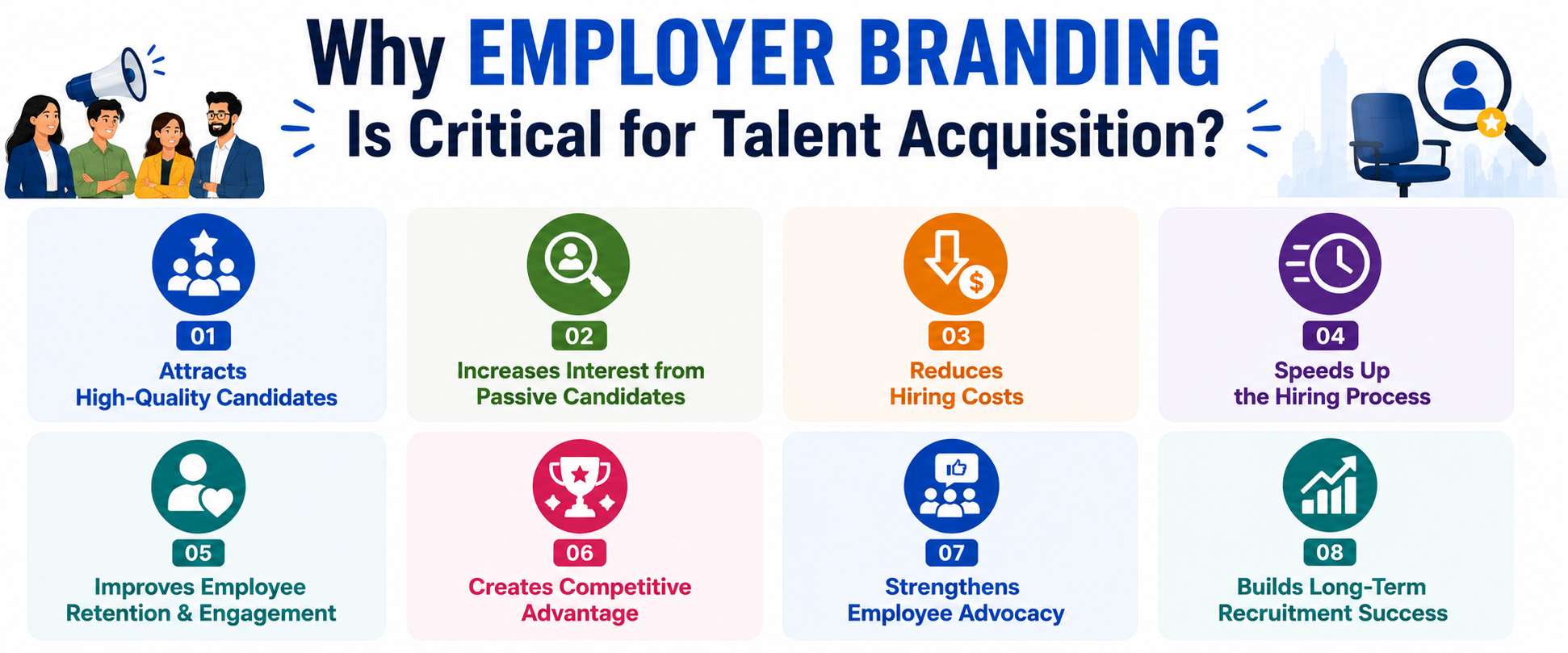
Below are the key reasons why employer branding is important for talent acquisition.
- Attracts High-Quality Candidates: A strong employer brand attracts candidates who align with your company culture, values, and goals, improving the overall quality of hires.
- Increases Interest from Passive Candidates: Well-known and respected companies often attract passive candidates who are not actively job hunting but are open to better career opportunities.
- Reduces Hiring Costs: Strong employer branding generates more organic applications and employee referrals, reducing dependency on paid recruitment campaigns.
- Speeds Up the Hiring Process: Candidates respond faster to trusted brands, helping companies reduce time-to-hire and fill positions quickly.
- Improves Employee Retention and Engagement: When companies deliver the workplace experience they promise, employees feel more satisfied, engaged, and likely to stay longer.
- Creates Competitive Advantage: A positive employer reputation helps businesses stand out in competitive industries and attract talent more effectively.
- Strengthens Employee Advocacy: Satisfied employees naturally promote the company through referrals, social media, and professional networks.
- Builds Long-Term Recruitment Success: Consistent employer branding helps companies build trust, maintain strong talent pipelines, and improve long-term hiring results.
SEE MORE : Talent Acquisition Specialist: The Strategic Partner Your Business Needs
Signs Your Employer Brand Is Weak
Weak employer branding negatively impacts the overall candidate experience, reducing trust and engagement among applicants.
Below are some common signs of a weak employer brand.
- Difficulty Attracting Quality Candidates: Receiving fewer applications or attracting unqualified candidates often indicates poor employer branding.
- High Employee Turnover: Employees leaving frequently can signal dissatisfaction with company culture, leadership, or growth opportunities.
- Low Employee Engagement: Disengaged employees usually feel unsupported, disconnected, or unmotivated at work.
- Negative Online Reviews: Poor reviews on platforms like Glassdoor or LinkedIn can damage trust among job seekers.
- Inconsistent Employer Messaging: When the actual employee experience does not match the company’s public image, it creates disappointment and distrust.
- Slow Hiring Process: Long hiring timelines and delayed communication often lead candidates to lose interest.
- Low Offer Acceptance Rate: Frequent offer rejections may indicate concerns about company reputation or workplace culture.
- Lack of Employee Advocacy: If employees are unwilling to recommend the company, it reflects weak internal satisfaction.
- Toxic Workplace Culture: Poor communication, unhealthy work environments, and weak leadership can seriously damage employer branding.
The Psychology Behind Why Candidates Chase Certain Brands
Strong employer branding works because it connects with human psychology. People naturally want to join organizations that offer recognition, growth, and emotional security.
-
Social Proof and Reputation
Candidates trust employee testimonials, online reviews, and workplace stories more than corporate advertisements. Positive social proof builds confidence quickly. When employees proudly share their experiences online, it strengthens trust naturally.
-
Purpose-Driven Work Culture
Companies with clear missions and values attract candidates who want to contribute to something larger than a paycheck. Purpose-driven cultures often create stronger emotional loyalty among employees.
-
Status and Career Growth
Working for respected companies improves professional credibility. Candidates often view strong employer brands as career accelerators. Organizations that offer mentorship, promotions, and skill development become highly attractive to ambitious professionals.
-
Emotional Connection
Candidates connect emotionally with authentic employee stories, leadership messages, and workplace experiences. People remember emotions more than corporate messaging.
-
Transparency and Trust
Honest communication builds credibility. Candidates appreciate companies that openly discuss culture, expectations, challenges, and career opportunities. Transparency reduces uncertainty and increases trust during the hiring process.
Step-by-Step Employer Branding Strategy
Building a strong employer brand requires consistent effort and long-term planning.
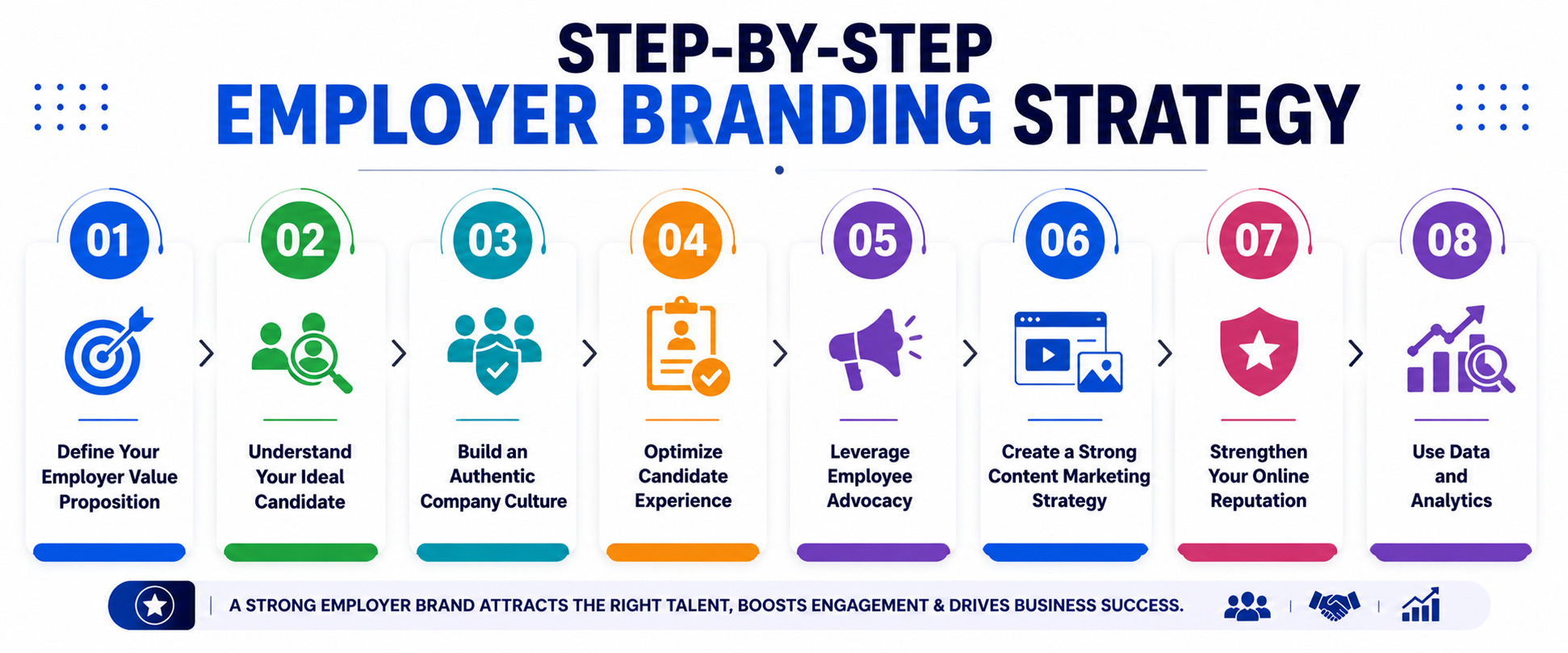
Step 1 – Define Your Employer Value Proposition
Your employee value proposition is the core message behind your employer branding strategy. It explains what employees gain by joining your organization.
A strong EVP should clearly communicate:
- Career growth opportunities
- Company mission
- Workplace flexibility
- Employee benefits
- Learning opportunities
- Leadership support
To create an effective EVP, gather feedback from current employees. Understand why they joined, why they stay, and what makes your workplace different from competitors. Your EVP should be authentic because candidates quickly recognize exaggerated branding.
Step 2 – Understand Your Ideal Candidate Persona
Not every candidate values the same things. Different professionals have different priorities.
For example:
- Tech professionals may value innovation and flexibility
- Sales professionals may prioritize incentives and growth
- Gen Z candidates often value purpose and inclusivity
Create detailed candidate personas based on skills, motivations, career goals, and work preferences. Understanding your audience helps improve recruitment marketing, messaging, and content strategy.
Step 3 – Build an Authentic Company Culture
Employer branding cannot succeed without a strong internal culture. External marketing only works when employees genuinely enjoy working at the company.
Businesses should focus on:
- Open communication
- Employee recognition
- Flexible work policies
- Learning programs
- Leadership transparency
- Mental wellness support
Culture should not exist only on the website. Employees must experience it daily. Organizations with authentic cultures create stronger employee advocacy naturally.
Step 4 – Optimize Candidate Experience
Candidate experience significantly affects employer reputation. Every interaction shapes how candidates perceive your company.
Improve the hiring experience by:
- Simplifying application forms
- Responding quickly
- Providing interview updates
- Respecting candidate time
- Making career pages mobile-friendly
A positive interview experience increases offer acceptance rates and improves employer perception even among rejected candidates. Many companies lose great talent simply because of poor communication during hiring.
Step 5 – Leverage Employee Advocacy
Employees are one of the strongest employer branding assets. Candidates trust real employee experiences more than corporate advertisements. Encourage employees to share workplace stories, achievements, team events, and learning experiences on professional platforms.
Employee-generated content builds credibility because it feels authentic. Businesses can also create referral programs that encourage employees to recommend talented professionals from their networks.
Step 6 – Create a Strong Content Marketing Strategy
Content marketing plays a major role in modern employer branding. Companies should consistently publish content that showcases workplace culture and employee experiences.
Effective employer branding content includes:
- Employee success stories
- Leadership insights
- Behind-the-scenes videos
- Career growth stories
- Workplace culture posts
- Team achievements
LinkedIn is one of the most effective platforms for employer branding, but businesses should also optimize career pages, blogs, YouTube channels, and social media profiles.
SEO optimization is equally important. Use keywords like employer branding, talent acquisition strategy, candidate experience, and recruitment marketing naturally throughout your content. This improves visibility in Google search results and AI-generated search summaries.
Step 7 – Strengthen Your Online Reputation
Candidates often research companies online before applying for jobs. Positive employee reviews, active social media presence, and transparent communication help build trust and improve employer branding. Regularly monitor review platforms, respond professionally to feedback, and maintain consistent messaging across your website, career pages, and social channels.
Step 8 – Use Data and Analytics
Tracking employer branding metrics helps businesses improve hiring performance and candidate experience. Monitor important data such as time to hire, employee retention, offer acceptance rates, and candidate feedback. Regular analysis helps identify gaps, measure branding success, and make better talent acquisition decisions over time.
See More : Talent Acquisition Strategy: A 7-Step Framework
Best Employer Branding Channels to Focus On
Choosing the right platforms helps companies improve visibility, attract talent, and strengthen employer branding.
Here are the most effective employer branding channels businesses should focus on.
- LinkedIn: LinkedIn is one of the best platforms for sharing company culture, job opportunities, and employee achievements with professional audiences.
- Company Career Page: A strong career page should clearly explain company culture, employee benefits, and growth opportunities to attract qualified candidates.
- Employee Social Media Profiles: Employees sharing workplace experiences and company updates add authenticity and improve employer credibility.
- YouTube: YouTube helps companies showcase workplace culture and employee stories through engaging video content.
- Glassdoor and Review Platforms: Candidates often check Glassdoor reviews before applying, making online reputation extremely important.
- Blogs and Content Marketing: SEO-optimized blogs improve search visibility and help companies build authority in employer branding and talent acquisition.
Common Employer Branding Mistakes to Avoid
Many companies invest in employer branding but still fail to attract and retain top talent because of common branding mistakes. Inconsistent messaging, poor candidate experience, and lack of authenticity can weaken employer reputation and damage trust among job seekers.
Below are some common employer branding mistakes businesses should avoid.
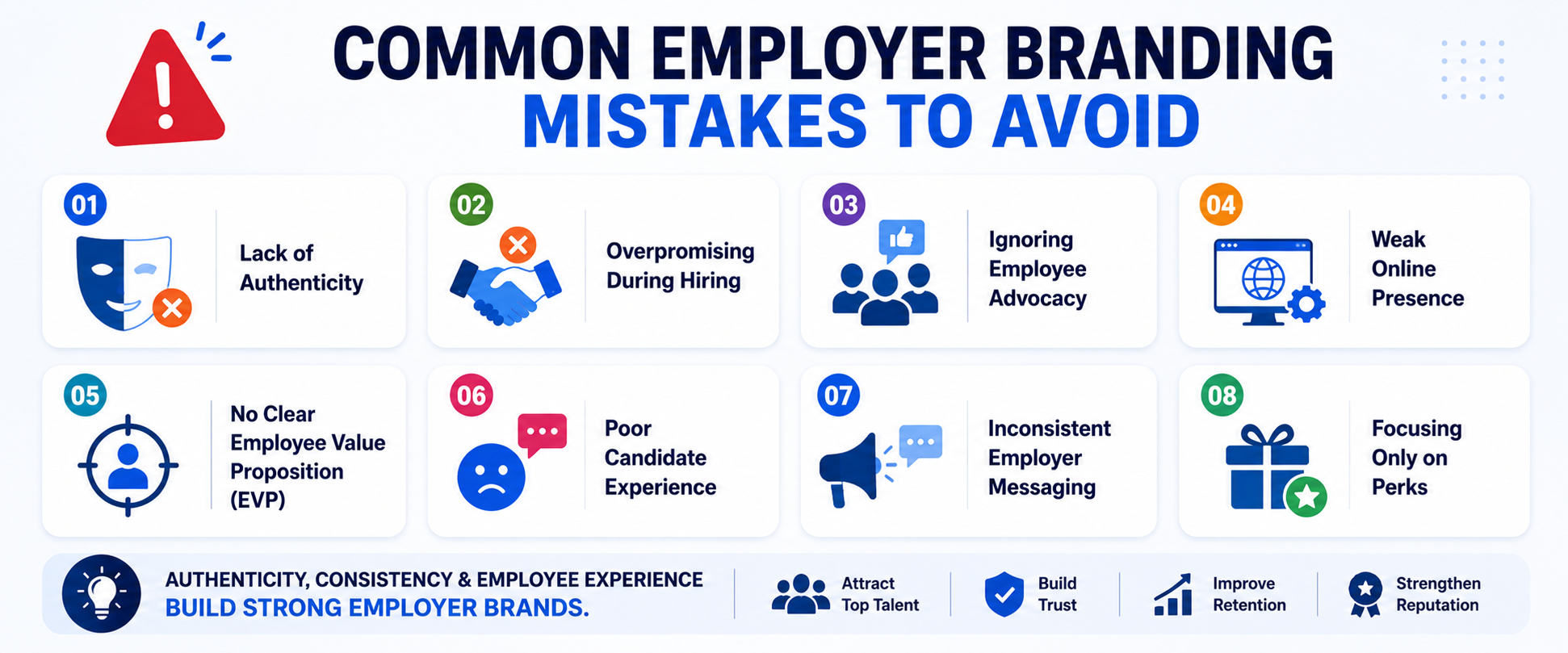
1. Lack of Authenticity
Showing an unrealistic image of workplace culture can create trust issues. Candidates expect genuine employee experiences, not exaggerated marketing.
2. Overpromising During Hiring
Promising flexibility, growth, or benefits that the company cannot deliver often leads to employee dissatisfaction and higher turnover.
3. Ignoring Employee Advocacy
Employees are powerful brand ambassadors. Failing to encourage employee stories and workplace experiences reduces employer credibility.
4. Weak Online Presence
Outdated career pages, inactive social media accounts, and poor engagement can make the company appear disconnected and unprofessional.
5. No Clear Employee Value Proposition (EVP)
Without a strong EVP, recruitment messaging becomes generic and fails to communicate why candidates should join the company.
6. Poor Candidate Experience
Lack of communication, generic rejection emails, and delayed hiring processes create negative impressions among candidates.
7. Inconsistent Employer Messaging
Different messaging across websites, interviews, and social platforms can confuse candidates and weaken brand identity.
8. Focusing Only on Perks
Highlighting perks alone without communicating company’s mission, culture, and career growth opportunities can weaken the emotional connection with candidates.
Final Thoughts
Employer branding is no longer optional. It has become one of the most important factors influencing hiring success, employee retention, and company reputation.
Candidates today evaluate employers carefully before applying. They look for transparency, growth opportunities, strong leadership, positive culture, and meaningful work experiences.
A successful employer branding strategy is built through authenticity, consistent communication, strong employee experiences, and long-term trust building. Companies that invest in employer branding today will attract stronger talent, reduce hiring struggles, and build sustainable competitive advantages for years to come.
Frequently Asked Questions
How do you measure employer branding success?
Employer branding success can be measured using metrics like employee retention, candidate satisfaction, offer acceptance rate, employee engagement, and time to hire.
Can small businesses build a strong employer brand?
Yes, small businesses can build strong employer branding by focusing on company culture, employee growth, flexibility, transparency, and authentic communication.
How long does employer branding take to show results?
Employer branding is a long-term strategy. Companies usually start seeing improvements in candidate quality, engagement, and hiring performance within a few months of consistent efforts.
How can a company improve its employer branding?
Companies can improve employer branding by creating a positive work culture, improving candidate experience, encouraging employee advocacy, maintaining strong online reputation, and sharing authentic workplace content.
What are the signs of a weak employer brand?
High employee turnover, negative online reviews, poor candidate experience, low employee engagement, and difficulty attracting skilled candidates are common signs of weak employer branding.