

Whether you run a startup, a small business, or a growing enterprise, keeping accurate financial records is essential for maintaining profitability and making informed decisions. This is where professional bookkeeping services play a critical role.
Many business owners focus heavily on sales, operations, and customer acquisition but overlook the importance of maintaining organized financial records. Poor bookkeeping can lead to cash flow problems, tax filing errors, compliance issues, and missed growth opportunities. On the other hand, effective bookkeeping provides a clear picture of your business’s financial health and helps you stay in control of your finances.
In this complete guide to bookkeeping services, you’ll learn what bookkeeping services are, how they work, their key benefits, different types available, and much more.
What Are Bookkeeping Services?
Bookkeeping services involve recording, organizing, and managing a business’s financial transactions to maintain accurate financial records. These services help track income, expenses, invoices, payments, and other day-to-day financial activities.
Professional services ensure that your financial data remains up to date, which makes it easier to monitor cash flow, prepare taxes, and generate financial reports. Whether provided by basic bookkeepers handling core data entry or an outsourced firm, they help businesses stay organized and compliant with financial regulations. Accurate financial tracking forms the foundation of effective accounting and supports better decision-making, financial planning, and long-term business growth.
Core Functions of Bookkeeping Services
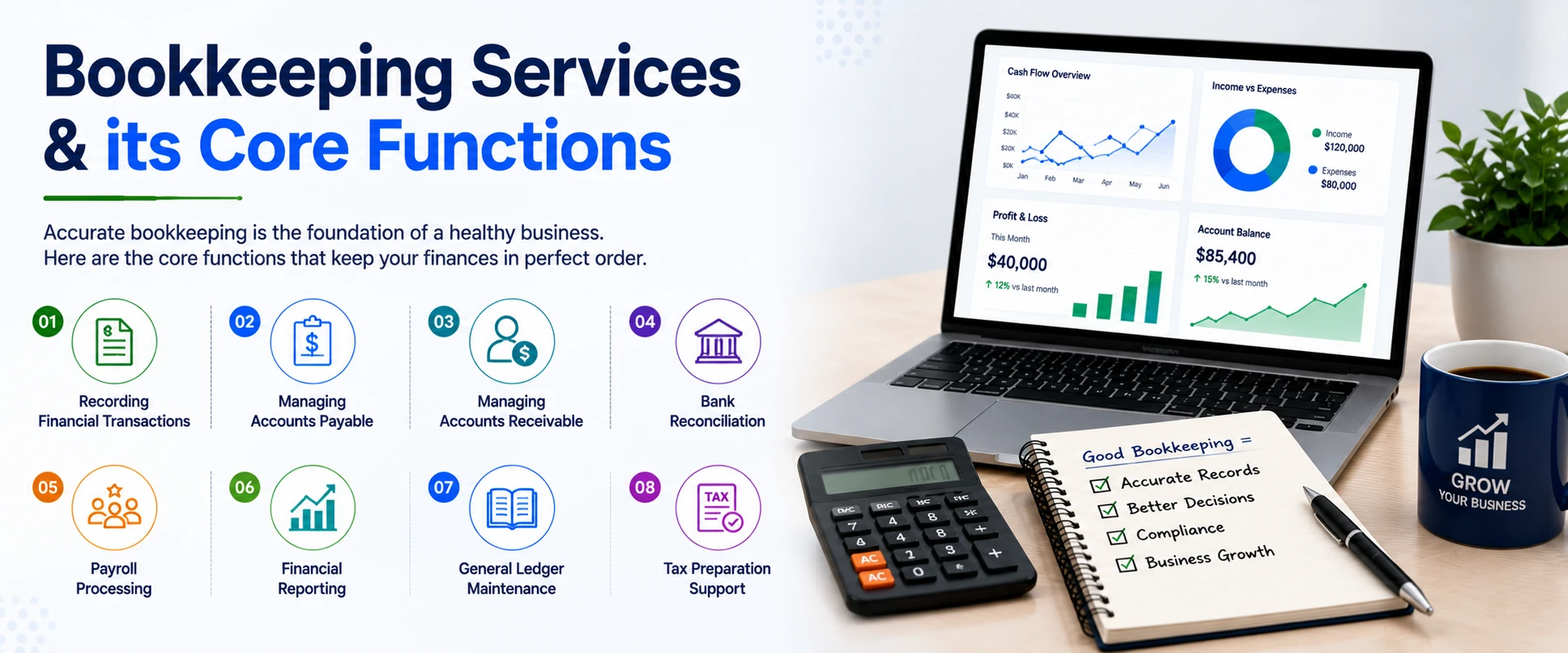
Professional bookkeeping services help businesses maintain accurate financial records and ensure smooth financial operations. Their core functions include:
1. Recording Financial Transactions
Every single bookkeeping entry must be accurately categorized and logged, including sales, purchases, expenses, payments, and deposits.
2. Managing Accounts Payable
Accounts payable management involves tracking vendor invoices, monitoring due dates, and ensuring timely payments. Effective management helps maintain positive supplier relationships and avoids unnecessary penalties.
3. Managing Accounts Receivable
Bookkeepers track customer invoices, monitor outstanding payments, and follow up on overdue accounts. This process improves cash flow and helps businesses collect revenue on time.
4. Bank Reconciliation
Bank reconciliation involves comparing internal financial records with bank statements to identify discrepancies, missing entries, or unauthorized transactions. Regular reconciliation improves accuracy and reduces errors.
5. Payroll Processing
Many bookkeeping solutions include payroll support, ensuring employee salaries, bonuses, deductions, and tax withholdings are recorded correctly.
6. Financial Reporting
Bookkeepers generate essential reports such as profit and loss statements, balance sheets, and cash flow reports. These reports provide valuable insights into business performance.
7. General Ledger Maintenance
General ledger maintenance involves recording and organizing all financial transactions in a central accounting record. It helps ensure accurate bookkeeping and supports reliable financial reporting.
8. Tax Preparation Support
Bookkeeping services keep financial records organized and up to date throughout the year. This makes tax preparation easier, reduces errors, and helps businesses stay compliant with tax requirements.
Read More : What is Outsourced Accounting
Why Businesses Need Bookkeeping Services?
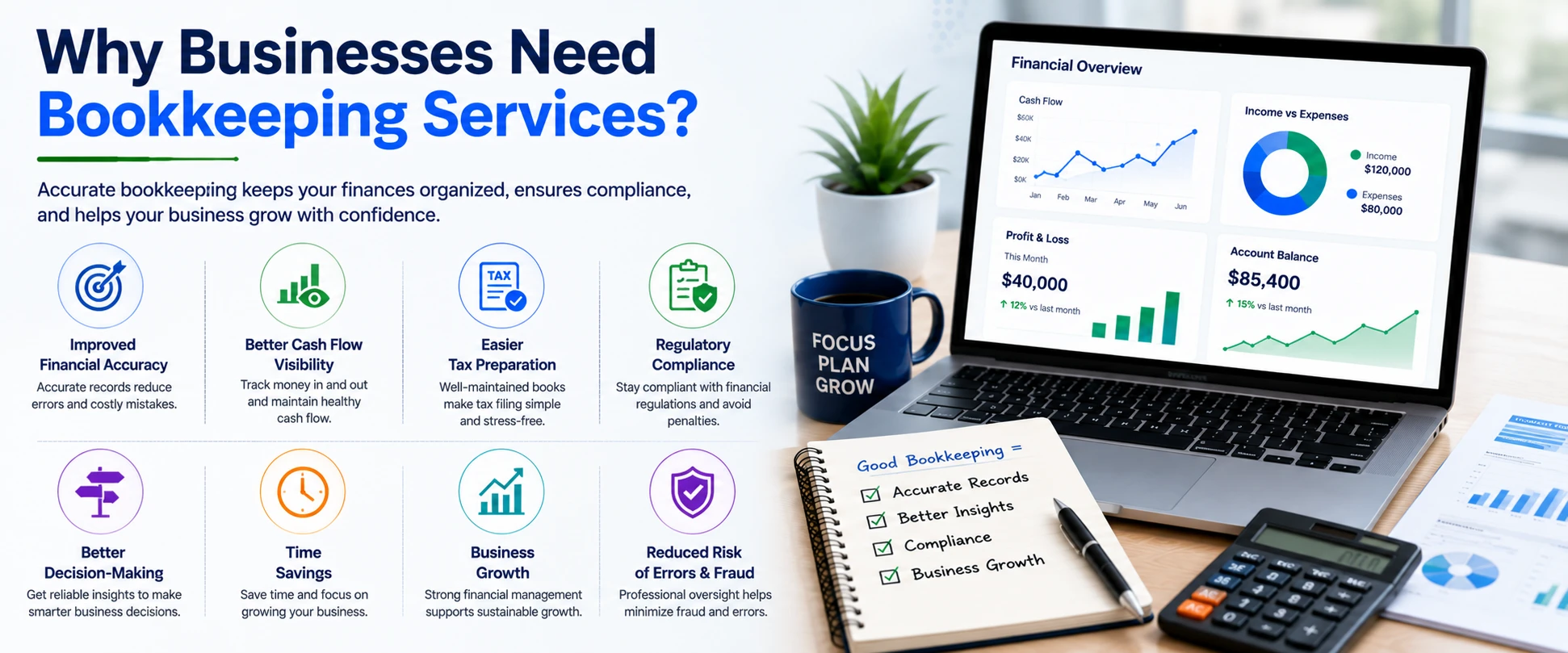
Many business owners initially attempt to manage their finances themselves using basic bookkeepers or simple spreadsheets. However, as a business grows, transactions become far too complex to handle without dedicated expertise. Relying on specialized bookkeepers for small business needs offers several distinct advantages:
- Improved Financial Accuracy: Accurate records help businesses understand their financial position and reduce costly mistakes.
- Better Cash Flow Visibility: Business owners can monitor incoming and outgoing funds more effectively when financial records are updated regularly.
- Easier Tax Preparation: Well-maintained books simplify tax filing and reduce the risk of penalties resulting from inaccurate reporting.
- Regulatory Compliance: Businesses must comply with various financial regulations and reporting requirements. Professional bookkeeping helps ensure compliance with applicable laws.
- Better Decision-Making: Reliable financial information enables business owners to make informed decisions regarding hiring, expansion, investments, and budgeting.
- Time Savings: Outsourcing bookkeeping services allows business owners to focus on revenue-generating activities rather than administrative tasks.
How Bookkeeping Services Work?
The bookkeeping process follows a structured approach that ensures all financial information is properly recorded and maintained.
Step 1: Collect Financial Documents
The process begins with gathering financial documents such as:
- Sales invoices
- Purchase receipts
- Bank statements
- Credit card statements
- Payroll records
- Vendor invoices
Step 2: Record Transactions
Each transaction is categorized and entered into bookkeeping software or accounting systems. Proper categorization is critical for accurate reporting.
Step 3: Reconcile Accounts
Financial records are compared against bank and credit card statements to verify accuracy and identify discrepancies.
Step 4: Generate Financial Reports
Bookkeepers prepare reports that summarize the company’s financial performance and position.
Step 5: Ongoing Monitoring
Professional bookkeeping services continuously monitor financial records to ensure they remain accurate throughout the year.
Types of Bookkeeping Services
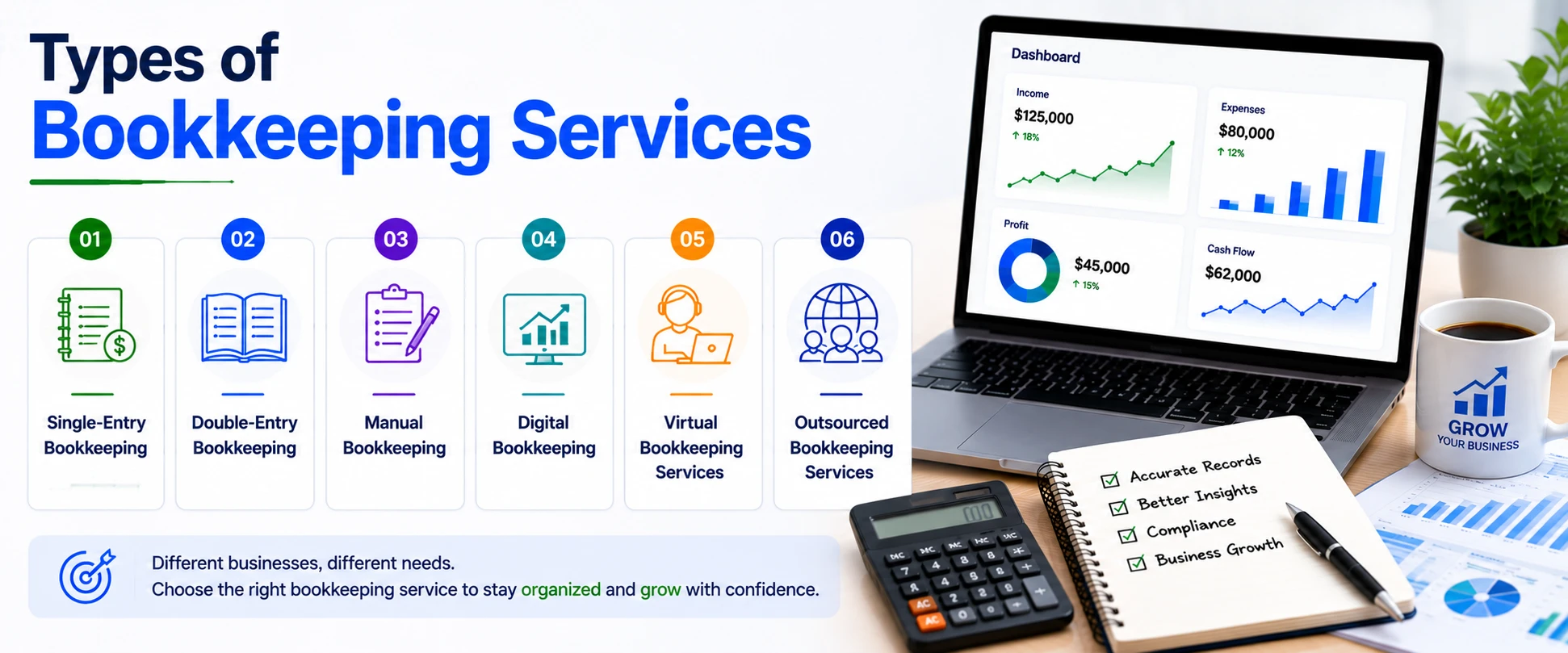
Different businesses have different financial needs. Several bookkeeping options are available depending on business size and complexity.
1. Single-Entry Bookkeeping
Single-entry bookkeeping records each transaction once. This method is simple and commonly used by freelancers and very small businesses with limited transactions.
2. Double-Entry Bookkeeping
Double-entry bookkeeping records every transaction in two accounts, ensuring greater accuracy and financial control. Most modern businesses use this method.
3. Manual Bookkeeping
Manual bookkeeping involves maintaining financial records using physical ledgers and spreadsheets. While still used in some cases, it is more prone to errors and inefficiencies.
4. Digital Bookkeeping
Digital bookkeeping uses accounting software to automate financial recordkeeping, improve accuracy, and simplify reporting.
5. Virtual Bookkeeping Services
A Virtual bookkeeper works remotely using cloud-based accounting software to manage financial records, reconcile accounts, track expenses, and prepare financial reports. This option allows businesses to access professional bookkeeping support without hiring an in-house employee.
6. Outsourced Bookkeeping Services
Outsourced bookkeeping services involve hiring external experts to handle financial record management. This option is often more cost-effective than maintaining an in-house bookkeeping team.
Key Components of Professional Bookkeeping Services
Professional bookkeeping services typically include several critical functions that support business financial management.
1. General Ledger Management
The general ledger serves as the central repository for all financial transactions and forms the basis for financial reporting.
2. Accounts Payable Management
Managing vendor invoices and payment schedules helps businesses maintain healthy supplier relationships.
3. Accounts Receivable Tracking
Tracking customer payments ensures businesses receive revenue on time and maintain strong cash flow.
4. Payroll Administration
Payroll management includes salary calculations, tax deductions, benefits tracking, and employee payment records.
5. Expense Tracking
Monitoring operational expenses helps businesses control costs and identify opportunities for savings.
6. Financial Statement Preparation
Bookkeepers prepare:
- Profit and Loss Statements
- Balance Sheets
- Cash Flow Statements
These reports help business owners evaluate performance and plan for future growth.
How to Choose the Right Bookkeeping Services?
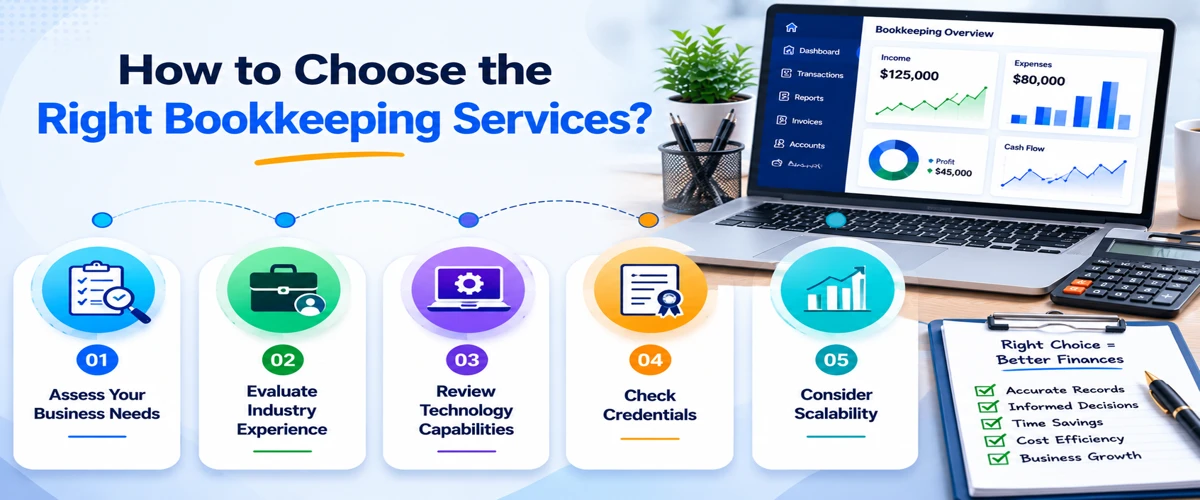
Selecting the right bookkeeping provider can significantly impact business efficiency and financial accuracy.
1. Assess Your Business Needs
Identify your specific requirements, including transaction volume, payroll needs, reporting expectations, and tax support.
2. Evaluate Industry Experience
Look for bookkeepers for small business operations who explicitly understand your specific industry’s compliance rules. Industry knowledge often results in more effective financial management.
3. Review Technology Capabilities
Modern bookkeeping solutions should utilize cloud-based software and automation tools for improved efficiency.
4. Check Credentials
Look for qualified professionals with relevant certifications and proven expertise in bookkeeping and financial management.
5. Consider Scalability
Your bookkeeping provider should be able to support your business as it grows and financial requirements become more complex.
6. Compare Pricing Models
Evaluate pricing structures carefully and ensure services offered align with your budget and expectations.
Benefits of Bookkeeping Services for Businesses
Investing in professional bookkeeping services offers numerous advantages.
- Enhanced Financial Control: Accurate financial records provide complete visibility into business performance and financial health.
- Improved Cash Flow Management: Businesses can better manage income and expenses, reducing cash flow problems.
- Reduced Errors: Professional bookkeeping minimizes mistakes that could impact reporting, compliance, or tax filings.
- Better Budgeting: Reliable financial information supports more accurate budgeting and forecasting.
- Simplified Tax Compliance: Maintaining organized records throughout the year makes tax preparation significantly easier.
- Increased Business Efficiency: Business owners can focus on growth initiatives rather than administrative financial tasks.
- Stronger Investor Confidence: Accurate financial records increase credibility with investors, lenders, and stakeholders.
Common Bookkeeping Mistakes Businesses Should Avoid
Even successful businesses can encounter problems when bookkeeping practices are neglected.
- Mixing Personal and Business Finances: Separate bank accounts and financial records should always be maintained.
- Failing to Record Transactions Promptly: Delayed data entry often leads to missing information and reporting inaccuracies.
- Ignoring Small Expenses: Minor expenses can accumulate over time and significantly affect profitability.
- Poor Receipt Management: Missing documentation can create challenges during audits and tax preparation.
- Skipping Bank Reconciliations: Regular reconciliations help identify discrepancies before they become larger problems.
- Incorrect Expense Categorization: Misclassifying expenses can result in inaccurate financial reports and tax issues.
Signs Your Business Needs Professional Bookkeeping Services
If you notice any of the following warning signs, it is likely time to hand your finances over to professional business bookkeepers:
1. Financial Records Are Disorganized
If you frequently struggle to find invoices, receipts, or financial documents, your records may not be properly managed. Disorganized records can lead to errors and compliance issues.
2. Frequent Accounting Errors
Repeated mistakes in financial records can affect reporting accuracy and business decisions. Professional bookkeeping helps reduce errors and maintain reliable data.
3. Cash Flow Problems
If you are unsure where your money is being spent or coming from, bookkeeping may need improvement. Accurate records help businesses monitor and manage cash flow effectively.
4. Missed Tax Deadlines
Late tax filings often result from incomplete or poorly maintained financial records. Professional bookkeeping keeps important financial information organized throughout the year.
5. Rapid Business Growth
As your business grows, managing financial transactions becomes more complex. Professional bookkeeping services help handle increasing financial responsibilities efficiently.
6. Lack of Financial Reports
Without regular financial reports, it can be difficult to evaluate business performance. Bookkeeping services provide valuable insights through accurate and timely reporting.
Essential Features to Look for in a Bookkeeping Service Provider
Not all providers offer the same level of expertise or service quality. When choosing bookkeeping services, look for the following features:
-
Industry-Specific Experience
A provider with experience in your industry can better understand your financial requirements and compliance needs.
-
Cloud-Based Bookkeeping Solutions
Cloud-based systems provide secure access to financial data and enable real-time collaboration from anywhere.
-
Strong Data Security Practices
Your financial information should be protected through secure systems, data encryption, and regular backups.
-
Timely Financial Reporting
Regular financial reports help you monitor business performance and make informed decisions.
-
Transparent Pricing
Choose a provider that clearly outlines service costs without hidden fees or unexpected charges.
-
Dedicated Customer Support
Reliable support ensures quick assistance whenever you have questions or financial concerns.
-
Payroll Management Capabilities
Payroll support helps manage employee payments, deductions, and payroll records accurately.
-
Tax Preparation Assistance
A bookkeeping provider should help maintain organized records that simplify tax filing and compliance.
-
Scalable Service Options
As your business grows, the provider should be able to handle increasing financial and reporting requirements.
-
Advanced Reporting Tools
Detailed financial reports provide valuable insights into cash flow, profitability, and overall business performance.
Final Thoughts
Bookkeeping is a fundamental part of running a successful business. Accurate bookkeeping services help businesses maintain organized financial records, monitor cash flow, reduce errors, and make informed financial decisions. Whether you choose in-house support or outsourced bookkeeping services, keeping your financial data updated is essential for long-term growth and compliance.
Professional bookkeeping not only simplifies daily financial management but also makes tax preparation and financial reporting more efficient. By investing in reliable bookkeeping solutions, businesses can save time, improve financial visibility, and focus on their core operations. Ultimately, strong bookkeeping practices create a solid financial foundation that supports sustainable business success and future growth.
Frequently Asked Questions
How much do bookkeeping services typically cost?
The cost of bookkeeping services depends on factors such as business size, transaction volume, and the level of support required. Some providers charge hourly rates, while others offer fixed monthly packages tailored to specific business needs.
Can a small business manage bookkeeping without hiring a professional?
Yes, small businesses can manage bookkeeping on their own during the early stages. However, as transaction volume increases, professional bookkeeping services can help improve accuracy, save time, and reduce the risk of financial errors.
What financial reports should a business review regularly?
Businesses should regularly review key financial reports, including profit and loss statements, balance sheets, and cash flow statements. These reports provide valuable insights into profitability, expenses, and overall financial health.
How often should bank accounts be reconciled?
Bank accounts should ideally be reconciled every month to ensure financial records match bank statements. Regular reconciliation helps identify discrepancies, prevent errors, and maintain accurate bookkeeping records.
Is cloud-based bookkeeping better than traditional bookkeeping?
Cloud-based bookkeeping offers real-time access to financial data, automated recordkeeping, improved collaboration, and enhanced security. For most modern businesses, it provides greater flexibility and efficiency than traditional bookkeeping methods.