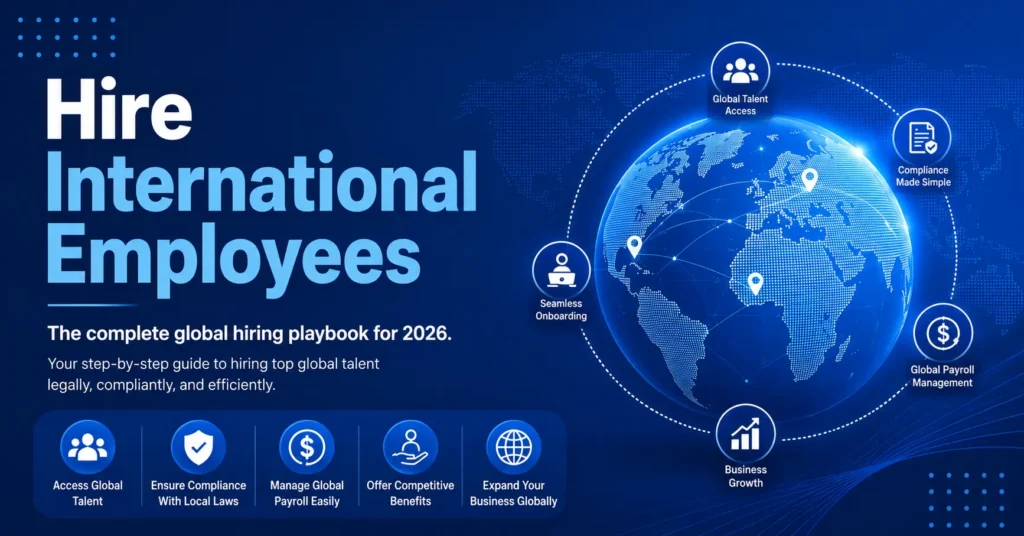
Businesses are no longer limited by geography when building teams. Companies of every size are now hiring international employees to access better talent, reduce operational costs, and expand into new markets faster. The rise of remote work has made global hiring more practical than ever, but it also comes with legal, payroll, and compliance challenges that many businesses underestimate.
From understanding international employment laws to managing global payroll and employee benefits, there are several moving parts involved in building a successful international workforce.
This guide explains everything you need to know about international hiring, including the best hiring models, compliance requirements, payroll processes, and common mistakes businesses should avoid.
Read more : Global Payroll Services: Complete Guide to Manage International Payroll in 2026
What Does It Mean to Hire International Employees?
Hiring international employees means hiring people who live and work in different countries outside your company’s main location. They can work remotely, from local offices, or as part of global teams.
International hiring usually includes:
- Full-time remote employees
- Overseas professionals
- Offshore development teams
- International customer support staff
- Regional sales representatives
Many businesses confuse international hiring with outsourcing, but both are different. Outsourcing involves giving work to a third-party agency, while international hiring allows companies to directly manage employees and maintain control over operations, company culture, and performance.
Why Companies Are Hiring International Employees?
Companies are hiring international employees to access skilled talent, reduce costs, and expand into global markets faster.
Here are the main reasons why companies are hiring international employees and building global teams.
1. Access to a Larger Talent Pool
Businesses can hire skilled professionals from different countries instead of depending only on local talent. This helps fill skill gaps faster, especially in industries like tech, marketing, and engineering. A strong global talent acquisition strategy also helps companies find specialized professionals faster across international markets.
2. Round-the-Clock Business Operations
Teams working in different time zones help companies provide 24/7 support, faster project delivery, and continuous business operations.
3. Lower Operational Costs
Hiring international employees can reduce labor and operational expenses while still allowing companies to offer competitive salaries.
4. Faster Expansion Into Global Markets
Local international employees understand regional culture, customer behavior, and market trends, making global expansion easier.
5. Better Innovation and Diversity
Employees from different backgrounds bring fresh ideas and unique perspectives that improve creativity and problem-solving.
6. Stronger Employer Brand
Companies with global teams are often seen as modern and flexible workplaces, which helps attract better talent worldwide. Building a strong employer branding strategy also improves international hiring success and candidate trust.
Challenges of Hiring International Employees
Below are the biggest challenges companies face while managing international employees and global teams.
- Legal Compliance and Visa Requirements: Every country has different employment laws, tax rules, employee benefits, and termination policies. Managing work visas and legal documentation can also become time-consuming and expensive for businesses hiring overseas employees.
- Global Payroll and Tax Management: Handling international payroll is the most complex parts of global hiring. Companies must manage currency conversions, tax deductions, transfer fees, and country-specific employee benefits accurately.
- Cultural and Communication Differences: International teams often work with different communication styles, workplace expectations, and cultural values. Without proper coordination, these differences can create misunderstandings and affect collaboration.
- Time Zone Management: Managing employees across multiple time zones can slow down meetings, approvals, and team collaboration. Remote employees may also feel disconnected from the rest of the team.
- Remote Onboarding and Employee Integration: International employees may take longer to adjust to a company’s culture and workflows, especially in remote environments. Poor onboarding can reduce employee engagement and increase turnover rates.
Read More : Skills-Based Hiring: A Practical Guide for Employers
Benefits of Hiring International Employees
Hiring international employees helps businesses grow faster, improve productivity, and access better talent worldwide. Below are the major benefits of building a global workforce.
- Access to Global Talent: International hiring gives businesses access to skilled professionals from different countries. Companies can fill skill gaps faster and hire specialized talent that may not be available in local markets.
- Around-the-Clock Productivity: Global teams working across multiple time zones help businesses maintain continuous operations. This improves customer support, project delivery speed, and overall productivity.
- Cost Efficiency: Hiring international employees can lower operational and hiring costs. Businesses can build high-performing remote teams while reducing expenses related to office infrastructure and local recruitment.
- Better Innovation and Diverse Perspectives: Employees from different cultural and professional backgrounds bring fresh ideas and unique approaches to problem-solving. Diverse teams often perform better in creativity, collaboration, and decision-making.
- Easier Global Expansion: Local international employees understand regional customer behavior, business practices, and market trends. Their knowledge helps companies expand into new countries more effectively.
- Stronger Employer Branding: Companies with diverse and global teams are often seen as modern and inclusive workplaces. This improves employer reputation and helps attract top talent worldwide.
Different Ways to Hire International Employees
Businesses can choose different international hiring models based on budget, compliance, and expansion goals. Below are the most common ways to hire international employees legally and efficiently.
1. Setting Up a Local Entity
Companies can open a legal entity in another country and hire employees directly under local employment laws. This option gives full operational control but usually requires higher setup costs, legal registrations, payroll management, and ongoing compliance work. This model is best for businesses planning long-term international expansion.
2. Hiring Through an Employer of Record (EOR)
An Employer of Record (EOR) helps companies hire international employees without opening a local entity. The EOR legally employs workers on behalf of the company and manages payroll, taxes, contracts, benefits, and compliance.
This is one of the fastest and safest ways to build a global workforce while reducing legal risks. Businesses exploring this model should also understand what is an employer of record and review important EOR benefits before making a decision.
3. Hiring Independent Professionals
Many businesses hire overseas professionals as independent workers for flexible or project-based work. This approach reduces administrative responsibilities and speeds up hiring. However, companies must ensure workers are classified correctly according to local labor laws to avoid compliance penalties.
4. Using International Staffing Agencies
International staffing agencies help companies find and hire skilled talent in different countries. These agencies are useful for temporary hiring, niche roles, and faster recruitment support.
Read More : 1099 vs W2: Which Is Right for Your Business?
Step-by-Step Process to Hire International Employees
A structured hiring process helps businesses avoid compliance issues and manage global employees more effectively. Below are the key steps involved in international hiring.
Step 1: Identify Hiring Requirements
Start by defining the job role, required skills, employment type, salary range, and time zone expectations. Clear planning makes international recruitment more efficient.
Step 2: Choose the Right Hiring Countries
Select countries based on talent availability, labor costs, language proficiency, and local employment regulations. Popular global hiring destinations include India, Poland, the Philippines, and Brazil.
Step 3: Understand Local Employment Laws
Research country-specific labor laws related to minimum wages, paid leave, working hours, employee benefits, and termination rules before hiring overseas employees.
Step 4: Select a Hiring Model
Choose whether to hire through an Employer of Record, freelancers, staffing agencies, or a local entity based on your business goals and hiring scale.
Step 5: Prepare Legal Employment Contracts
Create legally compliant contracts covering salary, benefits, confidentiality, intellectual property rights, and termination conditions.
Step 6: Set Up International Payroll
Implement a reliable global payroll system to manage salaries, tax deductions, currency conversion, and local compliance requirements.
Step 7: Onboard International Employees
Provide proper onboarding, training, communication guidelines, and cultural integration support to help employees adapt quickly.
Read More : Talent Acquisition Strategy: A 7-Step Framework
How Payroll Works for International Employees?
Managing international payroll requires businesses to handle salaries, taxes, benefits, and compliance across multiple countries. Here are the key parts of global payroll management.
- Salary Processing: Companies must pay international employees according to local labor laws, salary standards, and payment schedules in their respective countries.
- Tax and Compliance Management: Employers are often responsible for deducting local taxes, social security contributions, and other mandatory payroll obligations based on country regulations.
- Multi-Currency Payments: International payroll involves currency conversion and global money transfers. Businesses need reliable payroll systems to ensure accurate and timely payments.
- Employee Benefits Administration: Global payroll may include health insurance, retirement contributions, bonuses, paid leave, and other mandatory employee benefits.
- Payroll Automation Tools: Many companies use international payroll software or Employer of Record platforms to simplify payroll processing and reduce compliance risks.
Read More : What is Managed Payroll?
International Employee Benefits You Should Offer
Offering competitive employee benefits helps businesses attract and retain skilled international talent. Below are some important benefits companies should consider.
- Health Insurance and Medical Benefits: Healthcare coverage is one of the most valuable employee benefits in global hiring. In some countries, it is also legally required.
- Paid Leave and Holidays: International employees usually expect paid vacation days, sick leave, parental leave, and public holiday benefits according to local standards.
- Flexible Work Arrangements: Remote work flexibility, hybrid schedules, and work-life balance policies improve employee satisfaction and retention.
- Learning and Development Support: Providing training programs, certifications, and career development opportunities helps employees grow professionally and stay engaged.
- Remote Work Allowances: Many companies offer internet reimbursements, home office equipment, and wellness allowances to support remote international employees.
Tools and Platforms for International Hiring
Technology helps businesses simplify global recruitment, payroll, communication, and workforce management. Below are the most useful tools for international hiring.
EOR platforms help companies hire international employees legally while managing contracts, payroll, taxes, and compliance.
-
Global Payroll Software
International payroll tools automate salary payments, tax deductions, reporting, and multi-currency transactions for global teams.
-
Recruitment Platforms
Global hiring platforms help businesses source qualified candidates from different countries more efficiently.
-
HR Management Systems
HR software helps manage onboarding, attendance, employee records, performance tracking, and documentation for remote teams.
-
Communication and Collaboration Tools
Video conferencing, team messaging, and project management tools improve communication and productivity across distributed global teams.
Common Mistakes Companies Make When Hiring International Employees
Many businesses face compliance and operational issues because of poor international hiring practices. Below are the most common mistakes companies should avoid.
1. Misclassifying Employees as Freelance Workers
Incorrectly classifying full-time employees as freelance workers can lead to legal penalties, tax issues, and compliance risks.
2. Ignoring Local Employment Laws
Employment laws vary by country, and failing to follow local regulations can create serious legal and financial problems.
3. Poor International Payroll Management
Manual payroll processing increases the risk of delayed payments, tax errors, and compliance violations for global employees.
4. Weak Remote Onboarding
Without proper onboarding and communication, international employees may struggle to adapt to company culture and workflows.
5. Lack of Cultural Awareness
Ignoring cultural differences and communication styles can affect teamwork, productivity, and employee engagement.
6. Choosing the Wrong Hiring Model
Using the wrong hiring structure can increase operational costs and create unnecessary compliance complications for businesses.
Why Choose The Talent Company?
The Talent Company helps businesses build and manage global teams more efficiently. It takes complete responsibility for employment compliance, payroll accuracy, and statutory obligations, which significantly decreases operational complexity and legal risks.
- Helps businesses build stable, long-term offshore teams that work as a true extension of internal operations
- Manages international compliance, payroll, and statutory obligations
- Reduces legal risks and operational complexity in global hiring
- Supports long-term workforce planning and global team scalability
- Provides smooth onboarding and employee integration support
- Manages the complete employee lifecycle under one streamlined process
- Helps companies expand internationally with better efficiency and control
Final Thoughts
Hiring international employees is no longer limited to large corporations. Businesses of all sizes are building global teams to access better talent, improve productivity, and scale faster. However, international hiring also requires careful planning around compliance, payroll, taxes, contracts, and employee benefits.
Companies that invest in proper global workforce management strategies gain a significant competitive advantage. Whether you choose an Employer of Record, freelance professionals, or direct international employment, the key is building a legally compliant and employee-friendly hiring process.
With the right systems, tools, and hiring strategy, businesses can successfully create high-performing international teams that support long-term growth.
Frequently Asked Questions
How can a company hire international employees legally?
Businesses can hire international employees through local entities, Employer of Record services, or legally compliant employee agreements.
What is the easiest way to hire international employees?
Using an Employer of Record is usually the fastest and simplest method because the EOR handles payroll, taxes, and compliance.
What are the risks of hiring international professionals?
The biggest risk is worker misclassification, which can lead to tax penalties and legal disputes.
How do companies pay international employees?
Companies usually pay international employees through global payroll providers, international bank transfers, or Employer of Record platforms.
What benefits should international employees receive?
Benefits may include health insurance, paid leave, retirement contributions, remote work allowances, and wellness programs, depending on local laws and company policies.